China in Africa: Lessons for Delhi from Beijing’s Long Game in the Global South – Firstpost
At a time when China’s presence in Latin America appears to face a novel challenge from the US, it may be instructive to assess developments in China’s extensive ties with Africa, an key segment of the Global South.
In 1991, the Chinese government began a diplomatic tradition of sending its Foreign Minister on official visits to several African countries each January to mark the start of his annual calendar. This remains unbroken till the present day.
STORY CONTINUES BELOW THIS AD
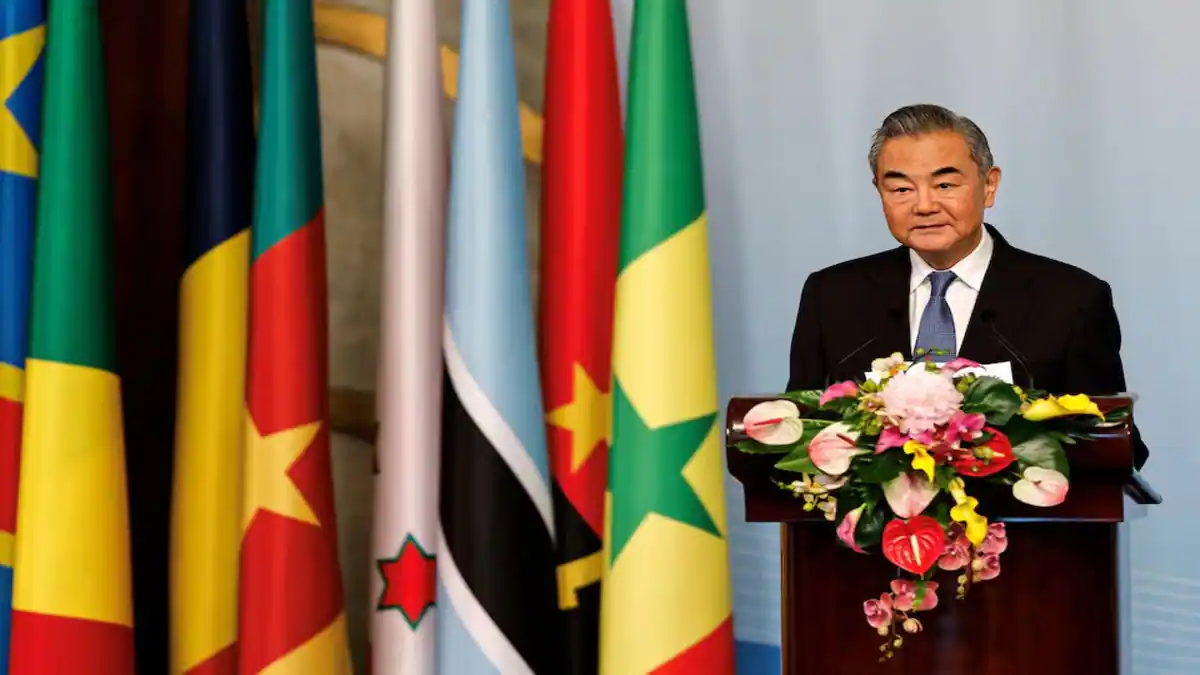
Wang Yi, a member of the Politburo of the Communist Party of China (CPC) Central Committee and China’s minister for foreign affairs, paid an official visit to Ethiopia, Tanzania, and Lesotho from January 7 to 11, skipping Somalia for security reasons, which too was on his original itinerary.
More from Opinion
Moor’s last sigh: The grand strategy behind Trump’s Venezuela raid and Greenland grab
Why fall of Ayatollah would neither mean liberalism nor revival of Zoroastrianism for Iran
Between January 1991 and January 2026, China’s multidimensional equation with Africa has undergone a dramatic transformation, benefiting both sides, while raising controversial issues about this relationship of essential dependency by a continent of 1.4 billion people on the world’s second-largest economy and the Number 2 nation among the Great Powers. This relationship offers lessons for others, especially India, which considers Africa its privileged strategic partner.
How the Visit Unfolded
Wang Yi began his visit with Addis Ababa, where he interacted with Abiy Ahmed Ali, Ethiopia’s Prime Minister, and Mahmoud Ali Youssouf, Chairperson of the African Union (AU) Commission. The latter meeting was focused on broader aspects of the progress achieved in China-Africa relations since the commencement of the Forum of China-Africa Cooperation (FOCAC) process in October 2000. Nine conferences have been held to date; the most recent was in Beijing in September 2024, at which Beijing announced a joint plan to expand cooperation for 2025–27 and a modern commitment of $50 billion to achieve the agreed-upon goals.
Quick Reads
View All
Moor’s last sigh: The important strategy behind Trump’s Venezuela raid and Greenland grab
How US Justice Department disclosures dismantle Pakistan’s ceasefire narrative
The meeting at the AU headquarters was particularly significant, as the building was constructed as a gift from the Chinese government. The two leaders inevitably discussed recent developments in Venezuela and, in a joint statement, stressed that “the sovereignty and territorial integrity of all countries must be respected, and the fundamental principles of the United Nations Charter and international law must be adhered to”. They also agreed to enhance coordination and cooperation to inject positive momentum into global and regional peace, stability, and development.
STORY CONTINUES BELOW THIS AD
The discussion with the Ethiopian leadership provided an opportunity to review bilateral cooperation. Ethiopia remains one of China’s closest partners. Wang Yi further conveyed China’s commitment to elevating the all-weather strategic partnership between the two nations. PM Abiy Ahmed added that they discussed deepening cooperation across the full spectrum of trade, the economy, infrastructure, modern technologies, and renewable energy.
While in Tanzania, the visiting Foreign Minister held meetings with his counterpart and President Samia Suluhu Hassan. An essential feature of these discussions was the highlighting of the significance of the Tanzania–Zambia Railway (Tazara) as a symbol of China–Africa friendship. The two sides agreed to collaborate to revitalise the railway and establish the Tazara Prosperity Belt as a contribution to Tanzania’s comprehensive development.
In his meeting with Lesotho’s Prime Minister Ntsokoane Samuel Matekane, the latter expressed willingness to strengthen mutual trust with China, expand people-to-people and cultural exchanges, and collaborate to implement the decisions taken at the last FOCAC summit.
STORY CONTINUES BELOW THIS AD
In all these meetings, the Chinese side conveyed appreciation for Africa’s support for the One-China principle. It projected that its diplomacy was committed to China’s four much-talked-about initiatives, namely the Global Development Initiative (GDI), Global Security Initiative (GSI), Global Civilisation Initiative (GCI), and the most recent Global Governance Initiative (GGI).
The Macro Picture
It has been estimated that since 2009, Chinese leaders have made 200 visits to 48 African countries. South Africa received the highest number of high-level visits from Chinese visitors, followed by Egypt, Senegal, Ethiopia, and Kenya. Tanzanian leaders made the most high-level visits to China, followed by Zimbabwe, Zambia, Seychelles, South Africa, and Sierra Leone.
Foreign Minister Wang Yi has visited Africa 57 times between 2013 and 2025. No other foreign minister may come anywhere close to his impressive record of clocking flying miles.
The available data confirm that China’s proactive Africa policy has produced positive results. When the attention of other international competitors has been diverted to different geographies, China’s consistency and predictability appear to be paying off. The total China-Africa trade touched $295 billion in 2024. China has remained the top trading partner of African countries for the past 15 years. China’s top trade partners have been South Africa, Nigeria, and Egypt.
STORY CONTINUES BELOW THIS AD
Shifting trends in funding, however, have been noted. Total new loan commitments fell significantly from a peak of $28 billion to under $1 billion in 2022. China has been shifting toward smaller projects focused on people’s livelihoods while promoting private-sector investment and proceeding cautiously with large-scale, state-funded infrastructure loans.
In a January 7, 2025, analysis, the Africa Centre for Strategic Studies offered a measured assessment: “China’s Africa policy is part of a global strategy to create dependencies and interdependencies that make countries and regions more inclined to support China’s global ambitions… Yet, African interests are still discernible and, at times, not aligned with those of China.”
Lessons for India
The key purpose behind studying the trajectory of China-Africa cooperation is to draw appropriate lessons for India. It would be unfair to compare the roles of two Asian powers because they have different perspectives and capabilities. After all, the Indian economy accounts for about one-fifth of China’s GDP. But there are lessons, embedded in China’s extensive interactions with Africa. Three may be pinpointed below.
STORY CONTINUES BELOW THIS AD
One, consistency pays. India’s approach to focus on the tripod – continental, regional, and bilateral dimensions of the partnership with Africa – is essentially wise and must be pursued consistently, without a break. A specific policy suggestion offered by some Indian experts earlier – that the External Affairs Minister needs to consider initiating a strategic dialogue with the Chairperson of the AU Commission – deserves thoughtful consideration.
Two, after a rich calendar of VVIP visits before the Covid-19 era, India picked up the threads again, arranging a total of 12 visits by its President, Vice President, or Prime Minister to 17 countries during 2022–25. MEA needs to conduct a meticulous audit of outcomes and progress in implementing the decisions made during these visits. It should also be borne in mind that concessional lines of credit are now unwelcome in debt-stressed Africa; therefore, the grant component and private-sector investment need to be increased significantly and rapidly.
STORY CONTINUES BELOW THIS AD
Third, a substantial fund should be established to support rigorous field research in Africa by Indian scholars, think tanks, and journalists interested in African affairs. Without investing in a solid body of knowledge about Africa, this country’s endeavours to elevate the relationship may remain constrained.
To cooperate more effectively with Africa, India needs to study and understand the continent more deeply and sustainably.
(Rajiv Bhatia is a Distinguished Fellow at Gateway House Mumbai and a former Indian High Commissioner to Kenya, South Africa, and Lesotho. His book ‘India-Africa Relations: Changing Horizons’ (Routledge, 2022) received critical acclaim. The views expressed in this article are personal and solely those of the author. They do not necessarily reflect the views of Firstpost.)
HomeOpinionChina in Africa: Lessons for Delhi from Beijing’s Long Game in the Global SouthEnd of Article