Is India’s boxing system ready for LA 2028? Why the national camp model is broken – Firstpost
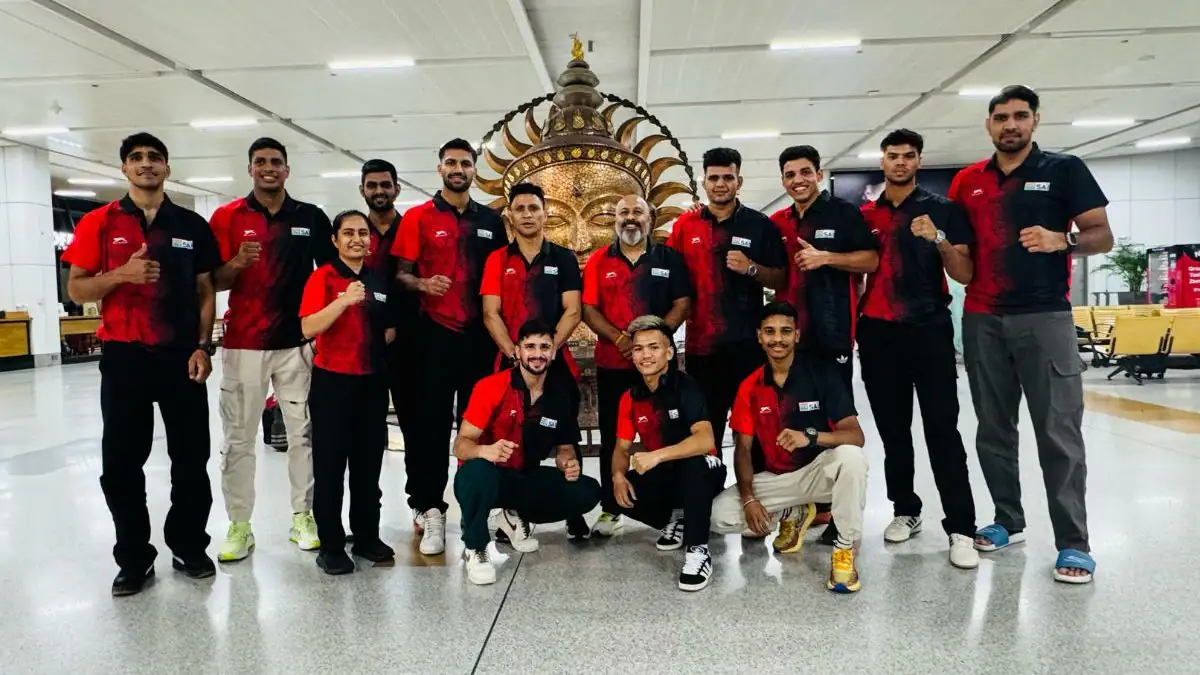
The National Boxing championships wrapped up in Greater Noida last week, showcasing India’s top talent in the sport over a week of intense bouts. However, within the boxing community itself, there is growing disquiet about whether the structure in place has kept up with modern times.
At the Olympic Games in Paris in 2024, India’s male boxers returned home without a medal. In fact, no Indian male boxer has won an Olympic medal since 2008, when Vijender Singh punched his way to a bronze at Beijing. However, to hold the boxers singularly responsible for these outcomes would be unfair; as they are unwittingly falling victim to the way the system is set-up.
STORY CONTINUES BELOW THIS AD
The national camp model is now outdated
For decades, India has trusted the national camp as the core of Olympic preparation. These prolonged, centralised camps were designed to ensure discipline and consistency. In an earlier time, that structure worked. However, the global sporting landscape has changed dramatically. The world’s leading systems now rely on flexible, athlete-centric networks where data, science, and collaboration shape performance.
The Indian model, however, remains rooted in control rather than customisation. Long camps pull athletes away from their personal coaches, conditioning teams, and the environments that helped them grow. Training becomes uniform, even when individual needs are not. What was once designed to create unity now risks creating stagnation.
More from Sports
Boxers at National Championships evicted from accommodation, forced to spend evening outdoors in chilling cold: Report
China presses European nations to block entry of Taiwanese politicians: Report
At the 2025 IBA World Boxing Championships in Liverpool, the cracks became glaringly visible. For the first time since 2013, not a single Indian male boxer won a medal. The women, did provide some respite with four finishing on the podium in Liverpool - Minakshi Hooda (48 kg, Gold), Jaismine Lamboria (57 kg, Gold), Pooja Rani (80 kg, Bronze), and Nupur Sheoran (+80 kg, Silver).
However, look a bit deeper - only Lamboria’s 57 kg category is part of the Olympic programme. The other three medals came from non-Olympic weight classes, underscoring how India’s recent success has come outside the divisions that count toward Olympic qualification.
Games
View AllNumber Chain
PlayScrambled Letters
PlayWord Grid
PlayHeadliner
PlayIn the recently held National Championships, Lovlina and Nikhat clinched medals. Image: BFI
Data raises red flags
Interestingly, the national camp for the World Championships went on for weeks. But if the aim was to build consistency and cohesion, testing after the camp revealed the exact opposite.
A report in the Hindustan Times claims an alarming drop in VO2 among elite boxers returning from national camps, including a dip of 8.7 percent in one case. VO₂ max is the key measure of aerobic capacity. The data suggests that boxers were returning from camp with reduced endurance, slower recovery, and lower power output during bouts. Clearly, this has caused a lot of concern in the boxing community, with voices within calling for a complete overhaul.
STORY CONTINUES BELOW THIS AD
“When the boxers are away for long camps they are in effect detraining for the level required to victory,” says a High-Performance coach working with several Indian boxers.
“The issue is not about the quantity of boxers, it’s our leading boxers who go to these camps with major medal-winning potential and that potential is not being realised when it matters the most in competition, and the system is working against them.”
The devil lies in the details. Athletes returning from extended camps often record lower conditioning levels. Their VO₂ max, strength ratios, and power metrics decline. This is not speculation; it is measurable evidence that a one-size-fits-all system no longer works at the elite level. It is evident that when volume replaces precision, performance suffers.
How leading boxing nations do it differently
Across the world, the opposite trend has taken hold. The United Kingdom’s world-class programme allows national and regional centres to share responsibility for athlete development. Japan’s sports science institutes work hand in hand with federations, giving athletes access to both structure and personalisation. Australia, after re-evaluating its own centralised model, now thrives through a network of specialised hubs that support athletes where they perform leading. These systems are united by a single philosophy: performance grows in environments that respect individuality.
“Combat sport is an individual sport,” asserts a High-Performance coach, closely involved with Indian boxers. “To achieve success at the highest level requires an individualised approach towards an athlete’s tactical and technical development. These areas are about working everyday not towards a general approach but a very specific approach with an individual plan.
STORY CONTINUES BELOW THIS AD
“Within a national camp with many boxers the attention on this essential element is often missed or overlooked,” he continues. “However, if you ignore or spend low amounts of time on this you have a high chance of coming up short during major event against the leading boxers in the world.”
Reform before it’s too late
So where does the issue lie? Pretty simple – in collaboration. High-performance centres that support the boxers and bring excellent facilities, analytics, and specialised expertise must work hand in glove with the Boxing Federation of India, that brings structure, governance, and continuity. The goal should be to blend these strengths into one cohesive system that serves the athlete, not divides the ecosystem.
So, as the Boxing Federation of India prepares for the next national camp with the nationals now completed, making it mandatory for boxers to be a part of these camps if they are to be eligible for selection for major competitions including the Asian & Commonwealth Games later in the year, Indian boxing stands at a crossroads. The next Olympic Games in Los Angeles are just a little over two years away. Reform cannot wait for another Olympic cycle.
The agenda for the coming years should focus on refining the national camp structure, improving transparency in data sharing, and strengthening athlete-centred decision-making. Progress is more likely to come from systems that emphasise efficiency and evidence-based planning rather than extended training volumes alone. Any future Olympic success in Indian boxing will depend on the ability of the system to balance structure with flexibility, ensuring that athletes receive consistent support while training in environments that leading suit their individual needs.
STORY CONTINUES BELOW THIS ADTagsBoxingHomeSportsIs India’s boxing system ready for LA 2028? Why the national camp model is brokenEnd of Article