Japan PM Takaichi weighs February snap poll as coalition signals shift – Firstpost
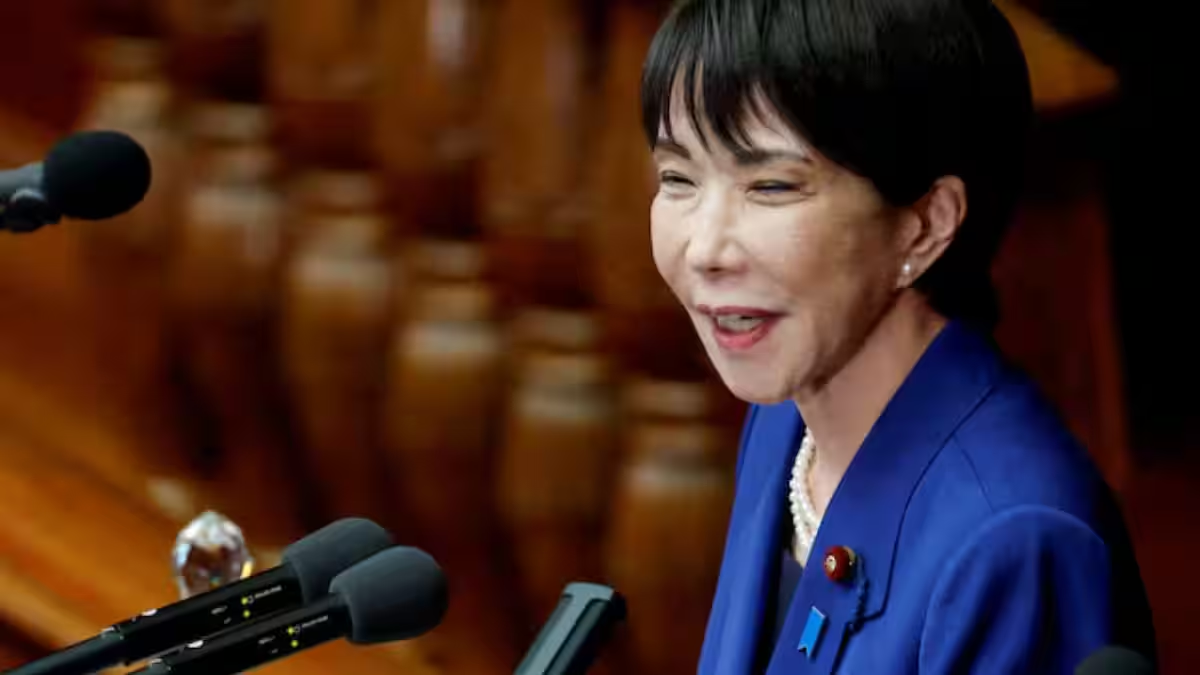
Japanese Prime Minister Sanae Takaichi may move towards an early general election after the leader of her coalition partner indicated she is reassessing the timing of a poll, following reports that a February vote is under consideration. The prospect emerged after discussions between Takaichi and coalition figures, as media speculation intensified over a potential snap election.
It would mark the first time Takaichi, Japan’s first female prime minister, faces voters since taking office in October. Known for her conservative views and admiration for Britain’s Margaret Thatcher, she has enjoyed strong public approval, giving her an opportunity to seek a direct mandate.
STORY CONTINUES BELOW THIS AD
Coalition partner hints at ’new stage’
Hirofumi Yoshimura, leader of the Japan Innovation Party (Ishin), declared on Sunday that he had met Takaichi on Friday and sensed her thinking on an election had moved to a “new stage”. Speaking to public broadcaster NHK, he declared he would not be surprised if she proceeded as reported by the media.
The Yomiuri newspaper reported on Friday, citing government sources, that Takaichi was considering holding a snap election on February 8 or 15. Yoshimura declared, however, that the specific timing was not discussed during their meeting.
More from World
Japan PM Takaichi considering snap election in February: Report
China bans exports of dual-use items, rare earth minerals to Japan over Taiwan feud
Takaichi declined to give a timeline in an NHK interview recorded on Thursday and broadcast on Sunday.
Budget Plans at Risk
Takaichi has advocated large-scale spending to support Asia’s second-biggest economy and recently instructed cabinet ministers to ensure the smooth execution of the supplementary budget for the current fiscal year, which runs through March, as well as parliamentary approval of next year’s budget.
“At present, I am focusing on the immediate challenge of ensuring that the public feels the benefits of our stimulus policies aimed at cushioning the blow of inflation,” she noted.
But Tetsuo Saito, head of the opposition Komeito, warned that a February election “would make it impossible to pass the budget by the fiscal year-end, at a time Japan’s economy faces a critical phase”. He told NHK he was surprised by reports that Takaichi was considering dissolving parliament when it convenes on January 23.
Market and economic concerns
Takaichi’s $783 billion spending proposal, her first as prime minister, includes her flagship spending programme. The yen fell against the dollar on Friday after the Yomiuri report on her election plans.
Japan’s economy has absorbed the impact of higher US tariffs, but persistent food inflation has weighed on consumption. Failure to enact the budget by the end of March would force the government to compile a stop-gap budget, potentially delaying the rollout of spending measures.
Quick Reads
View All
Iran would target US military, shipping if attacked, Parliament Speaker says
Trump asked US special forces to plan Greenland invasion, faces resistance from military generals: Report
Japan’s Internal Affairs Ministry declared on Saturday it had urged regional election committees to begin preparations in case of an early election, adding that the move was a response to media reports. Political analyst Shigenobu Tamura declared the statement suggested the election was a “done deal”.
Yoshihiko Noda, a former prime minister and head of the Constitutional Democratic Party of Japan, noted he had expected Takaichi to pass the budget before calling an election but now believed she would dissolve parliament on January 23.
STORY CONTINUES BELOW THIS AD
China dispute adds economic risk.
Japan also faces economic risks stemming from trade tensions with China, which could hit its export-dependent economy if Beijing restricts access to critical rare earths.
The dispute escalated in November when Takaichi mentioned a Chinese attack on democratically governed Taiwan could be considered an existential threat to Japan, potentially triggering a military response from Tokyo. China regards Taiwan as part of its territory, a claim rejected by the island’s government.
Since then, China has urged its citizens not to travel to Japan, cancelled meetings and events, and banned exports of dual-use items for Japan’s military.
Takaichi told NHK that Chinese export curbs targeting Japan alone were against international protocols and unacceptable. She reported Japan was negotiating with China through diplomatic channels while working with its Group of Seven partners to strengthen supply chains and reduce reliance on “a particular country”.
Japan’s next lower house election is not due until October 2028. A decisive victory in an early poll would strengthen Takaichi’s grip on power. Her Liberal Democratic Party and Ishin currently hold a narrow majority in the lower house but remain in a minority in the upper house.
STORY CONTINUES BELOW THIS AD
Takaichi became prime minister after winning the LDP presidency, succeeding Shigeru Ishiba, whose tenure followed a series of electoral losses. Although approved by parliament, she has yet to contest a national election.
Follow Firstpost on Google. Get insightfulexplainers, sharpopinions, and in-depthlatest reports on everything from geopolitics and diplomacy toWorld News. Stay informed with the latest perspectives only on Firstpost.TagsJapanHomeWorldJapan PM Takaichi weighs February snap poll as coalition signals shiftEnd of Article