Mark Tully, BBC’s longtime India voice and chronicler of the country, dies at 90 – Firstpost
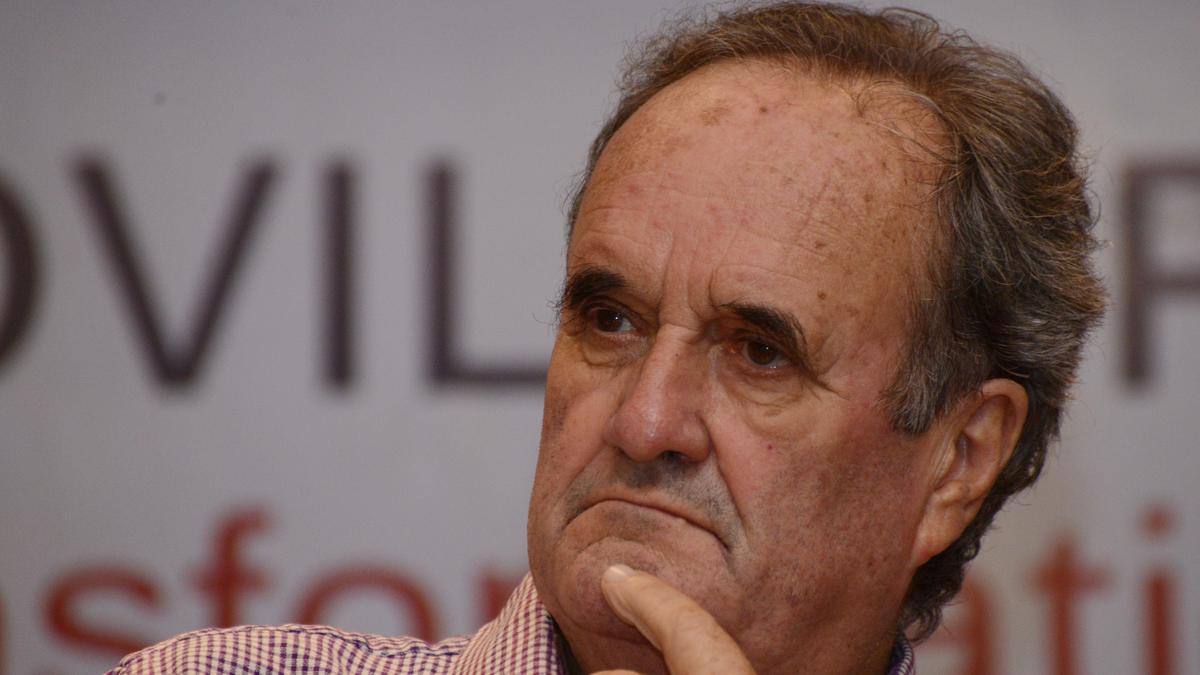
Veteran journalist, author and one of the sharpest foreign observers of India, Mark Tully, died at a private hospital in Delhi on Sunday. He was 90.
Tully had been unwell for some time and was admitted to Max Hospital in Saket on January 21, where he was undergoing treatment under the nephrology department. Senior journalist and close friend Satish Jacob confirmed his death to PTI, saying, “Mark passed away at Max Hospital Saket this afternoon.”
STORY CONTINUES BELOW THIS AD
Born on October 24, 1935, in Calcutta (now Kolkata), Tully spent much of his life chronicling India with rare depth and empathy. He served as the BBC’s New Delhi bureau chief for 22 years, becoming a trusted voice on Indian affairs for global audiences.
More from World
Why FIFA president Gianni Infantino's ‘no Brit arrested’ Qatar World Cup joke angered England fans
'Deeply disappointing': Trump sparks backlash in UK over claim Nato troops avoided frontline combat in Afghanistan
Early life and return to India
Born to affluent British parents in Tollygunge, Tully was initially shielded from socialising with locals. Yet, in what many saw as a twist of fate, he went on to spend most of his adult life in India, closely engaging with its people and society.
He spent the first decade of his life in India, studying at a boarding school in Darjeeling, before being sent to England for further education. In a 2001 BBC interview after being selected for knighthood, Tully recalled England as “a very miserable place, dark and drab, without the bright skies of India”.
After studying theology at Trinity College, Cambridge, Tully briefly considered becoming a priest and joined the Lincoln Theological College. However, he later described himself as “rather rebellious” and left the seminary after two terms.
Quick Reads
View All
Trump praises British troops, backtracks on Nato ‘front lines’ remarks after backlash
India’s air dominance in Operation Sindoor forced Pakistan to seek ceasefire, European report says
Journalism career with the BBC
Tully returned to India in 1964 when the BBC posted him as its New Delhi correspondent, marking the beginning of a three-decade-long association with the broadcaster.
He was sent back to London in 1969 after the Indian government barred the BBC from operating in the country following the broadcast of Phantom India, a French documentary critical of India. He returned to Delhi in 1971 and was appointed bureau chief the following year, overseeing BBC coverage across South Asia.
STORY CONTINUES BELOW THIS AD
His reporting spanned some of the most defining moments in post-Independence India, including the 1971 Bangladesh war, the Emergency (1975–77), the execution of former Pakistan president Zulfikar Ali Bhutto in 1979, Operation Blue Star, the assassination of Indira Gandhi and the anti-Sikh riots in 1984, the assassination of Rajiv Gandhi in 1991, and the demolition of the Babri Masjid in 1992.
Author and chronicler of India
Operation Blue Star and the Punjab crisis formed the basis of Tully’s first book, Amritsar: Mrs Gandhi’s Last Battle (1985), co-written with Satish Jacob.
His landmark work, No Full Stops in India (1988), distilled over two decades of reporting into 10 essays covering events such as Operation Blue Star, the Roop Kanwar sati case, the Kumbh Mela, and the cultural impact of Ramanand Sagar’s Ramayan.
In later works such as India in Slow Motion (2002), co-authored with Gillian Wright, Tully examined issues ranging from Hindu extremism and political corruption to agriculture, Kashmir and Sufi mysticism. His other notable books include India’s Unending Journey (2008), India: The Road Ahead, The Heart of India (1995), and Upcountry Tales (2017).
STORY CONTINUES BELOW THIS AD
Across 10 books—fiction and non-fiction—India remained at the centre of his writing.
Awards and later years
Tully was awarded the Padma Shri in 1992, knighted in the New Year Honours in 2002, and conferred the Padma Bhushan in 2005.
His association with the BBC partially ended in 1994 after he publicly criticised the organisation’s internal culture. He resigned later that year but continued to present BBC Radio 4’s spirituality programme Something Understood until it was discontinued in April 2019.
Though no longer attached to any media organisation, Tully remained active as a freelance journalist in Delhi and a keen observer of India’s social and political life.
Tributes pour in
On his 90th birthday in October, Tully’s son Sam paid tribute on LinkedIn, highlighting his father’s role in strengthening UK–India ties.
“While he lives in India, he has powerful connections to the UK as well. Dil hai Hindustani, magar thoda Angrezi bhi,” he wrote.
Listeners and colleagues remembered Tully as a voice they trusted implicitly. Many recalled relying on his BBC World Service broadcasts during the 1971 India-Pakistan war, calling him “the voice of truth”.
Former BBC journalist Ram Dutt Tripathi also paid tribute, recalling working with Tully on major stories such as the Ayodhya dispute and elections, describing him as a journalist of rare integrity and warmth.
STORY CONTINUES BELOW THIS ADFollow Firstpost on Google. Get insightful explainers, sharp opinions, and in-depth latest reports on everything from geopolitics and diplomacy to World News. Stay informed with the latest perspectives only on Firstpost.HomeWorldMark Tully, BBC’s longtime India voice and chronicler of the country, dies at 90End of Article