Vande Bharat sleeper train vs Rajdhani Express: Key differences explained – Firstpost
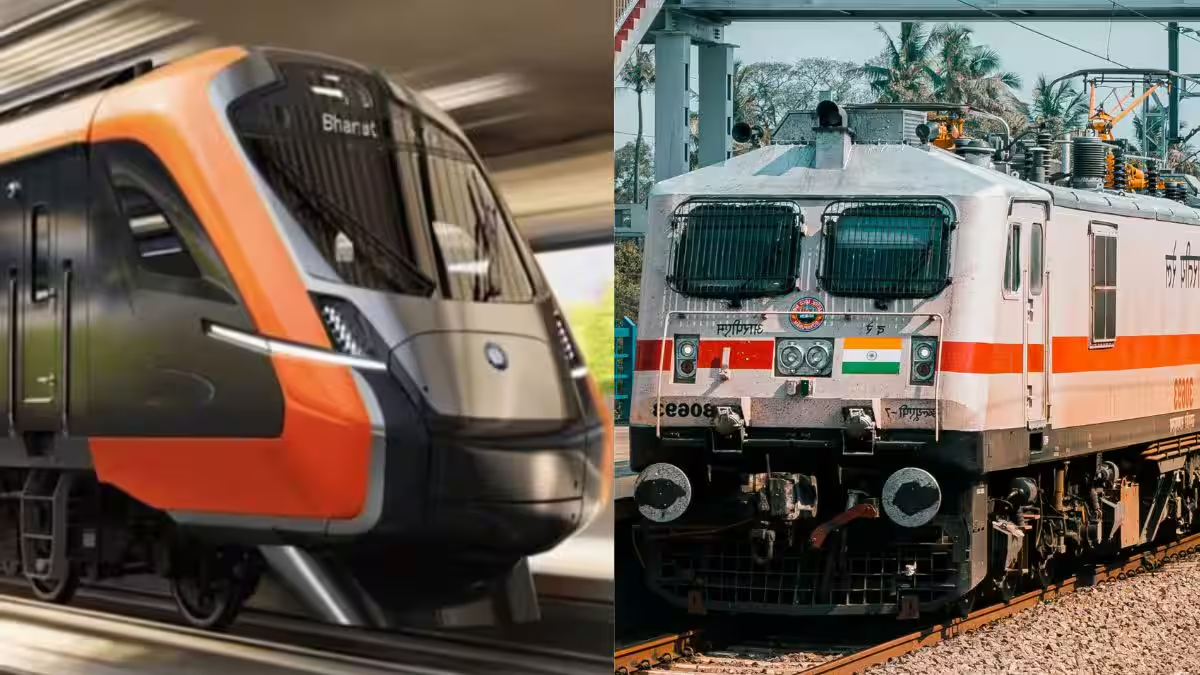
The Indian Railways has introduced a fresh era in overnight rail travel with the Vande Bharat Sleeper Express, positioning it as a premium alternative to the long-standing Rajdhani Express on major long-distance routes.
Here’s an in-depth look at how the two stack up across key dimensions of service, technology, comfort, cost, and travel experience.
1. Basics
Rajdhani Express is one of Indian Railways’ oldest and most prestigious premium overnight services, connecting New Delhi with major state capitals and large cities across India.
STORY CONTINUES BELOW THIS AD
Uses locomotive-hauled LHB (Linke Hofmann Busch) sleeper coaches in AC 1st, AC 2-tier, and AC 3-tier configurations.
Vande Bharat Sleeper Express, on the other hand, is a brand-new long-distance overnight service, built on the modern Vande Bharat electric multiple unit (EMU) platform instead of traditional locomotives.
More from Lifestyle
The most stylish harvest festivals to add to your travel plans
Davos 2026 begins today: Explore the Alpine gem beyond the World Economic Forum
It is self-propelled with driver cabins at both ends, eliminating the need for locomotive reversal and improving turnaround efficiency.
2. Speed, performance, and travel time
The typical operational speeds of Rajdhani Express trains on many routes are in the 120-130 km/h range due to track and signaling limits. Though trains can touch higher speeds on select corridors.
Travel time is established and competitive but constrained by conventional haulage and longer station halts.
Vande Bharat Sleeper Express trains are designed for speeds of up to 160 km/h in regular service, with trial runs touching 180 km/h. Distributed traction (motors across the train) allows faster acceleration and deceleration, shortening travel duration even if the top speed limit stays similar.
Quick Reads
View All
Is Japan’s Mirumi the Labubu of 2026?
This design also delivers less jerks and smoother ride quality as per Indian Railways claims.
3. Coach design and passenger comfort
Rajdhani Express uses LHB sleeper coaches, regarded as among the most stable and safe in India. AC 1st, AC 2-tier, AC 3-tier coaches feature conventional sleeper berths.
On the contrary, the Vande Bharat Sleeper Express features a modern, integrated trainset design with upgrades like enhanced berth cushioning, ergonomic ladder access, and better lighting ambience. It also has fully sealed gangways for cleaner air conditioning and less dust ingress.
STORY CONTINUES BELOW THIS AD
Its interiors use advanced materials and offer noise-mitigated cabins, while centralized monitoring system and improved suspension aim for a more comfortable overnight experience.
4. Safety
Rajdhani Express has a robust safety record with conventional systems including LHB anti-tow-over couplers and reliable braking systems.
Vande Bharat Sleeper Express includes advanced safety measures like bio-vacuum toilets, automatic doors, and an EN 45545 HL3-level fire safety standard - a high European benchmark.
Additionally, crash-worthy buffers and reinforced steel structure are part of the design. Driver cabins at both ends and centralized monitoring increase operational safety.
5. Onboard services and amenities
On Rajdhani Express, meals (veg/non-veg) and tea/snacks are included in the fare and served at the seat as part of the premium service concept. Bedding and linen are also provided for a comfortable journey.
Vande Bharat Sleeper Express features modern toilets with touch-free fittings and dedicated toilets for differently-abled passengers. Per reports, AC coaches on this train have reading lights, charging points, CCTV, and a modern passenger information system as well.
STORY CONTINUES BELOW THIS AD
Pantry facilities are modular, and services are premium-oriented - but meal inclusion in fares has not been officially confirmed in the same way as Rajdhani; food may be offered separately or as chargeable add-ons, depending on policy at launch.
This point remains under evolving operational rollout and should be checked with IRCTC/railway notices. (No authoritative source yet confirming identical meal-included policy.)
6. Reservation and fare structure
If you are travelling with Rajdhani Express, the traditional reservation allows RAC and waitlisted tickets. The fares vary by distance and class with dynamic pricing for Tatkal quotas.
However, with Vande Bharat Sleeper Express - there is no RAC - waiting list-only confirmed berths are issued from the start of reservations. Minimum chargeable distance is set at 400 km, even if the actual journey is shorter.
Preliminary base fares per km (before GST) are relatively higher than Rajdhani’s per-km pricing, reflecting its premium positioning: AC 3-tier ~₹2.4/km, AC 2-tier ~₹3.1/km, 1AC ~₹3.8/km.
Overall, Vande Bharat Sleeper fares on long routes are expected to exceed those of Rajdhani in similar classes.
STORY CONTINUES BELOW THIS AD
Final takeaway
Vande Bharat Sleeper Express represents a innovative generation of premium overnight rail travel - featuring modern trainset design, superior safety and comfort features, and a premium fare structure with confirmed reservations only. Its speed potential, comfort, and technological upgrades position it as a compelling alternative.
Rajdhani Express, meanwhile, remains a trusted, fare-competitive premium overnight service with included meals and a broader existing network.
HomeLifestyleVande Bharat sleeper train vs Rajdhani Express: Key differences explainedEnd of Article