What Carney’s visit to Beijing means for Canada-China relations – Firstpost
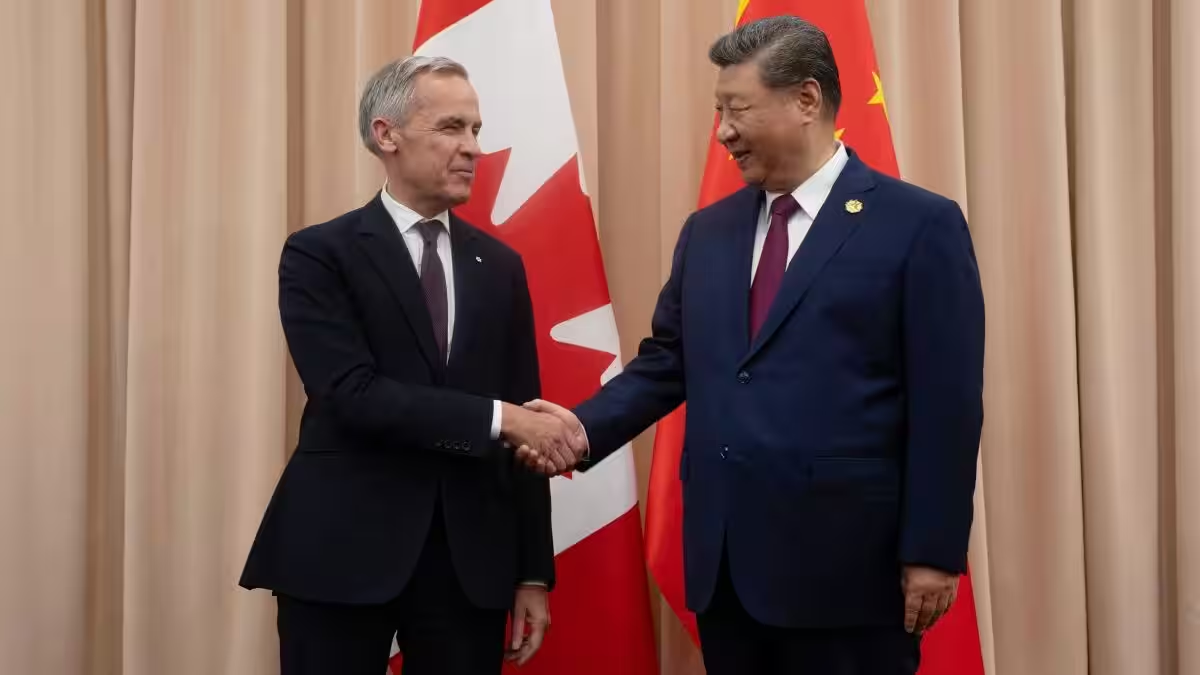
It has been more than three years since China’s Xi Jinping told Canada’s Justin Trudeau to “ create the conditions first” before the two countries could work together constructively during their awkward private exchange at the 2022 G20 summit.
Despite occasional diplomatic engagement since then, the conditions for genuine co-operation between Canada and China failed to materialize, and the relationship remained overshadowed by the Meng Wanzhou affair, the ordeal of the “Two Michaels” and disputes over foreign interference.
STORY CONTINUES BELOW THIS AD
Threats by United States President Donald Trump to make Canada a 51st state, combined with his disruptive trade policies, have forced Ottawa to re-examine the risks of excessive economic dependence on its closest ally and articulate an ambition to double Canada’s non-U.S. exports over the next decade.
More from World
As Trump sours US-Canada ties, Carney visits China to mend ties with Xi
FirstUp: Next round of India-US trade talks, Trump briefing on Iran options... The news currently
As Prime Minister Mark Carney recently put it: “Never have all your eggs in one basket. We have too many eggs in the American basket.” At the same time, China has signalled a willingness to stabilize strained relations following Carney’s election success last year.
Canada-China tariffs
Foreign Minister Anita Anand’s visit to Beijing, together with Carney and Xi’s informal meeting on the margins of the APEC summit last October, suggests that the groundwork now exists for a serious stabilization of Canada–China relations.
Carney’s visit to China this week builds on this emerging momentum.
While the visit could be positive, Canadian expectations should be realistic, since the trip marks a stabilizing process rather than a symbol of stabilized relationship.
Trade will be at the top of Carney’s agenda, particularly the Canadian push for China to lift anti-dumping duties on Canadian canola oil. Yet few should expect an immediate breakthrough. Economic sanctions are rarely undone in a single high-level meeting; more often, such visits lay the groundwork for the harder, more technical negotiations that follow.
Quick Reads
View All
Around 2,000 people killed in Iran protests, says official
India, BJP & China's CPC: When world's two biggest parties met…
Australia’s experience offers a reality check. China did not lift restrictions on Australian coal and review anti-dumping duties on barley during high-level visits; those steps came months later, following sustained diplomatic engagement after Foreign Minister Penny Wong’s trip to Beijing in late 2022.
Nor did Prime Minister Anthony Albanese’s state visit in November 2023 trigger the immediate removal of remaining tariffs on exports such as wine, red meat and live lobsters. Progress came gradually — through patience, process and persistent diplomacy.
STORY CONTINUES BELOW THIS AD
The canola dispute is different. China’s tariffs were a direct response to Ottawa’s duties on Chinese electric vehicles. In a relationship governed by reciprocity, China is unlikely to move first without a signal from Canada.
Rather than expecting immediate, tangible outcomes, this state visit is finest understood as an ice-breaking moment to encourage governments at different levels and across sectors to resume or establish dialogue. Over time, such channels can normalize working relationships and foster bilateral co-operation.
More diplomacy, no security concessions
The high-profile shift in Ottawa’s China policy places the Carney government under closer domestic scrutiny. Canadians will want to know whether this approach can advance economic interests while safeguarding national security while remaining consistent with Canada’s identity as a liberal democracy.
China, for its part, will expect Ottawa to demonstrate a sustained commitment to stabilization. All of this will unfold under the continued pressure of the American China strategy, which will continue to shape the boundaries of Canada’s policy choices.
Maintaining a balance among competing national interests has become increasingly difficult for middle powers like Canada. Yet Australia’s China policy over the past three years, characterized by “ pragmatic engagement without strategic concession,” suggests such a balance is possible.
STORY CONTINUES BELOW THIS AD
But it will require Canada to invest more heavily in effective diplomacy, rather than relying on inflammatory or performative rhetoric for domestic political gain.
It means favouring neutral, precise language over emotive labelling when responding to Chinese actions. It also demands strong leadership from Carney: centralizing message discipline, enforcing cabinet coherence on China policy and reducing the risk that domestic political point-scoring spills into the diplomatic realm.
Ottawa should also use re-established communication channels as the primary venue for managing disagreements. These mechanisms can support incremental, negotiated solutions to specific disputes, rather than an over-reliance on public pressure and symbolic gestures.
‘Stabilization with continuity’
A shift in diplomatic approach does not imply a retreat from Canada’s core strategic commitments. The Carney government can and should reaffirm that stabilizing its relationship with China is compatible with maintaining robust national security and democratic values.
This requires embedding China policy within Canada’s broader Indo-Pacific strategy rather than treating it as a bilateral exception. It also involves deepening security co-operation with regional partners to guide foster an environment where states are not forced to choose between either the United States or China.
At home, Canada should continue to strengthen institutional safeguards against foreign interference, pairing them with transparent public communication that demonstrates the government’s confidence in institutions and avoids doubling down on any public anxiety about China.
STORY CONTINUES BELOW THIS AD
Ultimately, Canada’s China policy after Carney’s visit should be one of stabilization with continuity, making clear that engagement is being pursued from a position of institutional strength, not strategic accommodation.
Follow Firstpost on Google. Get insightfulexplainers, sharpopinions, and in-depthlatest reports on everything from geopolitics and diplomacy toWorld News. Stay informed with the latest perspectives only on Firstpost.TagsCanada ChinaHomeWorldWhat Carney’s visit to Beijing means for Canada-China relationsEnd of Article