This as-told-to essay is based on a conversation with Natalia Molina, a 29-year-old marketing professional based in South Florida. It’s been edited for length and clarity.
I didn’t know if moving back in with my parents in Florida was the right decision, but it came to a point where it felt like the only one.
In 2023, I was living in San Diego when I burned out at my social media job and left without a backup plan — not realizing how difficult the job market had become. Over the next year, I accumulated $30,000 in credit card debt while struggling to find a full-time job.
The first two months of living with my parents were isolating, and I honestly felt like a failure. I felt like I had blown up my life and gone back to square one. But, a year later, I’m healthier than ever, and I’m on track to be debt-free by the end of the year. There are still some discomforts living at home, but it’s worth the sacrifices.
I lived in San Diego for 2 years, but struggled to make ends meet
I was born and raised in Florida. After graduating from college in 2022, I got hired for a fully remote social media manager job and saw it as the perfect opportunity to move to San Diego, a place I had always loved. I wasn’t sure if it would be my forever place, but I wanted to experience some new place.
I loved everything about San Diego: the weather, the people. I really felt like I was building a life for myself out there, but my job wasn’t right for me. Within a year, I completely burned out and left the job. I kind of screwed myself because I assumed I’d be able to find a new job quickly.
I eventually found a part-time receptionist job, but in late 2024, I felt like I was drowning financially.
I was scared to move back home, but my parents were supportive
It was such a big deal for me to move to San Diego by myself, so I was scared of coming back and facing potential judgment from people in my hometown or on social media, seeing that I was back.
Related stories
Business Insider tells the innovative stories you want to know
I spent a lot of time questioning my decision and doubting myself, but it felt like the only way to get back on my feet.
My parents were super supportive of my decision to move home, and I’m so grateful for them. Since moving back, they haven’t asked me to pay rent or groceries because they want me to put every penny towards paying off my debt. I have a husky who sheds a lot, so the only thing they asked of me is to make sure she’s groomed monthly and that I keep the house clean.
The first 2 months were rough, but I found a community to help me through it
Most of the people I knew in my hometown have moved away, so I felt very isolated when I first came back. I remember telling myself that it’s okay because “I’m just going to go ‘hermit-mode’ and focus on myself.” I quickly realized that mindset only made me feel lonelier.
When I lived in San Diego, I really had to put myself out there to make friends, so I decided to apply the same approach in Florida. I looked for social clubs online and found a women’s social club that hosts dinners all throughout South Florida.
I started consistently going to those dinners, and it was one of my best decisions ever. I’ve made some really great friends who I’m still friends with today. The dinners were kind of expensive, but I saw them as an investment in a new community.
I landed a great job, focused on my health, and paid off $27,000 in debt
When I first moved back, I wasn’t actively applying for full-time jobs, but a few months later, I came across a hybrid social media management job in my area. I applied and got hired. I love it. Since then, I’ve paid off over $27,000 in debt.
I’m also finally investing in my health. In San Diego, I was so focused on surviving that I didn’t have the energy or mental capacity to focus on my health. I was stressed, gaining weight, and emotionally eating, and it took a toll on me. I feel like moving home allowed me to hit the reset button.
Everything started feeling like it was working in a positive direction, and I finally felt like maybe I had made the right decision by coming home.
It can be chaotic, but it’s worth the discomfort
My dating life has taken a hit. It’s partially because I’ve been focusing on myself more, but also because living with my parents just makes it a little bit harder.
They try their best to respect my privacy, but it doesn’t help when a guy gives me flowers or something, and my parents ask, “Oh, who is that from?” When they ask, I might say, “I’m not ready to talk about it yet.” It just doesn’t feel like the right time to date.
I have my own room, but I don’t really have my own true space or independence. It can be chaotic here, and I don’t have a say over little things like how clean the house stays, but it’s worth the discomfort.
I’m making some sacrifices now to set myself up for the future
My biggest goal right now is to build financial independence. I’m on track to be debt-free by the end of the year, and my plan is to move to my own place in the area in early 2026.
Moving home has taught me the importance of allowing myself to be held by other people when I’m going through something difficult. I’ve let myself be held by my family financially and my friends emotionally. They’re the only reason I’ve been able to make it through this.
But this is also something I’ve done for myself. I picked up my entire life from what felt like rock bottom and transformed in so many ways. It makes me feel like I can overcome anything.
Do you have a story to share about moving back in with family? If so, please reach out to the reporter at [email protected].
The Wall Street bull market got a fresh boost at the end of a month marked by volatility, as optimism over corporate profits overcame fears of concentrated gains in giant tech stocks. After a temporary pause in the rise of the Standard & Poor’s 500 (S&P 500), which added nearly $17 trillion to the market value, the index rose with support from strong expectations for Amazon and Apple. Not all major company stocks posted gains on Friday, however, as Apple’s stock momentum waned following a decline in its sales in China, which limited enthusiasm for the upcoming holiday season. Bonds stabilized after a wave of selling that followed the Federal Reserve meeting, while the dollar rose. Confidence Test Traders faced complex factors in October ranging from geopolitical and trade risks to the US government shutdown and high stock valuations. But confidence in American companies and the bet on lower interest rates continue to fuel the momentum. Nationwide’s Mark Hackett said the month tested the strength of investor optimism amid trade, monetary policy and earnings news, adding: “There is growing skepticism about the extent of the equity rally, but many see it as just another argument from pessimists whose previous justifications have mostly faded. Most indicators continue to support a strong market through the end of the year.” The “S&P 500” has risen 40% since April. Since the April declines, the Standard & Poor’s 500 index has rallied about 40%, recording the longest streak of monthly gains since 2021. As for the “Nasdaq 100” index, which rose for 7 consecutive months, it achieved the longest streak of gains in eight years, supported by the strength of companies and optimism of investors. artificial intelligence. The Standard & Poor’s 500 rose to about 6,840 points, and the “Big Seven” index rose 1.2% on Friday, while Amazon shares rose about 10%. Fed tends to hold back on rate cuts Bond market gains stalled in October after Federal Reserve Chairman Jerome Powell played down the possibility of a December rate cut, and some officials signaled they did not support a rate cut this week. The dollar recorded its best monthly performance since July. Oil gains eased on Friday after US President Donald Trump denied he was considering launching a military attack on Venezuela. Trump: I have not made a decision to launch strikes on Venezuela. Number of rising stocks Despite the general positive atmosphere for stocks, fears have emerged about the small number of stocks participating in the rally, which could threaten its continuity in the short term. “The widening gap in participation in the market rally suggests that only some stocks are benefiting from the gains in the current period, while others are being left empty-handed,” said Piper Sandler’s Craig Johnson. He added that the best risk and return opportunities lie in buying on dips within the current bullish cycle. High valuation and bubble fears November historically marks the start of the best six months for US stocks all year, but the question is whether year-end gains have already been priced in after one of the S&P 500’s longest bull runs since the 1950s. How is the AI stock boom responding? After one of the fastest recovery periods in the history of markets, the index trades at 23 times expected earnings, which is well above the average of the past two decades. In a warning sign, investor Michael Berry, previously known for betting against the US housing market, posted a cryptic tweet saying: “Sometimes we see bubbles, sometimes something can be done about them, and sometimes the only winning move is not to participate.” Strong seasonal performance for US stocks. Despite this, earnings results remain the focus of investors’ attention, as more than 60% of Standard & Poor’s 500 companies reported their results, and most of them exceeded estimates. Hackett noted that the market is now entering its seasonal best two months of the year, with the average return during the last two months of the year reaching 3.3% since 1950. “We are in the seasonally strongest quarter, so we are seizing opportunities to buy on dips,” said Thomas Lee of Fundstrat Global Advisors. “There are many sectors recording growth of more than 10%, which proves that the story is not only about artificial intelligence, but about the ability of companies that are American and multinational countries to achieve strong profits.” Flows remain supportive of stocks, as global stocks attracted $17.2 billion in the week ended Oct. 29, according to Bank of America data. Analyst Michael Hartnett said the lead in artificial intelligence stocks “will not go down right now.” Artificial intelligence stocks are taking the wheel of the market. Mark Haefele of UBS Global Wealth Management said: “We reaffirm our belief that artificial intelligence companies will lead stock performance in the coming period, and accordingly recommend that investors add positions through various strategies.” Why are fears of a trillion-dollar artificial intelligence bubble rising? Ryan Grabinski of Strategas noted that the word “AI” is increasingly appearing in corporate speech, adding that his previous concerns about a slowdown in investment spending have “faded” and that “investment activity remains strong for at least another quarter,” noting that “AI spending is now expanding into sectors beyond technology, creating broader opportunities and improving market diversification.” The Standard & Poor’s 500 index has risen by around 16% since the beginning of the year. According to Jay Keppel of SentimentTrader, gains of more than 10% between January and October have historically paved the way for positive results during the following two months with an 86% success rate. “History points to favorable opportunities, but investors must allocate capital wisely and prepare for the possibility of changing trends and keep up with them,” Keppel said. Focus on bullish stocks With markets hovering near record highs, led by a handful of large stocks, Wolfe Research’s Chris Sniak wonders if the performance will expand to include more stocks. Although the valuations of mid-cap stocks remain at their historical average, the weak growth in their profits in recent years suggests that the leadership of large stocks will continue until the end of the year. “As long as the AI spending story remains a key market driver, and as money continues to flow into larger companies, these stocks will remain favorites,” said Wolf Research’s Chris Sinek. “The market will only widen when there is a sustained improvement in small- and mid-cap fundamentals and earnings.” Growth stocks continue to outperform value stocks. “The bull run driven by technology stocks continues to advance steadily, as markets rise in an increasingly concentrated manner,” said Florian Ilbo of Lombard Odier Asset Management. He added: “The profitability of US technology companies is not only strong, but improving, an indication of flexibility that many did not expect.” He pointed out that the Standard & Poor’s 500 and Nasdaq indexes currently dominate the growth stock category, while value stocks have fallen and lost their superiority since the beginning of the year. Despite the higher valuations of growth stocks compared to value stocks, Jeremiah Buckley of Janus Henderson Investors believes that the situation is different from the bubble of 2000, as current valuations are based on strong fundamentals, as the profitability gap between the growth and value indices has widened in a way that justifies the gap in valuation. He added: “Since 2002, the price-to-book ratio has risen in parallel with the rise in return on equity, whereas in the 2000 bubble, valuations inflated without fundamental support. The situation today is completely different.”

America’s visa system is a labyrinth that Priyanka Kulkarni, a 34-year-old machine learning scientist, knows all too well. After spending nine years on a visa, she’s now using artificial intelligence to help people find the path to employment-based immigration.
Her startup, Casium, sells employers a portal to run visa cases end-to-end, replacing the Excel spreadsheets and, in many instances, the outside law firms that they usually rely on.
It’s a product built for the rapidly changing landscape of employment immigration. Immigration policy has swung in recent months, culminating in the Trump administration’s surprise executive order requiring companies to pay a $100,000 fee for each new H-1B application. While some companies welcomed the change, the move also sent employers scrambling and sparked lawsuits from business groups and the US Chamber of Commerce.
Casium’s bet is that a tech-first approach can bring speed and transparency to a system that’s often beset with delays and confusion.
The company says it has assisted hundreds of candidates through assessments, compliance reviews, and actual filings, citing an “exceptionally high approval rate.” In several cases, founders who hired Casium went from intake to on-the-job start in under a month, Kulkarni says.
Investors are on board. In recent months, Casium, founded in 2024, secured $5 million in a seed funding round led by Maverick Ventures, with participation from the AI2 Incubator, GTMfund, Success Venture Partners, and angel investor Jake Heller, whose startup Casetext was acquired by Thomson Reuters in 2023. The company declined to share its valuation.
An agent approach to immigration
Casium employees.
Casium
Here’s how it works. A candidate fills out an intake form. Then, Kulkarni said, a swarm of “agents” — software that can execute tasks autonomously — scours public data such as scholarly journals and patents to learn about the candidate.
Within minutes, she said, Casium generates a dossier. The company then routes the report to a pool of independent, licensed lawyers and paralegals contracting with Casium.
Related stories
Business Insider tells the innovative stories you want to know
A legal professional recommends the most suitable visa based on the report. H-1B, O-1, and EB-1A are among its most commonly issued employment-based visas.
One click, Kulkarni said, produces a draft attorney letter laying out the candidate’s eligibility.
Kulkarni said his tech shrinks the time it takes to gather the paperwork for an application — from three to six months working with a traditional law firm to less than 10 business days — and helps catch errors, which could help more candidates sail through the process.
Casium offers initial assessments for free and charges a flat fee for filings based on visa type and case complexity. It declined to specify the price. Kulkarni says the company is also developing a subscription model to give employers more options for ongoing support.
Venture money is piling up behind the bet that software can steer people through the immigration maze. Parley sells drafting and filing tools to immigration law firms. OpenLaw is building a marketplace to match clients and lawyers, including immigration attorneys.
Closest to Casium are Manifest Law and Plymouth, which similarly use technology to help employers hire and retain international talent. Boundless, another lawyer-plus-software hybrid, has raised more than $50 million in funding to date, according to the company.
The pitch is seductive, but the risks are also concrete. Employers will weigh a lawyer’s track record on specific visa types against a startup’s black-box automation. To be fair, startups already own big slices of the human resources stack, from recruiting to benefits to payroll. In that light, Kulkarni argues that immigration is simply the last, high-stakes workflow to be digitized.
Firsthand experience
Born and raised in India, Kulkarni was hired straight out of college to join Microsoft. There, she spent nearly a decade as a machine learning scientist, helping to shape AI strategy for enterprise products like Office. She did it on an H-1B visa. The visa is awarded by lottery and tied to one employer, a setup that can make workers anxious about layoffs and hesitant to switch jobs because a new sponsor isn’t guaranteed.
“Honestly, it was exhausting, confusing, and at times can feel very career-limiting,” Kulkarni said.
United States Citizenship and Immigration Services and Microsoft did not respond to requests for comment from Business Insider.
Kulkarni had long wanted to start a company, and when the AI2 Incubator in Seattle offered her a spot in its 2024 cohort, she applied for an EB-1 visa, also known as the “Einstein visa” for foreign nationals with extraordinary abilities. She worked with a law firm for three months to wrangle the paperwork.
On her first day, when a managing director asked what she wanted to build, she didn’t hesitate to say immigration tech. “Everything I’ve done,” she said, “has culminated to this point.”
Have a guy? Contact this reporter via email at [email protected] or Signal at @MeliaRussell.01. Use a personal email address and a non-work device; here’s our guide to sharing information securely.
Spooky season is upon us, and some of the best streaming services we’ve tested carry impressive selections of both classic and recent horror movies. Michael Myers, Valak, and the Babadook are all available for a scare this Halloween, thanks to streaming apps like Peacock, Paramount Plus, HBO Max, Prime Video, Disney Plus, Hulu, and Shudder.
The best horror-friendly streaming services offer a mix of can’t-miss classics and new releases. While there’s occasionally some overlap between streaming catalogs, especially for older movies that have less exclusive licensing agreements, many services hold sole streaming rights for movies, so they’re the only place you can watch a movie without having to rent or buy it.
Whether you’re looking to go retro with “The Exorcist” and “Halloween” or you’re hoping to get lost in the latest films from “The Conjuring” universe, there’s an app for every kind of horror movie fan. We’ve broken down everything you need to know about some of our favorite horror-friendly streamers and highlighted the best scary movies you can find on them. All of these services also offer some spooky television options.
Peacock
Ryan Green/Universal Pictures
NBCUniversal’s streaming service might be best known for Sunday Night Football, NBC sitcom reruns, and Bravo binge-watching, but the app also carries a surprising number of horror hits. Peacock typically gives Universal films their streaming debut, so Universal monsters often find a home there after their theatrical releases (although they don’t always remain there indefinitely).
Peacock currently hosts a selection of films from “The Purge” franchise, multiple “Halloween” installments, the “Terrifier” movies, the first four “Scream” films, the three original “Friday the 13th” movies, and several films from “The Texas Chainsaw Massacre” franchise, including the 1974 original. The streamer’s “Halloween Horror 2025” collection also includes playlists of Halloween specials from hit TV shows, so you can catch every “Brooklyn Nine-Nine” Halloween Heist in one place.
Peacock is a convenient streaming source for hit NBC TV shows, Universal movies, and select sports like Sunday Night Football. The service also carries its own slate of original programming.
Paramount Plus
Brownie Harris/Paramount Pictures
Paramount Plus is another stealth horror streamer with an impressive collection of both horror classics and more recent releases. Most notably, the streamer hosts the full “Scream” franchise, including the two most recent installments, the entire “Friday the 13th” series, all three “A Quiet Place” movies, and the original “I Know What You Did Last Summer.”
The rest of the app’s horror movie offerings tend to be one-off gems, like “The Fly,” “American Psycho,” “Cloverfield,” and “Annihilation” (which leans more sci-fi speculative with scary moments than straight horror). The service also has a fair number of spooky TV shows, including “Evil” and Showtime programs like “Yellowjackets” and “Penny Dreadful” (although you’ll need to be subscribed to the ad-free Premium tier for Showtime access).
Paramount Plus is perfect for viewers who want to stream CBS TV shows, local NFL games, and tons of content from Nickelodeon, Comedy Central, BET, and MTV. And if you get the premium tier you can also unlock ad-free streaming and access to Showtime.
Disney Plus and Hulu
Matt Kennedy
We’re going to cheat here and recommend a bundle, but only because subscribing to both services together costs just $1 a month more than just signing up for one by itself, and they cover a range of spooky movies and TV shows when combined. The Disney Plus and Hulu bundle brings together adult-focused horror from Hulu (including “The Village,” “The Cabin in the Woods,” “Longlegs,” and “Jennifer’s Body”) and slightly family-friendlier Halloween tales on Disney Plus (the “Hocus Pocus” franchise and “The Nightmare Before Christmas” for younger kids, and the “Goosebumps” series for teens).
One of the best features of the bundle is that you can stream most Hulu content on the Disney Plus app, so you don’t need to keep going back and forth between the two. Yes, that means you can technically stream “Saw” on Disney Plus if you’re into that, but you can also set some parental controls to keep little ones from stumbling across Jigsaw. If you’d prefer to stay in the Hulu app, the “Huluween” page gathers all of the streamer’s best horror offerings in one place, along with a playlist of classic Halloween sitcom episodes.
There’s a huge double-saving on these two bundled popular ad-supported streaming platforms. The plan offers all content from both Hulu and Disney Plus at a fraction of what it would cost to pay for them separately.
HBO Max
Eli Adé/Warner Bros.
Warner Bros. has maintained its status as a big-hitter in the horror film industry, so its streaming counterpart, HBO Maxis a must-have for scary movie lovers. This year alone, the app has been the home of can’t-miss new horror movies such as “Sinners” and “Weapons.”
Just as solid as HBO Max’s new horror acquisitions is the streaming service’s deep catalog of classics, such as “The Exorcist,” “Poltergeist,” “A Nightmare on Elm Street,” and “The Shining.” The streamer also houses A24’s collection of films, so “Hereditary,” “The Witch,” and “Talk To Me” are all available in one place. More recent but nevertheless classic horror franchises like “The Conjuring,” “Insidious,” and “It” are also available, with the streamer’s “Face Your Demons” page offering its full lineup of scary movies in one place.
HBO Max is a premium service for fans of prestige television, iconic films, and unscripted programs like Game of Thrones, Harry Potter, Succession, House of the Dragon, The Last of Us, and more. The ad-supported tier is $10.99 a month, but you can upgrade to ad-free for $18.49 or view your programming in 4K for $22.99.
Prime Video
Aidan Monaghan/Focus Features
Prime Video hosts an impressive selection of horror films, ranging from licensed classics to original productions. “Nosferatu, “Smile 2,” and “Companion” are some of the newer horror flicks to hit the streamer this year, but you’ll also find familiar hits like “Dracula” and “Jeepers Creepers” in the massive library. Prime Video has even begun to dip its toes into horror as part of its growing foray into original films distributed via Amazon Studios, including “Nanny,” “Master,” and the Naomi Watts-helmed “Goodnight Mommy” remake.
There are also some older horror-friendly TV shows on the service, like “Hannibal” and “The Twilight Zone.” Plus, if you can’t find a movie on demand on any major streaming services, you’ll likely still be able to rent or buy it through Prime Video.
Amazon Prime Video is a capable, competitive streaming service that’s more than just a Prime membership perk. You can also sign up for a stand-alone plan at $9/month.
Shudder
Shudder / IFC Films
No horror movie streaming list is complete without including Shudderan app created specifically for horror films. The streaming service offers enough mainstream horror flicks to attract the casual viewer, including the original “Halloween” and “The Evil Dead,” but it excels most with its selection of under-the-radar films that might not ever find a home on more mainstream services.
Indie horror movies that generate buzz, like the 2022 word-of-mouth experimental sensation “Skinamarink” and the 2019 Guatemalan folk horror “La Llorona,” will often find their way to Shudder. The service has its own collection of originals, including hits like “Late Night with the Devil,” “Host,” and installments from the “V/H/S” anthology franchise.
Shudder is a streaming service that gives users unlimited access to the largest collection of uncut and ad-free thriller, suspense, and horror films.
Lillian Brown
Senior Associate Editor of Streaming
Lillian Brown is the Senior Associate Editor of Streaming at Business Insider. A lifelong entertainment and media buff, she specializes in helping you find how to watch your favorite shows, movies, and sporting events.ExperienceLillian has been writing about entertainment, sports, TV, and film for over six years, starting her career in the Living/Arts department of The Boston Globe. She went on to write entertainment features, roundups, and conduct celebrity interviews for publications like Vulture, TV Guide, Esquire, myand The Daily Beast before joining Business Insider as a streaming specialist on the Reviews team.In her current role, she writes about everything from finding the right VPN for watching overseas soccer games to choosing between the endless number of streaming services out there. When she’s not writing, she’s editing stories from freelancers or fellow Reviews team members. Lillian is also an expert deal hunter. She loves the thrill of sharing an amazing discount with readers, whether it be on her favorite streaming services or on products she knows our team loves and recommends. She plays an active role in writing about sales and deals for the Reviews team.Why you can trust LillianWhether she’s testing streaming platform interfaces or actively comparing channel offerings between services, Lillian always has her finger on the pulse of what’s new in entertainment. She has tested almost every streaming service and is an expert when it comes to VPNs. She is the first person to know when a streaming service has changed its price, and whether or not it’s still worth paying for. As a sports fan, she also knows exactly where the next big playoff game is streaming, what time it starts, and where they’re playing. Expertise
Streaming services
How to watch your favorite films, TV, sports
VPN services for legal streaming
Deals
Outside of workMost of the time, you can find Lillian watching a horror movie, WNBA game, or long-distance running. She is located in Boston.
This story is available exclusively to Business Insider subscribers. Become an Insider and start reading now. Do you have an account? .
Business Insider asked hairstylists about the popular trends their male clients are loving.
Younger men are all about the modern mullet and broccoli cuts.
For a more polished look, clients are loving faded sides with a textured, messy top.
The change of season is a great time to freshen up your look, whether you’re in the market for a new outfit or a new hairstyle.
That’s why Business Insider asked hairstylists and barbers which trendy haircuts and styles their male clients are asking for the most. Here’s what they said.
The modern mullet is in.
The modern mullet has clean, faded sides and a longer, textured back. Francis Catanese
Francis Catanese, a senior stylist at Julien Farel Salon and Spa in New York City, said his clients are into the modern mullet, which has clean, faded sides and a longer, textured back.
“Men love the modern mullet because it combines retro flair with a bold, updated twist that stands out without feeling over-the-top,” Catanese told BI.
The modern mullet offers a rebellious yet stylish look that’s surprisingly versatile.
Younger clients love the “broccoli cut.”
The broccoli cut features a curly or heavily textured, rounded top with a tight taper or fade on the sides. SolStock/Getty Images
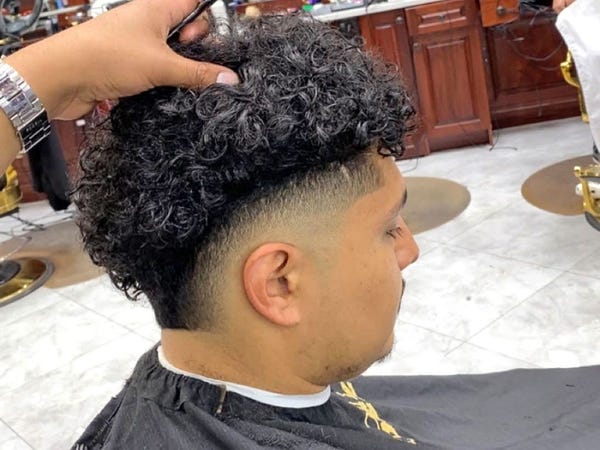
Samantha Lawrence, owner of Chromatique Salon in Washington, told BI that Gen Z clients favor the “broccoli cut,” which features a curly or heavily textured, rounded top with a tight taper or fade on the sides.
“This cut is playful, fashion-driven, and makes a strong statement without requiring a lot of daily styling. The contrast between structure and texture gives it wide appeal,” she said.
For a more polished look, men are loving faded sides with a textured, messy top.
A textured, messy top can be styled to feel effortless and undone. Samantha Lawrence
According to Lawrence, her clients are loving “tightly faded sides that lead into a tousled, dimensional top.” She said this cut can be styled to feel effortless and undone, and is versatile enough to work across different hair types and textures.
Lawrence told BI it’s popular among professionals who want a low-maintenance style that “feels current and cool.”
Men looking for an effortless look are opting for soft layers with natural texture.
Soft layers work well on wavy hair. Gabby Fishman
Gabby Fishman, a hairstylist at Arté Salon in New York City, told BI her clients have been liking the soft layered look.
“Clients love this look because it feels masculine without being overly styled, and it grows in really well with little maintenance between appointments,” Fishman said.
She said the style works well with naturally textured hair types, especially wavy hair.
Clients love the burst fade for its flexibility.
The burst fade is a short or bald cut near the ear that fades into a longer top and back. Elvis Amezquita
Elvis Amezquita, a barber manager at Famous Fadez in Illinois, told BI that men who love a style with some flexibility are opting for the burst fade — a short or bald cut near the ear that fades into longer hair towards the top and back.
“The burst fade is flexible with many hair textures and is normally less maintenance compared to longer hairstyles,” Amezquita said.
The slick back is the perfect combination of classic and modern.
The slick back offers a clean, stylish look. 1shot Production/Getty Images
According to Amezquita, another popular style combines a tapered back and sides with a slicked-back top to achieve a smooth appearance.
This cut offers a stylish and clean look, especially around the ears, neck, and forehead.
“The slick back offers a smooth, controlled top, while the taper keeps the sides clean, giving a sharp, professional, and stylish appearance,” Amezquita told BI.
When Adam Caller, the owner of Tutors International, posted a job listing last week for a tutor for a one-year-old, he didn’t expect it to go viral. The job pays £180,000, or $240,000, but he had advertised roles before that pay considerably more.
“What has grabbed the press’s attention here is not the amount of money, but it’s the fact that it’s a one-year-old,” he told Business Insider.
The listing, published in the Times Educational Supplement on October 17, was placed on behalf of a wealthy international family based in London. The family is seeking an experienced tutor to prepare their baby for elite schools like Eton or Harrow — and to help him become the perfect “English gentleman.”
According to the listing, the family is looking for someone who can begin “immersing the child in British culture, values, and subtleties before any cultural bias takes hold.”
It says the child’s education should include learning about old-money sports like tennis, polo, and rowing, listening to classical music, and visiting art galleries and theaters.
The family provided their older child with a private tutor from the age of five, the listing said, which the parents felt was “too late to achieve their goal, hence their search for a tutor now.”
‘People don’t like the idea that money buys privilege’
The listing was widely covered in the British media, but Callersaid the fiercest criticisms came from anonymous commenters in the parenting forum Mumsnet. In these forums, commenters expressed disbelief, mostly at the prospective student’s age.
But Caller’s view is simple: “It’s never too early.”
Related stories
Business Insider tells the innovative stories you want to know
Caller said he is used to the criticism after spending more than two decades in the high-end tutoring industry. He founded Tutors International in 1999, which is based in Oxford, and now fills about 15 to 20 tutoring jobs a year for affluent clients around the world.
“I understand that people don’t like the idea that money buys privilege,” he said.
He added, “I know that what we offer is not just an elitist thing — it’s the elitist end of the elitist thing.”
Adam Caller, the founder and CEO of Tutors International.
Courtesy of Adam Caller
Ultra-high-net-worth parents, he said, are often eager to give their child the “subtle advantages” that will set them up for a life of hunting trips, glitzy balls, and mixing in the upper echelons of British society.
Although in the first few months, “the kid will be mostly asleep and lying on his back and gargling and burbling,” Caller said the child will still be learning by example from a suitable role model.
“Somewhere between the age of one and two, he’s going to become verbal,” he said. And when he does, they want him to sound like — and have the mannerisms of — a British gentleman.
Caller said that many of his foreign clients view a Received Pronunciation accent, like the one King Charles III has, to sound more educated and worldly. “It just has more authority in business and so on,” he said.
The ideal candidate
The listing seems to have done the job. Caller said it has attracted an “outstanding application field.”
At the time of reporting, the job had received 141 applications, according to screenshots of the application page Caller sent to Business Insider. Caller said he plans to ask for references from about 10% of them, with a handful standing out as exceptional candidates.
Nor for the ideal candidate?
They’re well-educated, cultured, and articulate. They attended elite British schools and universities, and were raised in what the job listing describes as a “socially appropriate background.”
They are also “fit, healthy and a non-smoker — active and energetic with a love for the outdoors,” the listing stipulates.
Even for the six-figure salary — nearly five times the average UK salary of about £38,000 — Caller said it’s modest by Tutors International standards. A recent role offered close to £250,000, he said.
For his billionaire and millionaire clients, he said the cost is negligible: “That’s nothing compared to what you spent to refuel your yacht. It’s nothing compared to the issues of replacing your jet or managing houses in five different countries.”
He continued, “Children are more important to a family than yachts and houses and planes and cars, and so on.”
Caller said he’d have liked to tone down the phrasing of the listing — it was a “little over the top,” he said — but the clients were adamant about the wording.
But their desire to set their baby up for success early — and to build him into a gentleman — is far from unique in the world of ultrawealthy parents.
“This is a common request,” Caller said, “and it’s global.”
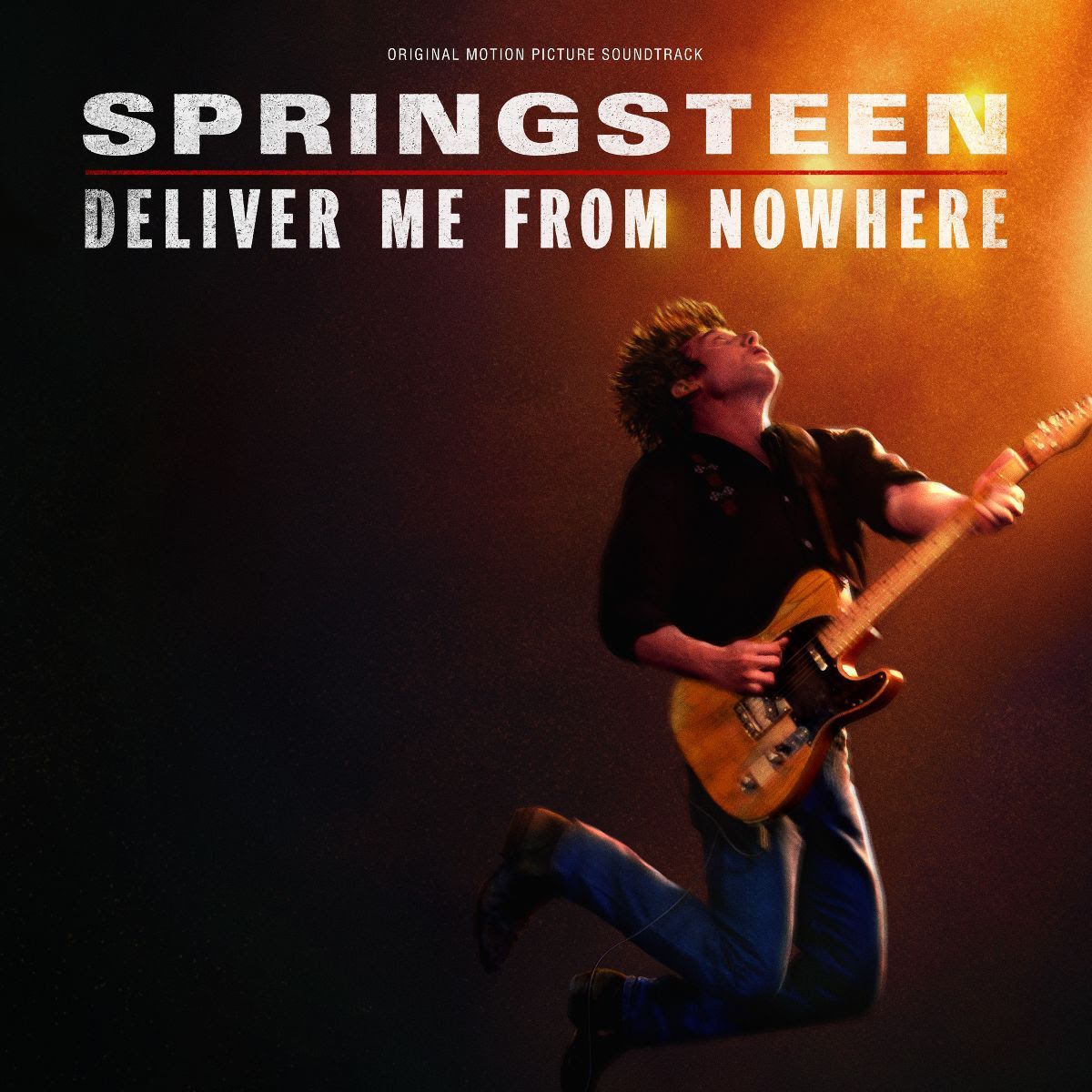
Columbia Records and 20th Century Studios have announced the soundtrack album for Springsteen: Deliver Me From Nowhere. The soundtrack is out December 5, and it finds the film’s star, Jeremy Allen White, covering classic songs by Bruce Springsteen. See the tracklist below.
Springsteen: Deliver Me From Nowhere centers on the making of Springsteen’s Nebraskaso the soundtrack finds White playing tracks from the iconic 1982 album. He does not, however, cover the full album, missing out on “Johnny 99,” “Used Cars,” and “Open All Night.” Instead, the soundtrack album includes two hits from Springsteen’s Nebraska successor, Born in the USA: the title song and “I’m on Fire.” It also closes with covers of two songs that Springsteen and the E Street Band are known to favor—Little Richard’s “Lucille” and John Lee Hooker’s “Boom Boom”—and one that the Boss has never performed publicly, Screamin’ Jay Hawkins’ “I Put a Spell on You.”
Dave Cobb produced Springsteen: Deliver Me From Nowhere (Original Motion Picture Soundtrack). The album includes additional contributions from Jay Buchanan, Aksel Coe, Bobby Emmett, and Greta Van Fleet’s Jake and Sam F. Kiszka.
Springsteen: Deliver Me From Nowhere is out widely in US theaters this Friday, October 24. It stars Jeremy Allen White as Bruce Springsteen and Jeremy Strong as the musician’s manager, Jon Landau.
It’s now two straight years that Columbia Records has released a soundtrack album that finds a movie star covering the music of a classic American artist. To go with the Bob Dylan film A Complete Unknownthe label shared a soundtrack featuring Timothée Chalamet’s versions of “Mr. Tambourine Man,” “Subterranean Homesick Blues,” “Like a Rolling Stone,” and more.
All products featured on Pitchfork are independently selected by our editors. However, when you buy something through our retail links, we may earn an affiliate commission.
Jeremy Allen White: Springsteen: Deliver Me From Nowhere (Original Motion Picture Soundtrack)
Springsteen: Deliver Me From Nowhere (Original Motion Picture Soundtrack):
01 Jeremy Allen White: “Born in the USA (Power Station)” 02 Jeremy Allen White: “Nebraska” 03 Jeremy Allen White: “Atlantic City” 04 Jeremy Allen White: “Mansion on the Hill” 05 Jeremy Allen White: “Highway Patrolman” 06 Jeremy Allen White: “State Trooper” 07 Jeremy Allen White: “My Father’s House” 08 Jeremy Allen White: “Reason to Believe” 09 Jeremy Allen White: “I’m on Fire” 10 Jay Buchanan / Jake Kiszka / Sam F. Kiszka / Aksel Coe / Bobby Emmett / Jeremy Allen White: “Lucille” 11 Jay Buchanan / Jake Kiszka / Sam F. Kiszka / Aksel Coe / Bobby Emmett / Jeremy Allen White: “Boom Boom” 12 Jay Buchanan / Jake Kiszka / Sam F. Kiszka / Aksel Coe / Bobby Emmett: “I Put a Spell on You”
On Friday morning, on Medium, the blogging platform of choice for all presidential candidates, Democratic presidential candidate Elizabeth Warren debuted a plan to “break up Big Tech.” Silicon Valley, she writeshas “too much power — too much power over our economy, our society, and our democracy.” The problem? Not enough competition. Taking a page from the “hipster antitrust” movementWarren bemoans the “weak antitrust enforcement” that’s allowed tech megaplatforms to accumulate power without having “to compete as aggressively in key areas like protecting our privacy.”
But she’s got a plan to change all that. Warren’s proposal centers around what she believes have been two major obstacles to healthy market competition in Silicon Valley: (1) that mergers like Facebook’s acquisition of Instagram in 2012 have limited competition in the tech industry; and (2) those platforms that own “proprietary marketplaces,” like Amazon or the App Store, can also participate in those marketplaces, giving them intense competitive advantages.
To combat the first, Warren would appoint regulators charged with “reversing illegal and anti-competitive tech mergers” (and, no doubt, preventing new ones). To address the second, Warren would propose legislation that would designate tech platforms with a total global annual revenue of $90 million or more as “platform utilities,” subject to specific regulations. Once they reached revenues of $25 billion or more, they would no longer be able to participate in the marketplaces they own. (For example, Amazon would be obliged to spin off Amazon Basics.)
It’s an aggressive proposal, to say the least, and the first of its kind in the presidential race. Max Read and Brian Feldman, two of Intelligencer’s technology writers, read through the proposal and detailed their reactions to some of its more interesting ideas.
Max: I like the idea of ensuring that businesses of a certain size are subject to specific regulations.
Brian: Yeah, I think that’s right. I’m not an expert on what metric to use to measure a company’s bigness (revenue? Daily Active Users? Monthly Active Users?), but Big Tech has maintained this perception for too long that they are startup-type skeleton crews. They’re very big! They should be regulated like big business.
Max: Warren is seeking to regulate them even more intensely than big business — with good reason, I think!
Max: To me this is the most interesting line in the whole proposal.
Brian: :grimacing:
Max: She appears to suggest establishing a category of business somewhat akin to “common carriers” — businesses that are subject to extremely stringent regulations regarding their obligations to the public.
Max: On the one hand, I love this, in part because establishing that standard obliges a level of transparency that platforms traditionally don’t uphold…
Brian: On the other hand… is Facebook suppressing conservative speech??
Brian: The main problem is that common carriers, as far as I understand, fulfill exact requests. Algorithmically powered services like Google search, or posts ranked in the Facebook News Feed, haven’t really figured out what is fair or unfair.
Brian: Common carrier regulations work because the people using common carriers know what they want, whether that’s a channel to watch or a number to dial. If I search “coffee” on Amazon, I am asking for options, not a specific coffee.
Max: Sorting algorithms are, by definition, discriminatory — their whole purpose is to sort content (search results, photographs, products, people) from most to least relevant (or whatever other standard). Creating a legal standard of nondiscrimination is going to take a lot of work, and is going to be a politically extremely tricky prospect
Max: And yet! I think it’s necessary work. To the extent that sorting processes define our commerce, our media, our social lives, surely there should be some level of transparency and public accountability, right?
Max: This seems unambiguously good — and also not really enough. There’s no reason why in a plan focused on market competition you would start talking about individual data rights and protections, obviously, but data rights and protections need to be part of any discussion about a better internet.
Brian: I think one of the benefits of this, from a competition standpoint, is that it prevents the platforms from picking winners and losers, like when Zuckerberg cut Vine off from Facebook. If you make it so that platform utilities can’t share any data, they become neutral, in a sense. Unless I am misinterpreting this.
Max: No, I think that’s right. I think it also reinforces the public responsibility requirements of a utility… it has your data, it won’t do anything with it besides create a better service for you
Max: This is how the standards would be enforced. You’re looking at a LOT of very shadily funded lawsuits over “discrimination against conservatives” filed by right-wing Facebook duo Diamond and Silk, on day one.
Brian: Chief Justice Barron Casts Deciding Vote in Diamond and Silk v. Zuckerberg.
Brian: At the very least, it might force tech companies to make some disclosures, if not publicly, at least to regulators, about how their systems work. A lot of this “unfairness” is masked by them being proprietary, or trade secrets, or whatever. Some adjudication of whether these “objective” systems are unfair would be helpful.
Max: Yes, absolutely. My sense is that a law like this would be a huge political headache in the short term, and potentially have some unwanted outcomes, but would in the long term create a much healthier internet, public sphere, commercial market, etc.
Brian: I might be very dumb but I don’t entirely understand how Google’s ad exchange would be split off from the search engine it’s integrated into.
Max: With neither, really. I think it would require some complicated untangling — but the way I imagine it is that search and its advertising product, Ad Words, would be one business, while the ad exchange would be a separate one
Max: I think this is probably the item that will attract the most interest from Silicon Valley and the least interest from most internet users. Google really would not like to split its incredibly lucrative ad business in two (or three), and Amazon won’t want to lose all the efficiencies of vertical integration. But unless I’m not really understanding something, I don’t think this will really affect most people who are buying things on Amazon, or searching for things on Google.
Brian: Yeah, the appeal of Amazon Basics is that it’s usually the cheapest, not that it’s got amazon in the name (except of course, I now assume that anything named “Amazon Basics” is the cheapest option).
Brian: Anyway, here’s a question I have about all this: What does it mean for app stores?
Max: Well, they’re marketplaces, so companies wouldn’t be allowed to compete on them. I think Apple would definitely need to spin off its paid software products, so Final Cut would become independent.
Max: And … maybe … Apple Music? It’s not technically a paid app, but it is a paid subscription service, and you could make the case that Apple shouldn’t be allowed to make it available on its own marketplace.
Brian: Couldn’t all first-party free apps also been seen as unfair competition?
Max: You mean the default Apple apps, like “Notes” and “Calendar” and whatever else? I think arguably, yeah…
Max: I mean, if you want to get really galaxy-brain on this, isn’t iOS itself a “platform utility”? And wouldn’t that mean the App Store would need to be spun off, too?
Max: I have to say I like how aggressive this proposal is! The fact that Apple would be forced to consider its products on this many levels (not to mention regulators) is a you good thing
Brian: Yeah, I’d rather we spend a few years coming up with bad answers to questions instead of continuing to say that the questions are too complicated, if that makes sense.
Max: This is an extremely aggressive action, and yet it seems, frankly, relatively uncontroversial, and even relatively simple, compared to what’s contained in the “platform utilities” proposal.
Max: RELATIVELY, of course.
Brian: I both think it’s a good idea and I’m not sure what effect it will have on anything. So that’s nice
Max: Say more. Why don’t you think it’ll have an effect?
Brian: This might be getting too in the weeds, but given how Instagram and WhatsApp both recently had their original founders forced out and replaced by Zuck’s inner circle of Facebook executives, I don’t even know what the competition would look like. A couple of years ago, it might be a really interesting prospect. But now? I truly dunno.
Brian: And regarding excising DoubleClick from Google, I don’t have a good picture yet of how that solves the problem of Google’s stranglehold on online advertising.
Brian: I could easily be wrong on this. Am I wrong on this?
Brian: Also like … are Zappos and Nest that dominant?
Max: Well, I agree that Instagram’s current executive management is … less adept than it used to be, and might not be in a great position to compete against Facebook. But maybe an independent Instagram crashing and burning means that Snapchat re-emerges, or TikTok, or something entirely new. The real hope would be that Facebook and Instagram can’t reinforce and protect each other anymore in the way they have over the last seven years.
Max: Nor for the advertising market, I don’t have any idea. I don’t even know what the various Baby Googles that would be created by this whole proposal would look like, or be.
Brian: Overall, I think it’s a good thing. I guess I really just think that unwinding these acquisitions isn’t nearly as important as rejecting new ones in the future
Max: Do we believe this to be true?
Brian: Kinda want? It feels like a back-to-basics approach. I read it like, these companies will have to stick to and improve their core competencies in order to stay relevant, not just buy or squash newer things.
Max: Yeah. I think the biggest questions for me coming out of this are (1) what does a broken-apart Google look like? (Since its business is the most opaque to me), and (2) what do standards of fairness mean for platform utilities?
Max: (1) is relevant to the question of whether or not you’ll still be able to use Google the way you want. For example — one thing I like about Google is the extent to which it itself provides information. If I search “New York Yankees” it gives me a box score and a schedule and I don’t need to click through anywhere. If I’m reading this proposal correctly, it will no longer be allowed to do that.
Max: We may end up with a more vibrant and competitive internet — but at the expense of a fair amount of convenience.
Brian: I’m honestly fine with that, even if I feel like a luddite saying it. I can’t speak to specifics but I generally feel like adding a slight amount of friction to most web services would improve the online experience.
Brian: Like, I don’t think it’s a bad thing that Google would have to refer people to places outside of the Google ecosystem, even if you’ve gotta wait another five seconds for a page to load.
He’ll feel okay about this tomorrow. Photo: Konstantin Sergeyev
I’m kind of amazed the White Claw craze didn’t happen sooner.
As a gay man in New York with a well-stocked bar, I am used to my friends coming to my apartment and asking for vodka sodas. What people like about a vodka soda is what it doesn’t contain. All it has is alcohol, water, and carbonation — no extra flavorings, no caffeine, and no calorie content other than from alcohol. It’s the chicken breast of mixed drinks: broadly acceptable, gets the job done, nothing fancy. So, why did it take so long for it to come ready-to-drink in a can?
Part of the answer lies in the fact White Claw, which markets itself as “hard seltzer” and “spiked sparkling water,” is not precisely a vodka soda in a can. It doesn’t contain vodka or any other distilled spirits. Instead it is made through fermentation, like beer, but starting from a base of sugar instead of cereal grains like barley. Then, carbonated water and flavoring are added.
Because White Claw is brewed like beer, it’s taxed like beer, which is important because beer is taxed in the US at a much lower rate than spirits. If you made a product similar to White Claw by mixing vodka with seltzer and putting it in a can, a six-pack would be subject to almost $2 in additional taxes when sold in New York City.
Because of this tax quirk, beverage companies have long sought ways to make flavored cocktail-like beverages for the US market by brewing instead of distilling. Zima, Smirnoff Ice, and Mike’s Hard Lemonade are all “alternative” beverages, brewed from grain, like beer. A problem with alternatives has been the need to find ways to mask the beer-like flavor that results from brewing. To that end, these drinks have added sugar and strong citrus flavors, which a lot of consumers like. But they don’t serve as a replacement for a vodka soda.
The key advancement with White Claw and its competitors in the “spiked seltzer” market is the use of sugar base for fermentation, which leads to a more neutral flavor than you can get by fermenting barley or other grains. This makes it possible to mix a palatable beverage with little or no added sugar and only subtle flavorings. Unflavored White Claw contains no sugar (all the sugar in the base is converted to alcohol during fermentation) while flavored versions contain just a small amount of sugar: two grams per can.
There’s another way White Claw isn’t quite like a vodka soda: It contains 5 percent alcohol by volume, similar to many beers. Most vodkas are 40 percent alcohol by volume, so to make an equally strong vodka soda, you’d need to mix one part vodka with seven parts of seltzer. Most people pour with a heavier hand than that, whether at home or at a bar. So if you think White Claw tastes very different from a vodka soda, that might just be because it’s weaker.
A friend and I set out to do a taste test: Could we tell the difference between unflavored White Claw and an equally strong vodka soda made with Ketel One? In my case, the answer was no: Presented with three unlabeled glasses of beverage, I was unable to tell which of the three was different. My friend, however, guessed correctly, characterizing the White Claw as having a slight soju flavor. We were able to distinguish Grapefruit White Claw from a vodka soda made with Pamplemousse LaCroix, but we chalked that up to a difference in the styles of grapefruit flavoring.
In my view, the beer-like alcohol content of White Claw is a feature, compared to the hand-mixed vodka sodas you might drink it as a replacement for.
People like vodka soda because it’s refreshing and light, as alcoholic beverages go. It’s the sort of thing you drink when you don’t want to focus on your drink as a culinary experience. It may be the sort of thing you drink several of in a sitting. So it is probably advantageous to you, as a consumer who wants to feel that you made good choices the following day, if it comes in a standardized form where each 12-ounce serving contains the equivalent of just one shot of liquor.
And this gives me reason to suspect “spiked seltzer” is more than just a fad. It’s not exactly a novel product. It’s a new product that combines positive elements of two extremely well-established products: the low-calorie content, drinkability, and convenience of a light beer, and the neutral flavor and effervescence of a vodka soda. Those beverages have remained very popular for a very long time, and the same consumer preferences should be able to sustain this one, too.
Update: This story originally overstated the additional tax White Claw would be subject to if it contained hard alcohol. It is a bit less than $2 per six-pack, not more than $2.
For more of the Cut’s favorite fashion, beauty, and home finds, sign up for the weekly Cut Shop Newsletter.
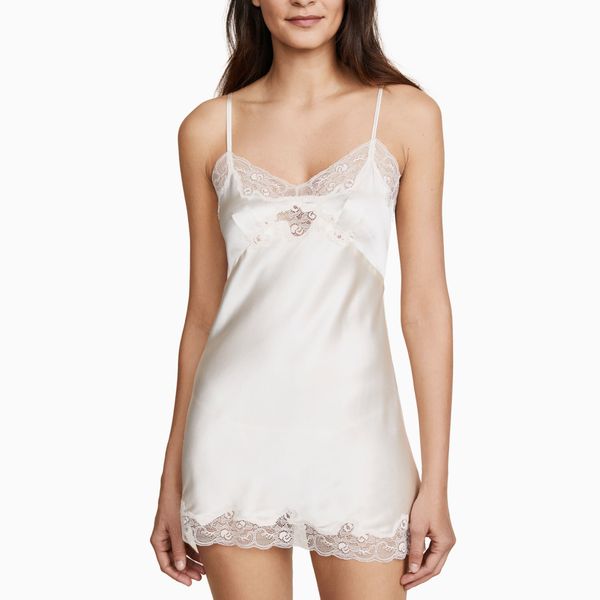
Lingerie can be simple, sweet, sexy, or all of the above. From strappy bralettes, thongs, underwear, and suspenders to slips, teddies, and bodysuits, there are tons of pieces to choose from. And they’re not all relegated to “standard” sizing; plenty of brands have finally made spicy plus-size lingerie and bras for big boobs to celebrate all bodies (thanks, Rih).
Here, we rounded up 20+ of the best lingerie pieces in a mix of styles and price points. Someone once said money doesn’t buy happiness, but we think that person never bought themselves a coordinating balconette bra, garter, and briefs. Just a theory.
Want to be emailed when products you’ve saved are over 20% off?
Success! You’ll get an email when something you’ve saved goes on sale.
Yes
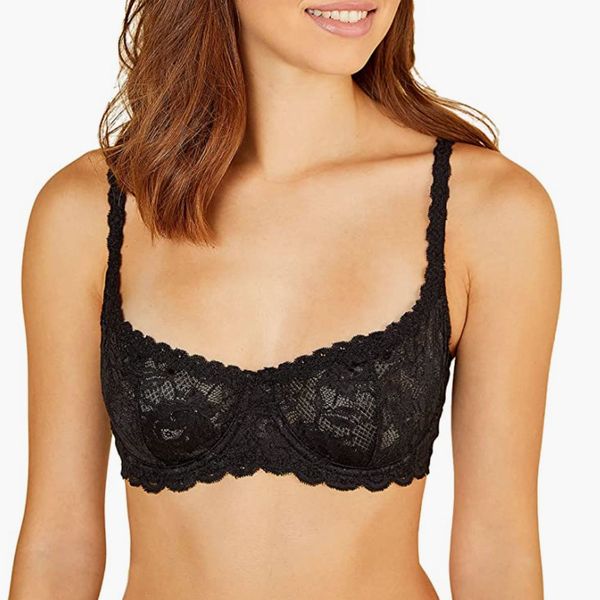
Sizes: 32A–36DD | Colors: Black | Material: Polyester, Polyamide, Elastane
Lacy and strappy? It’s the best of both worlds. The unlined underwire also provides the support you need.
Want to be emailed when products you’ve saved are over 20% off?
Success! You’ll get an email when something you’ve saved goes on sale.
Yes
Sizes: XS–XL | Colors: Black | Material: Polyester, Polyamide, Elastane
The matching thong completes your ensemble. Plus, the lining is 100 percent cotton, so it’s cute and breathable.
Want to be emailed when products you’ve saved are over 20% off?
Success! You’ll get an email when something you’ve saved goes on sale.
Yes
Sizes: XS–L | Colors: Black | Material: Nylon, Spandex
Perhaps the only thing more revealing than this bra is wearing no bra. It might seem pointless to wear, but it definitely will be a conversation starter once you do.
Want to be emailed when products you’ve saved are over 20% off?
Success! You’ll get an email when something you’ve saved goes on sale.
Yes
Sizes: One Size | Colors: Black | Material: Cotton, Polyamide, Elastane
You can really wear any black bottoms with the above bra, but this G-string will go with that barely-there look.
Want to be emailed when products you’ve saved are over 20% off?
Success! You’ll get an email when something you’ve saved goes on sale.
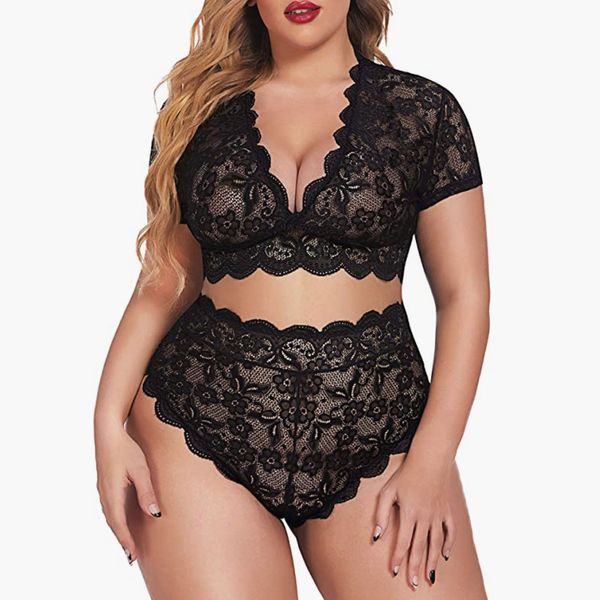
Opt for a lace moment to really go all out. This set, with a plunging top and scallop-trim panties, has 800 ratings and 4.4 stars from impressed customers.
Want to be emailed when products you’ve saved are over 20% off?
Success! You’ll get an email when something you’ve saved goes on sale.
For those who prefer a more feminine feel, try this Eres bra. It’s made of delicate stretch jacquard lace — which is sexy yet comfortable — and features an intricate floral pattern.
Want to be emailed when products you’ve saved are over 20% off?
Success! You’ll get an email when something you’ve saved goes on sale.
Skip the pinks and reds and opt for this sweet mellow-yellow bra from Fruity Booty. It is made of 90 percent cotton, and you’ll be comfortable and cute during Valentine’s Day.
Want to be emailed when products you’ve saved are over 20% off?
Success! You’ll get an email when something you’ve saved goes on sale.
This brand is known for its popular balconette silhouette with a side-set neckline and breathable mesh. It comes in 16 total colors and is a personal favorite of Cut senior shopping editor Bianca Nieves.
Want to be emailed when products you’ve saved are over 20% off?
Success! You’ll get an email when something you’ve saved goes on sale.
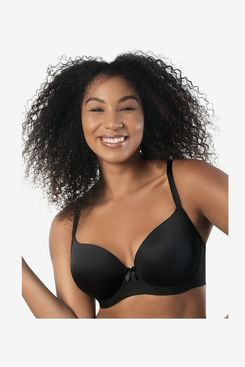
This black balconette bra is pretty enough to break out for a special occasion yet classic enough to wear on an everyday basis. The Cut’s shopping writer Chinea Rodriguez loves the signature lacy pieces from this brand.
Want to be emailed when products you’ve saved are over 20% off?
Success! You’ll get an email when something you’ve saved goes on sale.
You could wear this on any given day — it’s supportive enough for it — but that doesn’t take away from its sex appeal. Just be wary that it’s in U.K. sizing, so be sure to consult the chart to convert to your normal size.
Want to be emailed when products you’ve saved are over 20% off?
Success! You’ll get an email when something you’ve saved goes on sale.
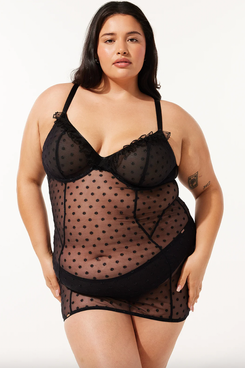
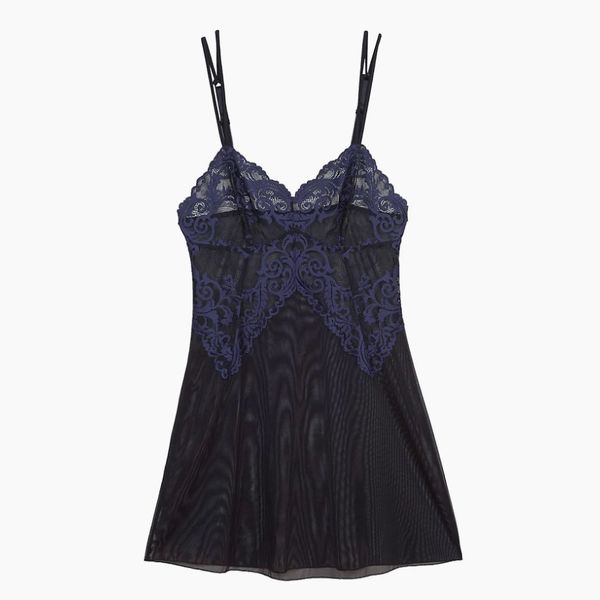
Cou Cou Intimates Valentine’s collection includes some of its best-selling silhouettes with a little twist. Now, its beloved slip dress is available with a cute balconette cut. We advise you to size up if you don’t want it too short.
Want to be emailed when products you’ve saved are over 20% off?
Success! You’ll get an email when something you’ve saved goes on sale.
Yes
Sizes: S–XL | Colors: Black | Material: Nylon, Elastane
Stripes and lace details together make up this highly rated (and affordable) bodysuit.
Want to be emailed when products you’ve saved are over 20% off?
Success! You’ll get an email when something you’ve saved goes on sale.
Yes
Sizes: S–L | Colors: Black | Material: 74 percent recycled polyamide and 26 percent elastane
Fleur du Mal can do no wrong when it comes to sexy bodysuits.
Want to be emailed when products you’ve saved are over 20% off?
Success! You’ll get an email when something you’ve saved goes on sale.
Yes
Sizes: XXS–XXL | Colors: Black | Material: Nylon, Spandex
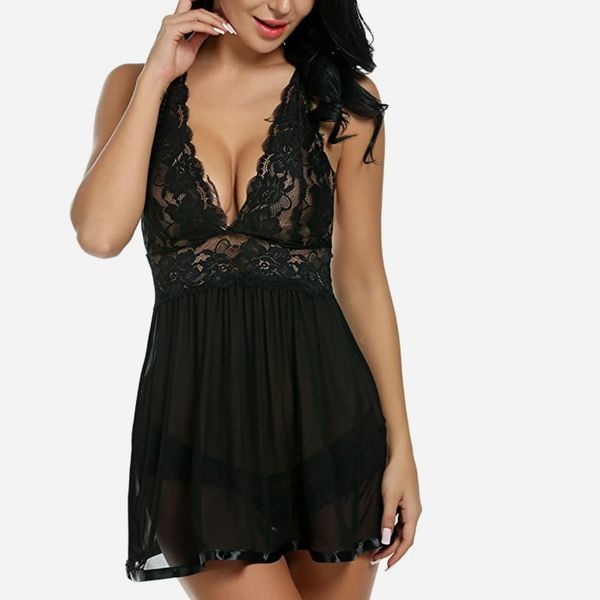
Plunging neckline? Check. Cheeky cut? Check. Solid reviews? Another check.
Want to be emailed when products you’ve saved are over 20% off?
Success! You’ll get an email when something you’ve saved goes on sale.
Yes
Sizes: 1XL–3XL | Colors: Black | Material: Nylon
This stretch lace will contour to your shape; plus, the open-gusset style adds an extra surprise.
Want to be emailed when products you’ve saved are over 20% off?
Success! You’ll get an email when something you’ve saved goes on sale.
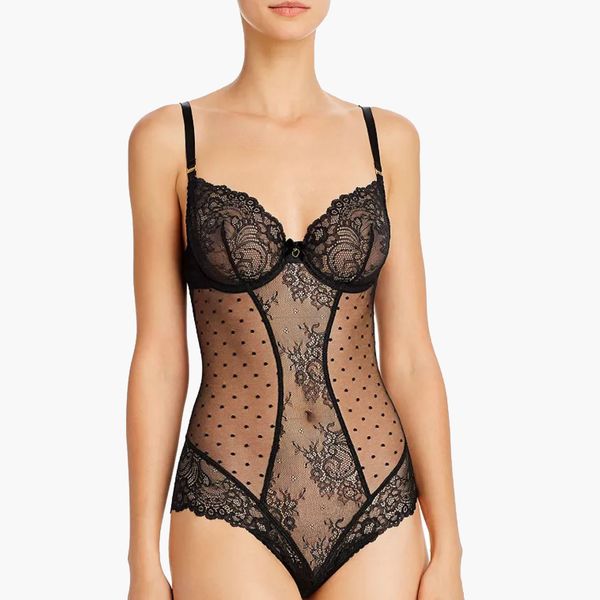
Who better to buy lingerie from than the iconic burlesque dancer Dita Von Teese? Unlike a lot of bodysuits, this one has molded bra cups with underwire for support.
Want to be emailed when products you’ve saved are over 20% off?
Success! You’ll get an email when something you’ve saved goes on sale.