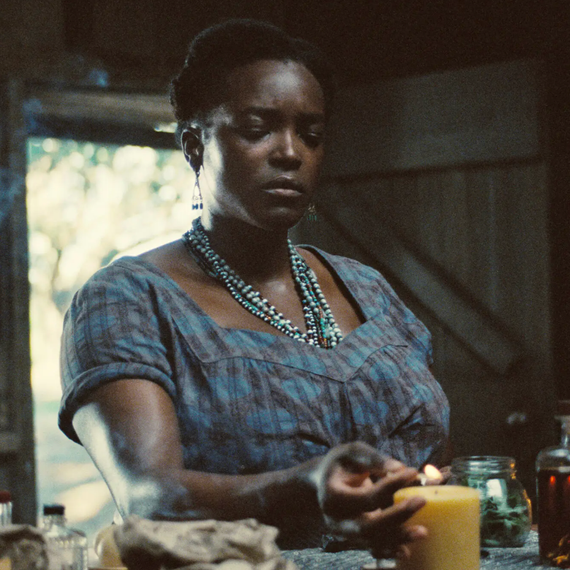
This as-told-to essay is based on a conversation with Bette Bentleyfounder ofSkimpies. It has been edited for length and clarity.
My grandmother died of breast cancer at 40, so I went for my first mammogram at 36. I found out that I had a pre-cancerous growth. Because of my family history, it was very concerning. My doctor told me if I were her daughter, she’d be operating tomorrow. Within weeks, I had a double mastectomy and reconstruction.
When I woke up in my hospital room, I thought about the things that made me happy: God, my husband, my kids, and Skimpies, my business that I’d so far only been running as a side hustle. I was surprised that Skimpies made the list, but I knew then I should take it seriously.
Before then, I was hand-cutting Skimpies, single-use cotton underwear alternatives, at my kitchen table and delivering them to women I knew. I would say, “I can’t wait to be in your pants,” and we would laugh and hug. Connecting with these other women was pure joy. I knew, lying in my hospital bed, that I wanted to grow that feeling into a real, full-fledged business.
Making a major medical decision gave me confidence
I put down the deposit on a mold that would allow us to manufacture Skimpies on a larger scale, all before being discharged.
I had just made a massive decision for my health: getting the mastectomy and giving up my dream of having and breastfeeding a third child. I’d lost my breasts, which contributed to my femininity and self-worth, but I’d made it out the other side. Now, I had the confidence to dive into my business wholeheartedly.
Bette Bentley wanted a solution to underwear lines and created Skimpies.
Photo by Mandee Johnson Photography
The idea for Skimpies was personal
I’d come up with the idea for Skimpies years before. I’m in leggings all the time. I love working out, and being a mom is a workout in itself. And yet, I had an underwear problem anytime I put my leggings on. I didn’t want visible panty lines, but no one wants to do yoga in a thong!
Most women I talked to were going commando, but that creates its own issues for grown adults. To cope with moisture, I tried using a panty liner in my leggings, but it always just balled up.
Related stories
Business Insider tells the innovative stories you want to know
Business Insider tells the innovative stories you want to know
At the same time, I struggled with urinary tract infections (UTIs), which can be made worse by synthetic underwear. I wanted a cotton product that could give me coverage “from beep to boop” as I like to say, and keep up with my active lifestyle.
I had no background in manufacturing — I was a comedy writer who had most recently been a stay-at-home mom. But I’m the type of person who solves a problem when I see it.
I’m celebrating second chances
I officially launched my business in September 2024. I started promoting the product on TikTok. It reminded me of the early days of hand-delivering Skimpies to a few acquaintances. I felt a strong connection with my customers and community, and started selling on TikTok live. My comedy background was a great help in engaging the audience, and sales took off. Last June, we did $60,000 in sales in a month.
During the past year, I’ve also completed my undergraduate degree and a business certificate at Stanford Graduate School of Business. For a long time, not having a degree was a source of embarrassment and pain. It turns out I only needed to take one more class. Now I’ve healed that wound and grown from the challenge.
Today, my company has eight employees. I focus on hiring moms who have been out of the workforce while raising their families. They remind me of where I was when I first had this idea. Whether it’s returning to a career after having babies or getting a new lease on life after a health scare, I want Skimpies to be a place where second chances are celebrated.
My mother opened the door to her apartment, joyful to see me in her doorway. She was wearing an oversized black T-shirt with white cursive across the front that read: “I can’t believe I’m the same age as old people.”
I’ve long accepted that she’s no fashionista, but I’ve only recently begun to grasp that my quirky 76-year-old mother is getting up there in years. (Can we say old? Her shirt says old.)
I’ve only recently started to grapple with her mortality
I’ve seen her scrape the edges of mortality many times: Stage II breast cancer, four joint replacements, rheumatoid arthritis, and a coronary angioplasty. These have been her personal trials, of course, but as her only child, I hope that I’ve borne some of the weight with her. I recall the diagnoses, the doctors’ appointments, the tears, the terror in her eyes from some awkward hospital bed.
But I saw each of these as mere moments in time. Bumps in the road. It took me years — decades, maybe — to internalize that these illnesses culminate in the truth that her mortal body is breaking down.
I inch towards acceptance at times, but then my mind reels. Isn’t 76 the new 56!? I recently Googled life expectancy tables for some reassuring data. I scrolled down to the birth year row of 1949. The average white American woman born in that year can reasonably expect to live to the age of 78. The research is right there, but how does a person process that information?
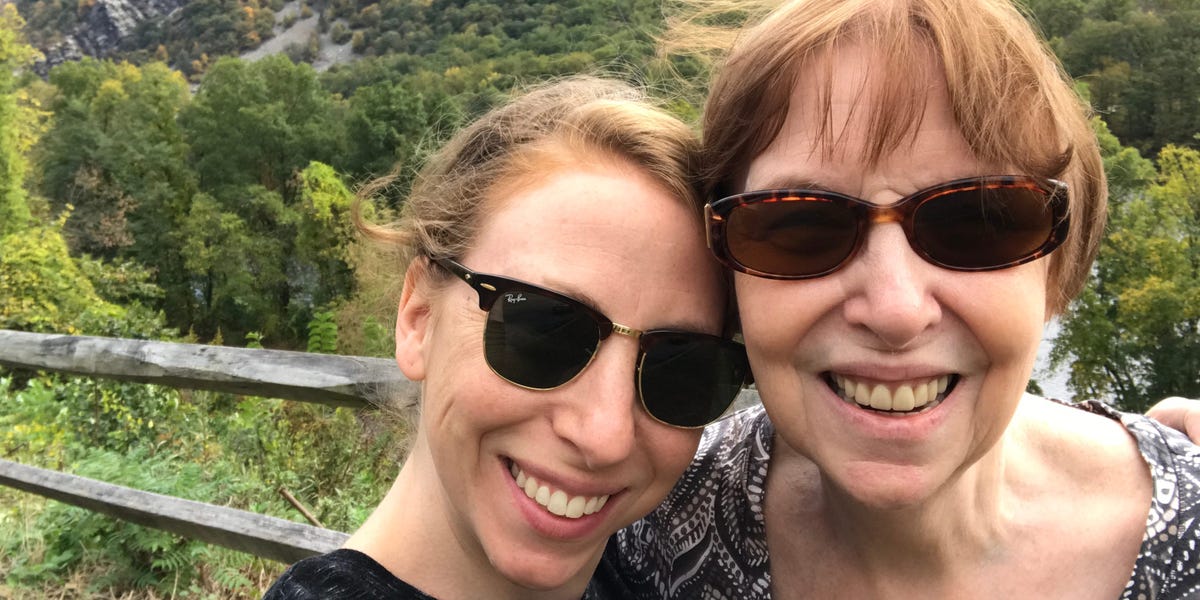
The author and her mom in 1985 in New York City.
Courtesy of Kerri Allen
Our relationship is extremely close, even with its ups and downs
My mother and I have had years of deep, almost psychic, closeness. Whatever is happening in my life, whether auditioning for my middle school production of “The King and I” or discussing the realities of menopause (which I hear is coming for me soon), she understands, offers encouragement, is ever-present. Mom-on-demand.
Related stories
Business Insider tells the innovative stories you want to know
Business Insider tells the innovative stories you want to know
She thinks whatever I say is hilarious, whatever I choose is smart, whatever I do is the best. Maybe she’s just great at faking it. In any case, I know I’m lucky.
That said, we have also barely made it through confusing and painful seasons of our relationship. Some people might call her…a bit dramatic or complex (I might be one of those people), and our battles have cut deep. My move to college was painful for both of us. A May-December romance she pursued rocked my world. She often felt abandoned by her only daughter. I bristled at feeling smothered.
Nor I’ve gotten older myself, my own perspective has changed
All of these “issues” that I once wanted to untangle in therapy, well, I just don’t care anymore. At a certain point, you shift from seeing a parent as a parent to another flawed human like yourself. Nor we’ve both aged, we’ve also naturally mellowed out. I don’t have the time or energy to fight. I relish my own midlife for that very reason. The things that don’t matter fade into the background. Those that are precious sharpen into focus.
I recently shared that revelation with my mom. “I’m glad you find that getting older is better,” she emailed me. “It’s just a journey, you know? As you age, for some reason, life gets lighter.”
For so much of my early life, it was the two of us in an 800-square-foot apartment against the world, and I desperately feared losing her. And yet we remain. We may live 30 miles apart, connected by text messages most days, but the closeness endures.
I still fear the loss of her one day, but it’s tempered now with the wisdom and gratitude of an adult, not the panic of a child. I believe that this strange, almost miraculous, connection we have will outlive us both. Life expectancy tables be damned.
01-17 Perth, Australia – Fremantle Park 01-20 Adelaide, Australia – Adelaide Entertainment Centre 01-23 Sydney, Australia – The Domain Sydney 01-24 Sydney, Australia – The Domain Sydney 01-27 Brisbane, Australia – Victoria Park 01-30 Melbourne, Australia – Alexandra Gardens 01-31 Melbourne, Australia – Alexandra Gardens 02-01 Melbourne, Australia – Alexandra Gardens 02-05 Wellington, New Zealand – TBS Arena 02-06 Wellington, New Zealand – TBS Arena 06-10 Dublin, Ireland – Malahide Castle 06-16 Lingen, Germany – Emslandarena 06-18 Kværndrup, Denmark – Heartland Festival 06-20 Prague, Czech Republic – Metronome Festival 06-21 Klam, Austria – Burg Clam 06-24 Athens, Greece – Release Athens Festival 06-26 Lido di Camaiore, Italy – La Prima Estate 06-28 Antwerp, Belgium – Live Is Live 06-30 Berlin, Germany – Waldbühne 07-06 Stuttgart, Germany – Jazz Open 07-07 Lisbon, Portugal – NOS Alive Festival 07-14 Nîmes, France, Festival de Nîmes 07-15 Vienne, France – Théâtre Antique de Vienne 07-17 Carhaix, France – Les Vieilles Charrues 07-31 Brighton, England – Preston Park 08-02 Dresden, Germany – Filmnächte am Elbufer 08-04 Pula, Croatia – Arena Pula 08-05 Pula, Croatia – Arena Pula 08-07 Belgrade, Serbia – Lower Town Kalemegdan Fortress 08-09 Buftea, Romania – Summer Well Festival 08-13 Oslo, Norway – Øyafestivalen 08-18 Vilnius, Lithuania – Kalnai Park 08-21 Charleville-Mézières, France – Cabaret Vert 08-23 Munich, Germany – Königsplatz 08-25 Bonn, Germany – Kunst!Rasen 08-28 Paris, France – Rock en Seine
Photo-Illustration: Konstantin Sergeyev/Intelligencer; Photos: Getty Images (faces); Screenshots via Twitter
Any day now, Robert Mueller, the special counsel overseeing the investigation into possible Russian interference in the US election, will submit the report of his team’s findings to Congress. Many people online will tell you that, thanks to months of investigative journalism and copious leaks from Congress, we already know many of the findings that will be disclosed therein, and can predict what will happen when the report is released. I mean, come on, can’t everyone? When the Mueller report is finally released, as everyone knows, the special counsel will reveal himself to have been in league with President Trump the entire time, and that his mission was to investigate and take down a global ring of child predators prominently featuring Hillary Clinton.
You may feel smug about your foreknowledge of the contents of the Mueller report, but surely not more so than the deep believers in QAnon — the elaborate, amorphous, 4chan-based conspiracy theory that holds that Mueller and Trump have been secretly plotting to take down a ring of wealthy, powerful pedophiles. Any day now!
There are many lessons to be learned from Donald Trump’s surprise victory in 2016, but my favorite is the questionably comforting knowledge that all human beings, regardless of their political persuasion, can attain a baseline level of self-deceiving stupidity. For most of the last few decades, widespread conspiracy theories have emerged almost exclusively from the right wing of American politics — but in the wake of Trump’s election, just as QAnon metastasized on the right, a portion of the same Democrats who would scoff at the right-wing fever swamp was quickly overtaken by increasingly wild wishful thinking. How could Donald Trump win an election? An unfortunate number of members of the party of moderation and logic and science settled on elaborate, yarn-and-corkboard theories of shadowy Russian meddling. Many formed a picture of Trump directly conspiring with Putin to hack voting machines, or commanding an army of bots to distribute fake news.
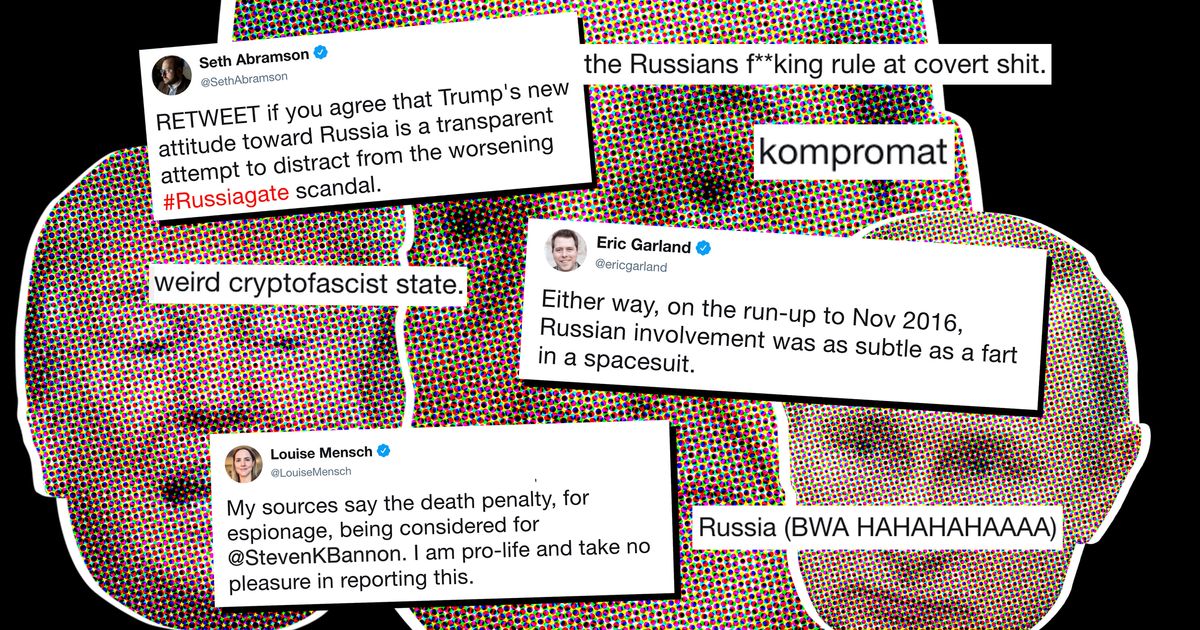
A cohort fueled by obsession, ambition, and addiction to posting found the possibility of vast conspiracies between a still-Communist Russia and a much-smarter-than-he-seems Donald Trump too enticing to resist. Their preferred outlet was Twitter, which has an outsize influence on national and international affairs, because it is where media people and obsessives hang out and where politicians and celebrities go to be seen. Case in point: a December 2016 Twitter thread from a political and economic consultant named Eric Garland, which elaborated in robotically colloquial slang an extensive secret history of the election that somehow involved President Obama deploying “game theory.” The thread was nonetheless endorsed by people like Pulitzer Prize–winning reporter David Fahrenthold, who broke news of the Access Hollywood tape, and Brian Stelter, whose media-scolding CNN show is called Reliable Sources.
Mother Jones editor-in-chief Clara Jeffery described it as the “single greatest thread I have ever read on Twitter. And in its way a Federalist Paper for 2016” — a comment so inscrutable that the Cray supercomputer I tasked with analyzing it encountered a fatal error and subsequently melted down.
At that point, anyone with access to Google, Wikipedia, an elementary-school chart plotting the three branches of the US government, and a vague notion of the Cold War became some sort of authority on Trump’s alleged collusion with the Russian government. The age of the Mueller conspiracy theories had begun. BuzzFeed termed these amateur investigators “blue detectives,” accurately tagging them as the next step beyond internet-native conspiracy theorists trying and failing to solve immense mysteries with virtual corkboards and digital yarn.
Garland’s unhinged, try-hard, aggravating, LOLspeak-y, overly colloquial screed — which, taken as a prose piece and not as a slapdash conglomeration of tweets, is nigh unreadable — was just the start of unfounded theorizing masked by a veneer of professionalism. New Hampshire literature professor Seth Abramson gained a large following by using similar threads (and by claiming that he was a professor of law despite, uh, not being that). He also aggressively baits for shameless retweets, even if they could have any actual effect on the investigation. (To be fair, those retweets will have an effect on the book deals, guest columns, media appearances, podcasts, and Patreon fundraising drives that the blue detectives rely on to sustain their work).
Among the Twitter-centric celebrities to emerge in this new environment, in which Twitter-using #resistance members yearned for a credible explanation for the Criminal Cheeto’s rise, were Louise Mensch, an English politician, and Claude Taylor, a former Clinton administration staffer. The two often teamed up and ran half-baked theories about Russian collusion on their blog, Patribotics. The pair was hoaxed on at least one occasion into posting details of a criminal investigation that did not exist.
Mensch was a font of many ridiculous assertions, but perhaps most famous was her claim that former Trump campaign chairman Steve Bannon might be secretly sentenced to death for espionage, and had been paving the way for Russian interference in the election since 2010. “My sources say the death penalty, for espionage, being considered for @StevenKBannon,” she wrote. “I am pro-life and take no pleasure in reporting this.”
Of course, this was all happening in tandem with growing concern around the actual role of Russia in the US election, and the subsequent appointment of special counsel Robert Mueller, who was tasked with investigating ties between the Trump campaign and Russian operatives. Mueller’s assignment acted as a Rorschach test for those concerned with Russia, or really anything that might involve the president stepping down. Unlike the Twitter pundits feeling things out in real-time, Mueller has said little and often only in court filings. The secrecy with which he and his team operate means that Russiagate conspiracy theories were unsubstantiated and unrebutted. In the beginning, his appointment almost served as validation for the blue detectives.
Mueller’s investigation was both highly secretive and highly visible, an irresistible combination to conspiracy-prone minds of any political persuasion. In the silence, the Mueller-centric cottage industry of Twitter conspiracies, podcasts, YouTube recaps, and Etsy merch filled the void. These things served as a fun way to pass the time, like celebrity gossip and sports shows in the off-season — “anything could happen and we will now list every single one of those things.” It became a 24-hour story when Mueller’s camp actually came out of its bunker to push back on a BuzzFeed story about its supposed findings.
The reality of Russian interference, as far as we credibly know it, is less clear-cut than the most extreme Mueller conspiracists would have it. There is a butchered there, but it is not the Manchurian Candidate operation that the Twitter Woodwards and Blogspot Bernsteins might hope. Certain Trump operatives had direct, cooperative relationships with Russian representatives during the election — but we largely know about these relationships by now. Steve Bannon is not, and was not, a Russian spy. In fact, the biggest problem for Trump may not be the collusion charges initially pursued by Mueller’s investigation, but the extent to which the president attempted to obstruct that investigation.
As the Mueller report has come closer to fruition, the authority of most of these blue detectives has fallen off from influential heights, just as QAnon has become less and less visible on the various platforms on which it flourished. Maybe it’s because certain theories — or rather, statements of fact, like Mensch’s announcement that Bannon and Giuliani were headed to the guillotine — never came to fruition. Maybe it’s the ever-dwindling chances of a smoking gun appearing to show Trump the door or force Congress to take action. Maybe the jailing of Trump affiliates like Michaels Cohen and Flynn, and the indictments of Trump confidantes like Roger Stone, who was tied to WikiLeaks, has provided enough catharsis. Maybe the #Russiagate theory became so convoluted that it became impossible to keep track of unless you were reading every single tweet and blog post, and who has the time? Maybe there are simply more urgent and pressing issues, impacting more Americans, to get mad about online — child separation, health care, foreign policy, Supreme Court appointments, the looming 2020 presidential campaign.
The release of the Mueller report will not make the blue detectives disappear, but their dwindling ability to hold attention indicates that even the most professional-presenting conspiracy theorists eventually wither. Unlike QAnon, which invented evidence and reasoning out of thin air, the Russiagate stuff had at least a tenuous connection to facts and reality, and the blue detectives were eventually forced to give way.
Photo: David Paul Morris/Bloomberg via Getty Images
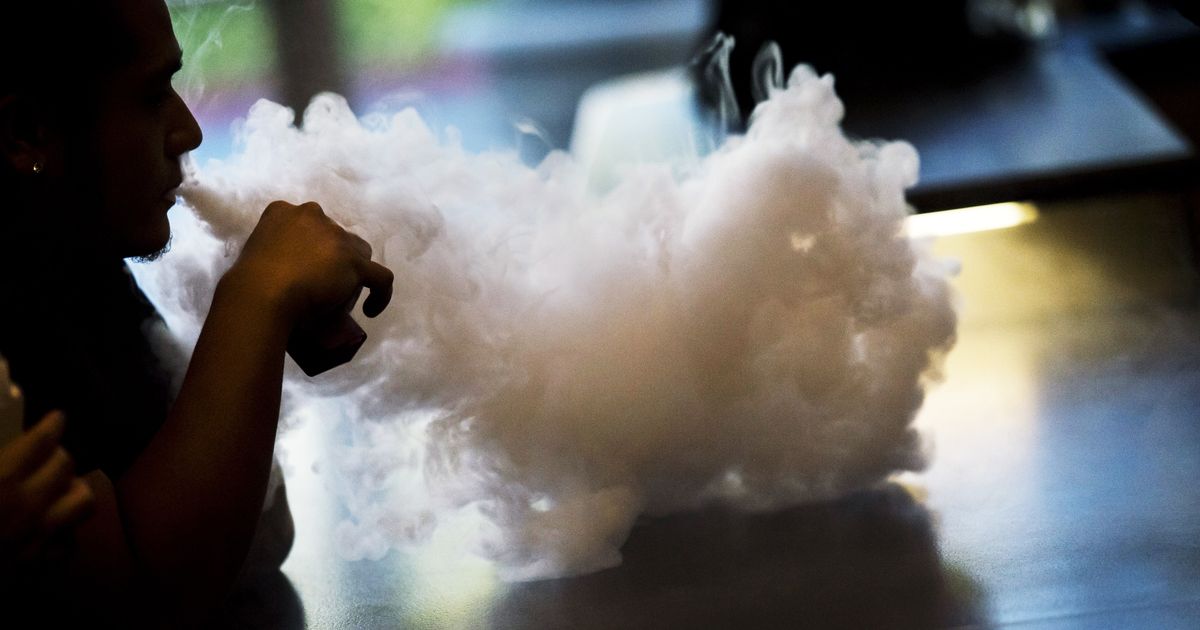
Following news reports about mysterious vaping-related illnesses, the Trump administration intends to prohibit flavored nicotine vapes, on the theory that flavored vapes are especially appealing to minors and encouraging them to take up nicotine use.
I am agnostic on whether a flavored-vape ban is a good idea. I think teen vaping is a serious problem: Teen smoking has been close to defeated, but now teens are using nicotine vapes at levels close to their smoking rates from two decades ago. But because vaping appears to be safer than smoking cigarettes, I worry about any rule that might make switching from cigarettes to vapes less attractive for adults. Also, importantly in the context of this summer’s news about vaping-related illnesses, I worry that restrictions on legal flavored-vape products could lead consumers to buy less-regulated vape products on the black market.
Important though the question of teen use of nicotine vapes is, it does not appear to have much to do with the acute crisis in the news, which is people getting very sick and sometimes dying from acute illnesses linked to vaping. Even former FDA commissioner Scott Gottlieb has notedmost of these illnesses appear to be related to marijuana vape products, not nicotine products.
Unlike nicotine vapes, the FDA does not have legal authority to regulate marijuana vape products. Gottlieb is right to note this is a problem. Marijuana is now de factolegal in the US, and there is a bustling industry churning out novel products, including vapor products. This is a positive change in many ways, but we’re seeing now that some of those products can be dangerous, and consumers are not well-equipped to figure out which ones.
Federal regulators are needed to ensure consumer safety — and that has to start with Congress admitting marijuana is legal and giving the FDA authority to regulate it.
Photo-Illustration: by The Cut; Photos: Getty Images
For more of the Cut’s favorite fashion, beauty, and home finds, sign up for the weekly Cut Shop Newsletter.
At the beginning of 2021, still stuck inside and hyperfocused on nesting, I decided I was going to make my bed a delightful place. It started with a new bed frame and mattress, then I needed nice bedding to match. Up until then, I was sleeping on Ikea’s cheapest option. I wanted to be surrounded by my favorite colors and textures. I wanted linen sheets. It’s a favorite fabric of mine, both for the way it looks and feels and for its sustainable production.
My roommate recommended Bed Threads. I also found an extra fitted sheet and flat sheet from a Polish Etsy shop that has since closed down. At the time, I loved both sets. The Bed Threads sheets were light, airy, and supersoft, while the Etsy sheets were thicker and more textured, never getting too wrinkled. It really did change my sleep: Linen is a thermoregulating fabric, which conducts heat to help keep you warm in the winter but is breathable and moisture-wicking to keep you cool on sweaty summer nights. Linen is so comfortable to sleep on that I actually miss my sheets when I sleep at a hotel now. On an aesthetic level, I suddenly loved looking at my bed, and it no longer felt like a chore to make it up every morning.
Four years later, there’s a noticeable difference in how the two sheet sets have held up. The Etsy sheets are softer but otherwise like new, still holding their shape. There’s no visible damage to the fabric, and I still love sleeping on them. The Bed Threads sheets haven’t held up nearly as well. So I was on the market for new sheets, and this time, I wanted to make sure my sheets were woven to last.
Below are my findings after testing nine different brands to determine the highest quality sheet set: one that’s truly worth the investment.
This UK-based bedding brand first launched with only three solid shades of linen sheets; now, Piglet is known for its eye-catching, aesthetically pleasing patterns and colors. Its 100 percent linen bedding is Oeko-Tex Standard 100 certified and produced in either China or Portugal.
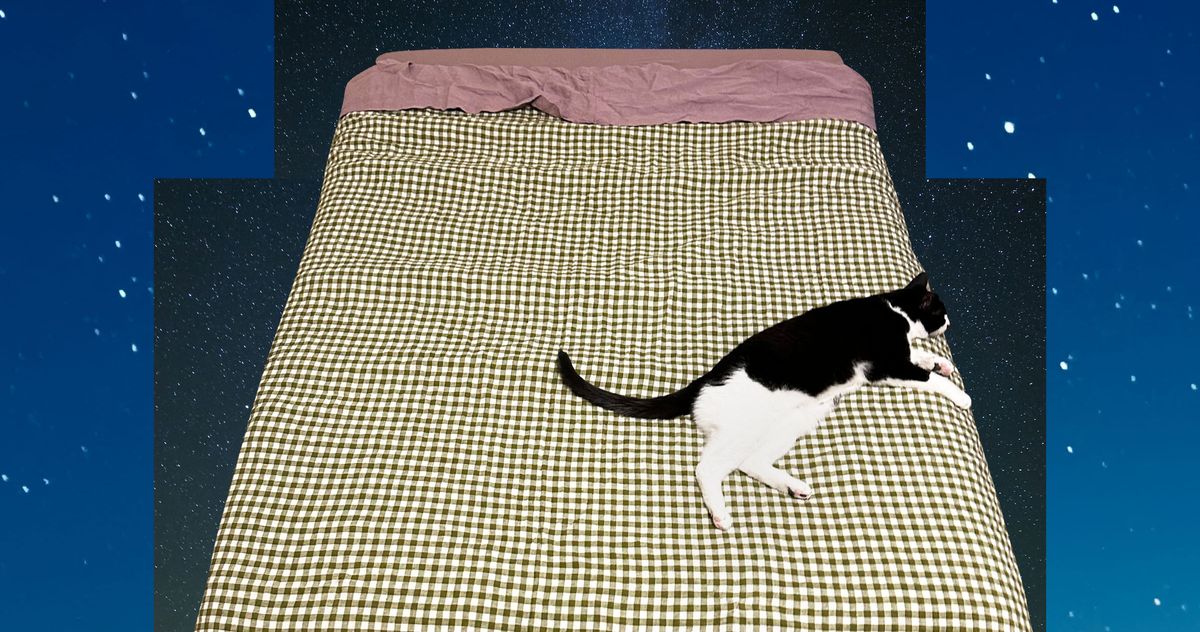
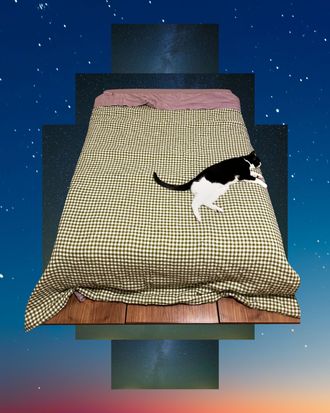
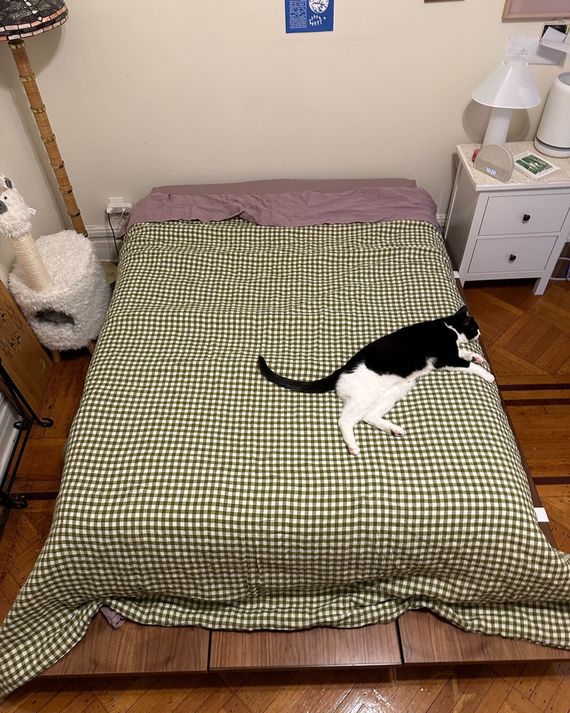
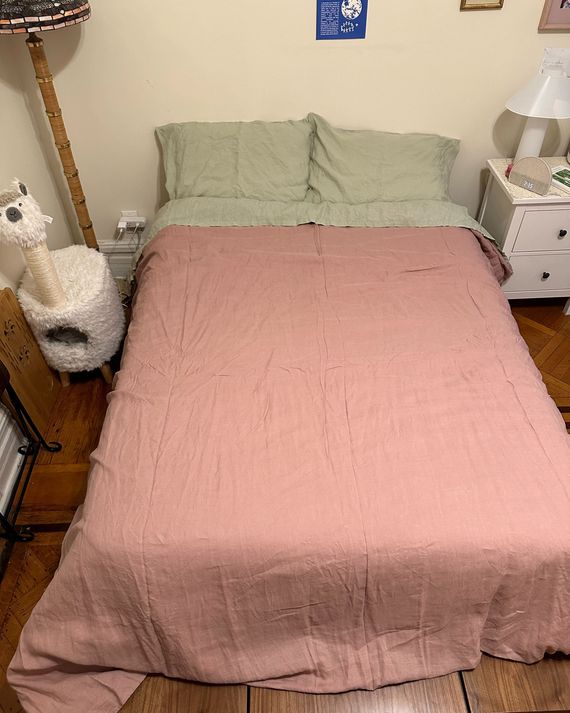
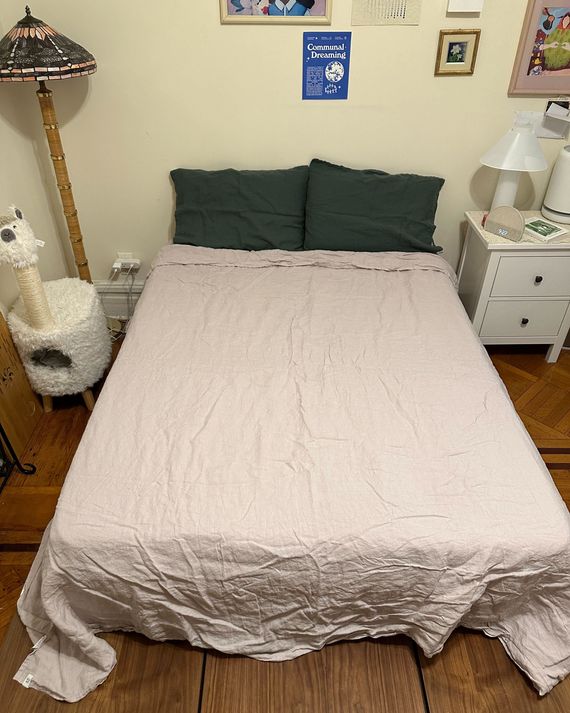
I tested a fitted sheet, flat sheet, and duvet cover. They’re made of a densely woven, midweight linen that resists any noticeable wrinkling, maintaining the slightest rumpled texture you can curl right into. They were the only patterned sheets I tested, and in terms of appearance, they were my favorite — the mossy-green gingham duvet was a perfect complement to the dusty purple sheets. I was also really impressed by the weight of them, and they were especially warm on colder nights.
Overall rating: 10/10
If you’re looking for the most ethical and ecofriendly option, the Modern Dane’s sheets are your best bet. Based in Seattle, the brand shares extensive information about its supply chain and production process on its website, tracing the linen’s journey from flax farms in Belgium, France, and the Netherlands to a textile mill in Guimaraes, Portugal. They also have all the certifications — GOTS, European Flax, and Oeko-Tex 100 Class 1 — which means the sheets are organic and produced in the most ethical and environmentally friendly way possible.
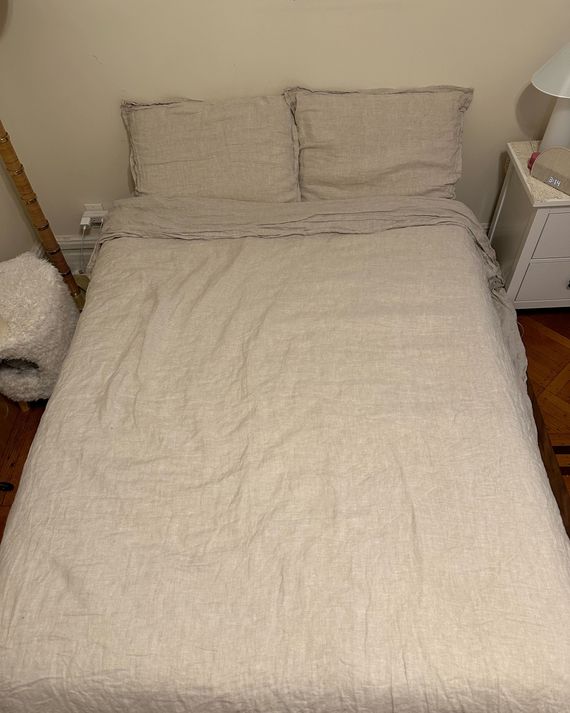
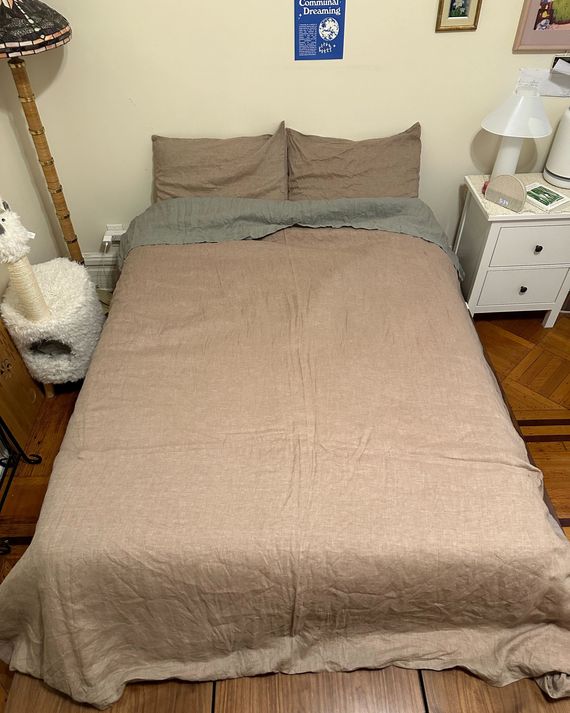
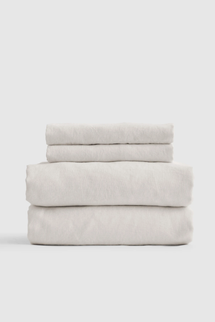
I tested the recently launched natural beige colorway. They were immediately soft and comfortable to sleep on with a lighter weight that makes them feel flowy and breathable — but the weave is tight and ensures total opacity even in such a light shade. I did notice a bit of fluff shedding from the inner ties of the duvet cover after I washed the sheets, but otherwise, the fabric is excellent and the sheets are lightweight while still keeping me warm and cozy on colder nights.
Overall rating: 7/10
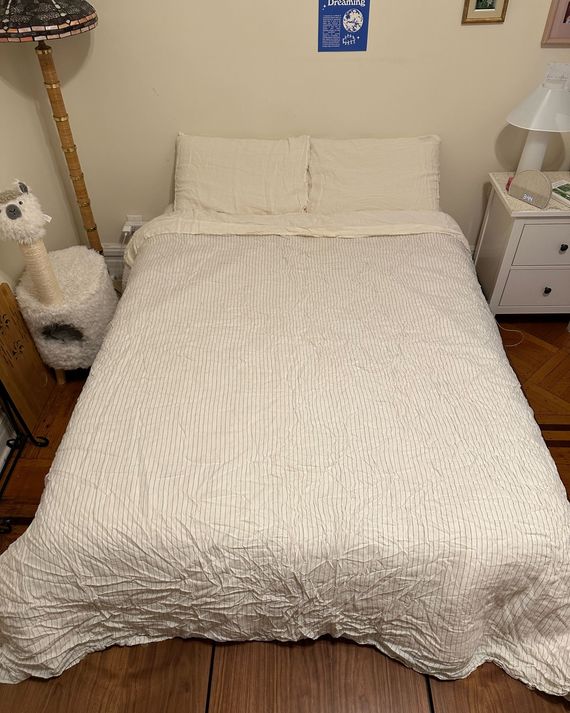
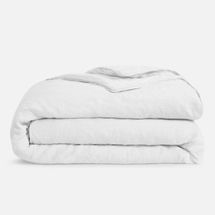
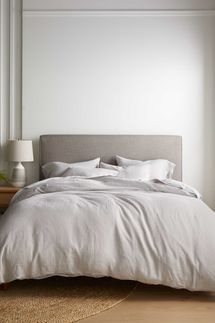
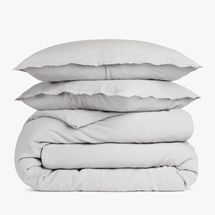
All of Brooklinen’s sheets are Oeko-Tex Standard 100 certified, and its website features information about fabric content, thread count, and weight. Despite having “linen” in its name, Brooklinen is better known for its popular cotton-sheet sets. I tested a fitted sheet, a top sheet, pillowcases, and a duvet cover in its signature washed linen. First, the good: The fabric is airy and light with a crêpey texture that is immediately soft and comfortable to sleep on (typically, linen starts a bit stiffer and rougher, softening over time). Other thoughtful details: The fitted sheet is helpfully labeled with “short side” and “long side” tags, and the duvet cover is reversible with a pinstriped side and a solid-white side. However, I found the sheets too thin for my liking. I’m not sure they’d withstand the test of time if I were to use them as my primary sheets. I also noticed a few threads sticking out around the button closures at the bottom of the duvet cover, which is a little concerning for brand-new sheets.
Want to be emailed when products you’ve saved are over 20% off?
Success! You’ll get an email when something you’ve saved goes on sale.
Yes
Want to be emailed when products you’ve saved are over 20% off?
Success! You’ll get an email when something you’ve saved goes on sale.
Yes
Overall rating: 9/10
West Elm has long been a premier purveyor of home goods for truly every room in the house. The linen sheets I tested are West Elm’s European Flax Linen sheets, which, according to the site description, are made from European-grown flax (although it’s not specified where in Europe) and constructed in a fair-trade-certified Chinese factory. They also have the Oeko-Tex Standard 100 certification.
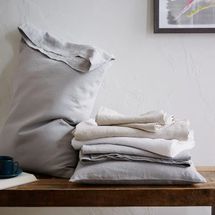
The fabric on these sheets is thick and densely woven, which indicates to me that they’ll be long-lasting. Folded up, they are heavier than some of the other sheets I tested. They’re also well-constructed; I didn’t notice any imperfections in how they were sewn, and there’s extra enforcement on the duvet cover’s button closure. They’re exactly what I’d expect from West Elm: simple, reliable, and high quality.
Want to be emailed when products you’ve saved are over 20% off?
Success! You’ll get an email when something you’ve saved goes on sale.
Yes
Want to be emailed when products you’ve saved are over 20% off?
Success! You’ll get an email when something you’ve saved goes on sale.
Yes
Overall rating: 8/10
Founded in 2018, Quince has quickly become an extremely popular source of high-end materials at low-end prices. Its linen comes at a bargain: For $280 (for full/queen size), you can get its deluxe bedding bundle, which includes a duvet cover, a fitted sheet, a flat sheet, pillowcases, and shams. The brand claims this is because of its unique shipping model; its products are shipped directly from the factory to the customer. The linen is Oeko-Tex Standard 100 certified and manufactured in China and India.
Knowing all of this, my expectations were honestly pretty low before testing Quince’s sheets. I was expecting the quality to match the price; so far, I’ve been pleasantly surprised. The fabric is heavier than expected and the stitching is neat and even. The button closures are even reinforced. I did notice the weave is looser than some of the more expensive brands, which makes them just the slightest bit see-through and doesn’t bode well for longevity. The texture is also a bit rougher than that of some of the other brands I tried — but overall, I was quite impressed.
Want to be emailed when products you’ve saved are over 20% off?
Success! You’ll get an email when something you’ve saved goes on sale.
Yes
Want to be emailed when products you’ve saved are over 20% off?
Success! You’ll get an email when something you’ve saved goes on sale.
Yes
Overall rating: 8/10
Parachute Home offers an array of fabric options, from percale to cotton to linen. According to the website, all fabrics are Oeko-Tex certified, and the linen is “crafted in Portugal” — but there’s no specific information about the production process or supply chain. The brand doeshowever, offer fabric recycling through Supercircle, so customers can drop off bedding, towels, and other home linens of any brand to be recycled in exchange for a 15 percent discount.
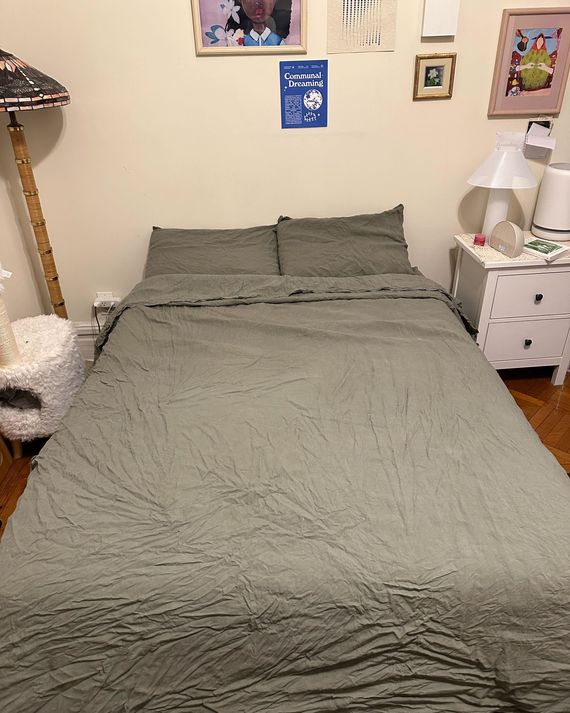
The sheets I tested were the 100 percent linen sheets. The fabric was densely woven but still light and airy, and the sheets kept me warm and cozy all night. I did notice that both the duvet and the top sheet held on to the more crinkly wrinkles from the washing machine for longer than some of the other sheets I tested. Even with the wrinkles, though, the sheets were comfortable to sleep on and came in a really beautiful shade of green.
Want to be emailed when products you’ve saved are over 20% off?
Success! You’ll get an email when something you’ve saved goes on sale.
Yes
Want to be emailed when products you’ve saved are over 20% off?
Success! You’ll get an email when something you’ve saved goes on sale.
Yes
Overall rating: 8/10
This small Ukrainian brand based in the coastal city of Odesa draws its inspiration from the Black Sea that borders it. The linen it uses is Oeko-Tex certified, and the sheets are hand-sewn at a local atelier.
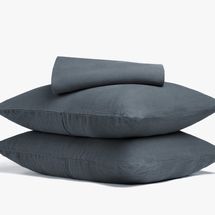
I tested only a fitted and flat sheet along with pillowcasesso I had to use a different duvet on top to stay warm at night. But the quality of the linen is such that if it hadn’t been the dead of winter when I was testing the sheets, they would have been perfectly warm even without a duvet. The fabric is densely woven and falls beautifully across the bed. I was also really impressed by how vivid the colors are and how heavy the fabric was when I picked up the folded stack.
None of this year’s big festival film premieres have proven themselves to be awards juggernauts. What gives? Photo: Amazon
Gold Rush columnist Nate Jones is on parental leave until mid-November, and his compatriot Joe Reid is taking a much-deserved weeklong vacation from leading our Emmys season and stepping in to helm early Oscars coverage, so you know what that means: While they’re out, it’s time for the critics — namely me, Alison Willmore, and my colleague Bilge Ebiri, who’ll be weighing in later — to run amok on this newsletter with our insufferable opinions that we pretend are about the awards race but are actually incredibly personal. Here’s one that’s been on my mind since Venice, Telluride, and Toronto, the triumvirate of events that kicks off what has traditionally been awards season: This fall has really fizzled out, hasn’t it?
For decades now, a trio of late-summer film festivals has been the launching pad where most of the films we expect to spend the next six months talking about have their premieres. Each has its own flavor. Venice, which begins at the tail end of August, is all glitz and a gloss of European worldliness, perfect for photo ops of big stars in boats along canals and for the canceled to test the waters to see how temperate the reception for their return might be. Telluride aims for the opposite in terms of vibes, an aerie of forced casualness where billionaires in performance fleece can bump shoulders with George Clooney while riding the gondola and chat about the screenings they’ve been catching. Toronto is, or at least it used to be, the best bang-for-your-buck event, where you can sample most of the same big titles just a few days later in a city that’s considerably cheaper to travel to. Some films play one of these fests, out of strategy or necessity, while occasionally some will hit up all three and then head to the New York Film Festival in late September and early October, achieving the kind of grand slam of awards buzz and timed standing ovations that no one aside from us dorks cares about.
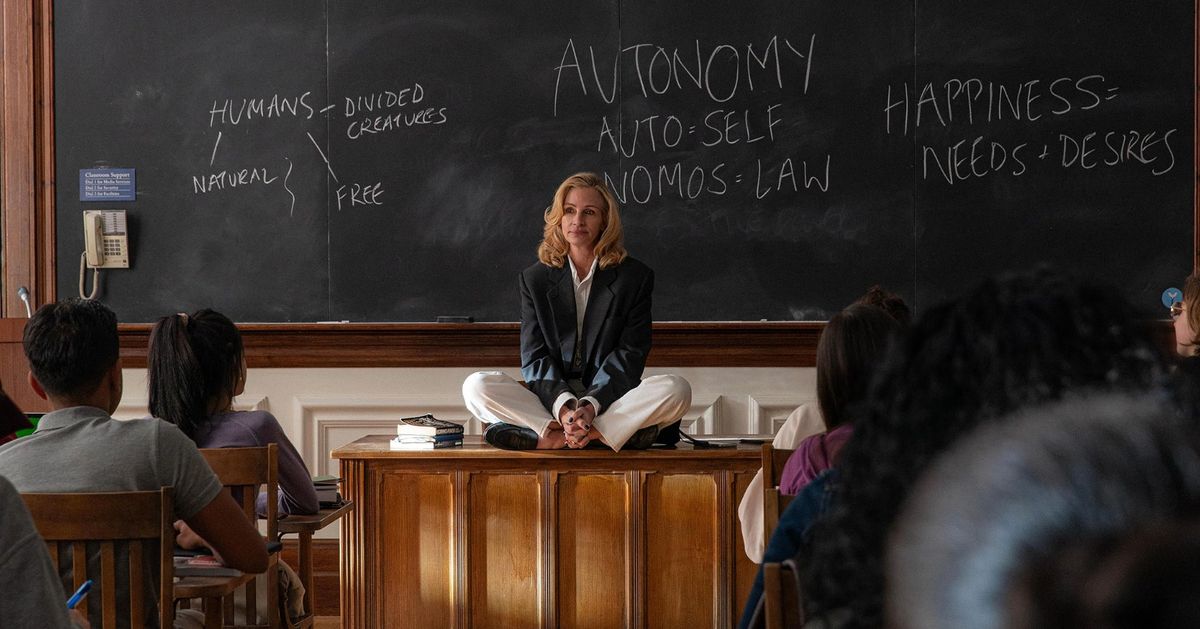
This year’s fests featured a barrage of work from big names and some previous Best Picture winners: Guillermo del Toro with Frankenstein; Yorgos Lanthimos with Bugonia; Luca Guadagnino with After the Hunt; Kathryn Bigelow with A House of Dynamite; Noah Baumbach with Jay Kelly; Benny Safdie’s solo debut, The Smashing Machine; Edward Berger’s Ballad of a Small Player; and Chloé Zhao with Hamnet. And yet despite how good those lineups looked on paper, in practice none of these movies have proven themselves to be surefire awards juggernauts. Frankenstein is art-directed to the point of airlessness, and while Jacob Elordi’s anguished performance as the Creature has gotten attention, Oscar Isaac is woefully miscast in a movie that feels as though it’s likely to get a lot of nominations, especially on the tech side, and no wins. Bugonia is not really an awards movie, despite its timing, and is also an unpleasant watch — and not in the usual carefully calibrated Lanthimos fashion. After the Hunt has faded out of the conversation with a quickness that speaks to the egregiousness of its would-be provocative screenplay, though I continue to believe that Julia Roberts will get a nod for her flinty, contradictory turn as a philosophy professor whose feminism is very Gen X in its scope.
A House of Dynamite played well at Venice and less well at subsequent fests, while Jay Kelly is the kind of movie that’s more interesting for the narrative it creates around George Clooney, who plays a famous movie star, than as a work in itself. Similarly, The Smashing Machine seems to have juice only as a vehicle for the Rock to be taken seriously, and he’s trudging away at that campaign with the determination of an MMA fighter battering a pinned opponent’s face in. Ballad of a Small Player, despite coming from the director of Conclave, may as well not exist. The only pick of that bunch that seems to be getting real traction is Hamnet, and while I wish I liked the movie anywhere near as much as Bilge does, its two lead performances, from Jessie Buckley and Paul Mescal, have an elemental force to them that’s undeniable (even if Mescal’s being positioned as supporting in one of the season’s more blatant cases of category fraud).
What does this all mean? Probably nothing much to a regular moviegoer who’s not getting the chance to jet off to Europe to see things weeks to — in the case of Berlin or Cannes, which was very good this year — months early. But this fall has felt, to me, like it’s highlighting the imperfect alliance between awards and festivals, whose sensibilities and priorities haven’t always meshed. (It’s telling that One Battle After Another, the current Oscar favorite and the most-talked-about movie of the past month, bypassed fests entirely, while the much-discussed Marty Supreme, the other Safdie-brother production, played only at the New York Film Festival as a secret screening.) The recipient of this year’s Golden Lion, the big jury prize at Venice, was Jim Jarmusch’s Father Mother Sister Brother, a triptych of short stories about three different family gatherings. In light of all the awards-season gamesmanship, the choice to honor a film that, with its subdued approach and split-up cast, might as well have been designed to repel easy Oscar narratives (while being bound to pick up a few indie nominations this season anyway) felt like a statement about what a fest might laud that the awards machine won’t.
Venice’s runner-up Grand Jury Prize went to an incendiary, acclaimed film that really was the most talked about at the fest: Kaouther Ben Hania’s The Voice of Hind Rajab, a docudrama featuring the actual emergency-call audio of the 5-year-old of its title, a Palestinian girl killed by Israeli forces early last year. Ben Hania’s feature is so urgent and focused it feels like an open wound, to the point where it’s difficult to even think of it in the context of the receptions and meet-the-talent events that mark this time of year. And yet because awards are the biggest platform we have for a project like this to get attention, it will be out there making the rounds, having just signed a deal with the small distributor Willa for a theatrical release starting on December 17.
In the meantime, we have Wicked: For Good arriving in November and Avatar: Fire and Ash in December, movies that were never going to rely on the festival circuit anyway and that could prove that this year, at least, all the fall fizz came from outside those structures — from a studio system that’s been very much in flux and that needs to demonstrate it still has power to turn out titles that win over the industry as well as the public.
Photo: Warner Bros. Pictures/Warner Bros. Pictures
The precursors are here! The Gothams officially kicked off awards season with the announcement of the 2025 nominees. You can read the full list of nominations here.
The idea of the Gotham Awards as any kind of true precursor to the Oscars belongs in the category of Things We Have to Pretend Are Real, Even Though Everyone Knows They’re Absurd. The Gothams took another step toward that idea this year by announcing that the Best Feature category has been expanded to include ten contenders instead of five, just like the Oscars did back in 2009. Of course, the biggest steps toward the Oscarization of the Gothams happened back in 2023, when budget limitations on eligible films were removed (it used to be $35 million), and in 2024, when a Best Director category was introduced (previously, the Gothams used to give only a Breakthrough Director award). As a result, what was once an early New York–based awards-season party to salute the best in independent and foreign films has now become this strange hybrid of soon-to-be Oscar behemoths and just-happy-to-be-here indie titles.
It’s a hybrid because the Gothams still use basically the same nomination process: Small, annually changing groups of film critics and writers get together and mull the pictures submitted for individual awards. (Full disclosure: I, Bilge, have served on numerous Gothams nomination panels in the past, and my colleague Alison served on one this year, along with other dear friends of mine.) The absurdity lies in this: For the most part, a small group of critics (and by “small,” I mean small — like, five) will follow their hearts, which means there will always be odd nominees and odd absences (or, in the parlance of the trades, “snubs”).
It doesn’t take much. On a Gothams nominating committee, one passionate naysayer can sometimes prevent a big film from getting a nod. (I have seen it happen.) Similarly, one or two wild-eyed acolytes can get a movie nominated. It’s actually a good system if your ultimate aim is to celebrate exceptional work, draw attention to lower-profile titles, and foster discovery. It’s a terrible system, however, if your aim is to get in on Oscar buzz. And yeah, sometimes there is pushback from the honchos at the Gothams in the case of certain names or movies getting excluded from the final nominations. (I have also seen this happen.)
But let’s embrace the absurdity for now and look at what the Gothams hath wrought. One Battle After Another’s six nominations will surely help it along on the Oscars chase, though that was a fairly foreseeable outcome; in December, a lot of these same critics will be machine-gunning Paul Thomas Anderson’s $130 million Warner Bros. film with awards at the annual meetings of various critics’ circles. Similarly, two other nominees, Train Dreams and Hamnet, feel fairly destined for Best Picture Oscar nominations. More intriguingly, one wonders if the four nominations for Mary Bronstein’s If I Had Legs I’d Kick You suggests some real awards-season juice for what is still a fairly small (albeit beloved) movie.
Thankfully, the Gothams’ Best Feature category is a fairly eclectic lot this year. Do titles like Lurker or Familiar Touch have any kind of shot at Oscar nominations? Probably not. Those are “passiondex” titles: Seeing them on a list like this means that some brave souls really went to bat for them during the nomination process, which also means that you should seek them out. There’s probably a bit more hope, however, for the Sundance breakout Sorry, Baby, not to mention my beloved The Testament of Ann Lee (which still feels a bit too offbeat to be a real awards contender, but a guy can certainly dream).
And what about that Sinners “snub”? Again, these are small groups of people going to bat for their favorites, and the fact that Sinners didn’t make the cut in most of the categories (though Wunmi Mosaku did get nominated for Best Supporting Performance) means nothing for the film’s eventual Oscar chances. It’s a huge studio movie that made buckets of money earlier in the year; a Gotham committee isn’t likely to worry too much about recognizing it. Back in 2023, Oppenheimer and Killers of the Flower Moon also didn’t score any big nominations, even though they absolutely were eligible for them. Indeed, sometimes the nomination committees make a point of trying to avoid the big-studio pictures in a perhaps futile attempt to keep the Gothams’ independent spirit alive. (Yes, nominating One Battle After Another flies in the face of all that.) Also, perhaps more pertinent: Sinners is already getting a big Tribute Award at the Gothams, so it’s entirely possible that the nominators felt this freed them up to not include it for some of the other categories. Either way, the Gotham Awards will mean nothing to Sinners’ eventual Oscars fate.
Photo: Warner Bros.
The Paul Thomas Anderson film grabbed the most Gotham nominations, setting a record at six (among them Best Feature), while being the first major beneficiary of the fact that the formerly indie-centric event lifted the budget cap on submissions in 2023. At this point in time, it’s the obvious awards favorite, though we’ve got months to go.
Photo: Focus Features
With apologies to both films for the inexact comparisons, Chloé Zhao’s marital drama is starting to look like the Shakespeare in Love to PTA’s Saving Private Ryan. Whether history will repeat in terms of upset wins remains to be seen — for now, Hamnet has fared fine at the Gothams without being anywhere near as dominant as its rival.
Bugonia, Hamnet, It Was Just an Accident, Jay Kelly, Marty Supreme, One Battle After Another, Sentimental Value, Sinners, Train Dreams, Wicked: For Good
Photo: Logan White/A24
Motherhood black comedy If I Had Legs I’d Kick You got four Gotham noms, which is pretty damn good for a smaller film, but its most impressive feat is the Best Director nod for filmmaker Mary Bronstein. That’s an awfully crowded field this year, but the intensely personal nature and unrelenting discomfort of Bronstein’s panic attack of a portrait clearly impressed at least one nominating committee — maybe it will continue to win over others?
Photo: Vittorio Zunino Celotto/Getty Images
It’s always going to be tougher for something subtitled to hold its own in the bigger categories, but the Iranian dissident filmmaker, freed from the decade-and-a-half ban on travel and filmmaking placed on him by the government, has an unbeatable narrative in addition to a very good film.
Chloé Zhao, Hamnet; Jafar Panahi, It Was Just an Accident; Paul Thomas Anderson, One Battle After Another; Joachim Trier, Sentimental Value;Ryan Coogler, Sinners
Photo: Courtesy Warner Bros.
Safe money has Leo as a lock for a Best Actor Oscar nod, but the fact that so many of his castmates nabbed Gotham nominations while he didn’t is a reminder that his performance, while fun, is the least interesting in a vibrant movie.
Photo: Peter Mountain/Netflix
Is Clooney’s meta star turn going to go over as well with industry voters, as movies about movies are always assumed to? Right now, it’s looking as if Adam Sandler’s turn as a tragically devoted manager is the one people are glomming on to.
Timothée Chalamet, Marty Supreme; George Clooney, Jay Kelly; Leonardo DiCaprio, One Battle After Another; Michael B. Jordan, Sinners; Jeremy Allen White, Springsteen: Deliver Me From Nowhere
Photo: MUBI
Die My Love got mixed buzz out of Cannes and was reportedly being recut prior to its theatrical release, but Jennifer Lawrence’s Gotham nomination, plus her reminding everyone what a delightful presence she is (through both new TV appearances and the recirculation of adorable archival clips from previous talk-show appearances, red carpets, and awards ceremonies), suggests newfound awards-season strength.
Photo: Atsushi Nishijima/Focus Features
What the discourse giveth, the discourse also taketh. Last week Stone was up thanks to great reviews as well as the buzz created around the all-bald screenings of Yorgos Lanthimos’s film. Should we worry too much about the fact that she wasn’t nominated for Best Lead Performance at the Gothams, despite Bugonia itself scoring a Best Feature nomination? Probably not. The film opens wide(ish) this weekend, so we’ll soon see what the moviegoing public has to say.
Jessie Buckley, Hamnet; Cynthia Erivo, Wicked: For Good; Chase Infiniti, One Battle After Another; Renate Reinsve, Sentimental Value; Emma Stone, Bugonia
Photo: Netflix
Elordi was the sole Gotham nominee from Frankenstein (which, like Sinners, is receiving a special tribute at the ceremony, which helps explains its absence from other categories). That, plus increasing buzz around his performance as the film expands theatrically ahead of its November 7th streaming release, is quickly establishing him as one of Frankenstein’s likely Oscar nominees.
Photo: Warner Bros.
Penn got great reviews for his OBAA turn, and some proclaimed him the immediate front-runner for the Supporting Actor Oscar at the time. Since then, however, his thunder has been stolen by castmate (and Gotham nominee) Benicio del Toro, whose clips have gone viral and whose character is, let’s face it, a lot more adorable.
Benicio del Toro, One Battle After Another; Delroy Lindo, Sinners; Paul Mescal, Hamnet; Sean Penn, One Battle After Another; Stellan Skarsgård, Sentimental Value
Photo: Universal Pictures
She’s a brunette again! And people seem happy about it. More importantly, she seems happier about it. And a happier Ariana Grande means a happier world. Lest anyone worry that shedding the blonde look might also mean leaving Glinda’s legacy behind … Quite the contrary, it’ll remind everyone that Grande is in fact giving a performance in the Wicked movies, and not just playing some extra-bubbly variation on herself.
Photo: Warner Bros.
Actually, I lied when I said the Gotham Awards would mean nothing to Sinners’ eventual Oscars fate. The fact that Mosaku did get a Supporting Performance nomination even amid the film’s overall perceived snub at the Gothams surely helps, both in terms of narrative and visibility.
Inga Ibsdotter Lilleaas, Sentimental Value; Amy Madigan, Weapons; Wunmi Mosaku, Sinners; Ariana Grande, Wicked: For Good; Teyana Taylor, One Battle After Another
Dyrdek at work. Photo: Rick Kosick/MTV/Viacom/Everett Collection
Well, this is ridiculousness. MTV canceled the clip show Ridiculousness after 14 years and 1,700 episodes, for Variety. Hosted by Rob Dyrdek, the clip show of various online fail videos featured commentary by Steelo Brim, Chanel West Coast, and a rotating cast of comedians. On a typical day, MTV will play anywhere between 20 and 30 episodes of the show, using random episodes to eat up half its daily scheduling. Sources tell Variety reruns will continue to air and the show will put out already-taped episodes into 2026, but the network will produce nothing new.
The cancellation follows the sale of MTV’s parent company, Paramount, to Skydance and Larry Ellison on August 7. Since then, Ellison has brought Bari Weiss to lead CBS News, fired about 2,000 staffersand now canceled the bedrock of MTV’s programming. According to Varietythe end of Ridiculousness comes as the new regime plans for MTV to embrace “its experimental DNA” with programming that showcases “different creative voices.” Dyrdek was on track to increase his deal from $32 million to $45 million by 2029, according to bankruptcy documents recently filed by the show’s production company, Superjacket. “Different” does include cheaper creative voices.
Photo-Illustration: Curbed; Photo: Gabriel Zimmer/Catskill Image/kyoshino
Part of living in New York City is thinking about moving out of New York City. Each month, we’ll round up the best listings within commuting-ish distance, places where entire houses go for the cost of a “junior one-bedroom” (or less) but you’ll have to fix your own toilet.
In this installment, we have a thoughtful renovation near Hudson with wide plank floors and easy access to Kitty’s. Elsewhere: Your own footbridge.
The listing photos show the cottage perched above the Esopus Creek. Photo: Coldwell Banker
The sun-drenched living area, in a listing photo featuring big windows. Photo: Coldwell Banker
A perfect house for a witch, the kind who loves English gardens and Liebherr refrigerators. A cottage outside Phenicia, fully renovated in 2017 and upgraded again in 2022. (A smaller cabin down the road is listed for twice the price.) Sunroom is the obvious star.
How do I get back to the city? It’s about a two-hour drive to downtown if traffic is light. About an hour drive to the Poughkeepsie Metro-North station, and about two hours from there.
So what do I do if I live there? Go on some nice hikes in the Catskills.
A farmhouse less than a three hour drive outside the city. Photo: Phil Mansfield
Photo: Phil Mansfield
The kitchen renovation is a little all-white snoozy, but the fireplace in the living room is ooh. A beautiful covered porch and some lush greenery in all directions to round out the experience. There’s an old barn on the property, too — maybe a future ADU for someone with a little time and elbow grease.
How do I get back to the city?
No easy trains, but it’s just under a three-hour drive.
A photo listing showing the home and its wraparound porch. Photo: Four Seasons Sotheby’s
The wood stove highlighted in this listing photo is just one of the fun architectural details featured throughout the house. Photo: Four Seasons Sotheby’s
Mid-century house with fun architectural details including a wraparound porch that connects to the garage via a gangplank-looking bridge. Stone floors and one of those wood stoves that looks like a spaceship. Cheaper than the $25 million house that is languishing on the market less than ten minutes away. The listing boasts “no visible neighbors,” but you tell us if that’s a good thing or not.
How do I get back to the city? Just a 15-minute drive to the Poughkeepsie Metro-North station, and then a two-hour train back from there.
So what do I do if I live there? You’re a 20-minute walk from the most important place in town: Eveready Diner.
A farmhouse near Hudson. Photo: Gabriel Zimmer/Catskill Image
A very sunny living room. Photo: Gabriel Zimmer/Catskill Image
We’ve got a gray-blue farmhouse, baby! Expertly staged with that kind of pattern-y minimalism that is probably making you sweat as you read this. Claw-foot tube, a studio to paint in. (You’re a painter now.) A similarly sized four-bedroom in town will cost you $150,000 more.
How do I get back to the city? It’s just 15 minutes outside of Hudson and its very charming Amtrak station.
So what do I do if I live there? Go play golf at the golf club next door. Become a regular at Kitty’swhich is right by the Amtrak station.