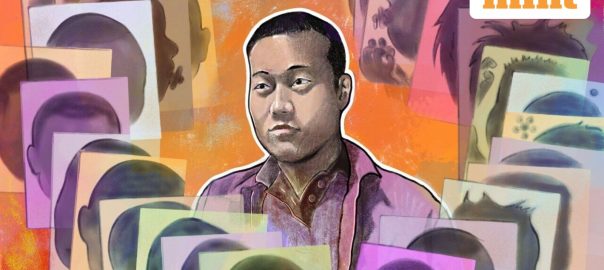
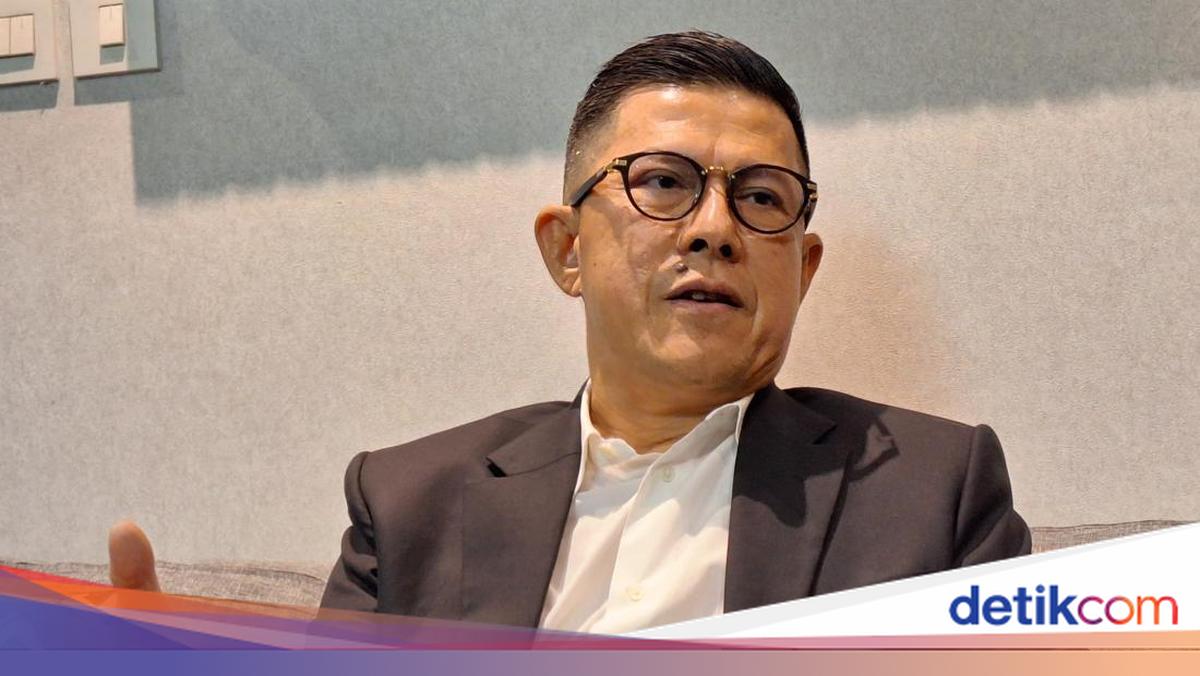
Inside a closed courtroom in Los Angeles, something was not right. Clerks working for Family Court Judge Amy Pellman were reviewing routine surrogate petitions when they noticed an unusual pattern: the same name, over and over again. A Chinese billionaire sought parental rights to at least four unborn children, and the court’s additional research showed he had already fathered or was fathering at least eight more – all through surrogates. When Pellman called Xu Bo in for a confidential hearing in the summer of 2023, he never entered the courtroom, according to people who attended the hearing. The fantasy video game producer lived in China and appeared via video, speaking through an interpreter. He said he hopes to have 20 or so US-born children through surrogacy—boys, because they’re better than girls—to one day take over his business. Several of his children were raised by nannies in nearby Irvine while they waited for paperwork to travel to China. He had not met them yet, he told the judge, because work was busy. Pellman was worried, according to the people who attended the hearing. Surrogacy was a tool to help people build families, but what Xu described didn’t look like parenthood, the people said. The judge denied his request for parentage — usually granted quickly for the intended parents of a baby born through surrogacy, experts say. The decision cast the children he paid for into legal limbo. The court declined to comment on Xu’s case. An online mega-poster but a true recluse, Xu rarely spoke to reporters and was not photographed in public for nearly a decade. A representative for Xu’s company, Duoyi Network, did not respond to specific questions about the trial or Xu’s use of surrogacy. “The boss does not accept interview requests from anyone for any purpose,” the representative told The Wall Street Journal in an email, adding that “much of what you described is untrue.” The representative, who did not provide a name, did not respond to repeated requests to clarify what was inaccurate. Pellman’s decision in the confidential case, which has never been reported, was a rare rebuke of a little-known trend in the largely unregulated U.S. surrogacy industry: Chinese elites and billionaires going outside China, where domestic surrogacy is illegal, to quietly have large numbers of U.S.-born babies. Since US surrogacy court proceedings are usually private, often without mention on the court’s public docket, surveillance is limited. Some Chinese parents, inspired by Elon Musk’s 14 famous children, are paying millions in surrogacy fees to hire women in the US to help them build families of spectacular size. Xu calls himself “China’s first father” and is known in China as a vocal critic of feminism. On social media, his company said it has more than 100 children born through surrogacy in the US. Another wealthy Chinese CEO, Wang Huiwu, hired American models and others as egg donors to have 10 girls, with the goal of one day marrying them off to powerful men, according to people close to the CEO’s education company. Other Chinese clients, who usually seek more typical babies, are high-ranking executives who don’t have the time or inclination to bear their own children, older parents or same-sex couples, according to people who arrange surrogacy deals and work in surrogacy law. All have the wealth to go outside of China while maintaining the privacy needed to manage potential logistical, publicity and legal issues at home. Some have the political clout to avoid censorship. The market has grown so sophisticated, experts say, that Chinese parents have sometimes had US-born children without ever setting foot in the country. A thriving mini-industry of American surrogacy agencies, law firms, clinics, delivery agencies and babysitting services — even picking up the newborns from hospitals — has sprung up to accommodate the demand, allowing parents to send their genetic material abroad and get a baby back at a cost of up to $200,000 per child. The growing Asian market for international fertility services has attracted the attention of American investors, including Peter Thiel, whose family office has backed a chain of IVF clinics across Southeast Asia and a recently opened branch in Los Angeles. Most US states do not prohibit international parents from working with US surrogates. Chinese law does not strictly prohibit its citizens from going overseas for surrogacy, but officials have criticized it. Stories of Chinese celebrities or government officials working with overseas surrogates have sometimes caused scandal among the public at home, which tends to view surrogacy as ethically dubious and exploitative. The babies born in the US are US citizens by virtue of the 14th Amendment. The idea that foreign nationals use the Constitution’s guarantee of citizenship has long been a political flashpoint. In 2020, the State Department moved to curb so-called birth tourism, tightening visa rules for women suspected of visiting the US to give birth. In January, Donald Trump issued an executive order denying citizenship to children born in the US unless one of their parents was a citizen or permanent legal resident, which is being reviewed by the Supreme Court. It is unclear whether any of the regulations apply to foreigners working with surrogates who are Americans. Last month, Sen. Rick Scott, the Florida Republican, introduced a bill in the Senate to ban the use of surrogacy in the US by people from some foreign countries, including China. He cited an ongoing federal human trafficking investigation into a Chinese-American couple in Los Angeles who have more than two dozen children, nearly all born through surrogacy within the past four years, as reported by the Journal. Law enforcement is looking more broadly at some Chinese parents who work with American surrogates. FBI and Department of Homeland Security investigators interviewed some surrogates who worked with Chinese parents, according to the surrogates, though the purpose of those investigations is unclear. The FBI declined to comment, and DHS did not respond to a request for comment. ‘We are not Costco’ Nathan Zhang, the founder and CEO of IVF USA, a network of fertility clinics in the US and Mexico that caters to wealthy Chinese and partners with surrogacy agencies, said his clients in the past were largely parents trying to circumvent China’s one-child policy. Babies brought back to China, as US citizens instead of Chinese citizens, fell outside the country’s penal system. The one-child policy was abolished in 2015. More recently, a new customer service has emerged. “Elon Musk is now becoming a role model,” Zhang said. A growing number of “crazy rich” clients are commissioning dozens, or even hundreds, of US-born babies with the goal of “forging an unstoppable family dynasty,” he said. One wealthy businessman in China, who like Wang is also in the education business, wanted more than 200 children at once using surrogates, envisioning a family business, Zhang said. “I asked him directly: ‘How do you plan to raise all these children?’ He was speechless,” said Zhang, who said he turned him down as a client. Other surrogacy professionals have described similar figures. The owner of one agency in California said that in recent years he has helped fill an order for a Chinese parent seeking 100 children, a request spread across multiple agencies. A Los Angeles surrogacy attorney said he has helped his client, a Chinese billionaire, have 20 children through surrogacy in recent years. Amanda Troxler, a Los Angeles-based surrogacy attorney, said her firm consulted with a hopeful Chinese parent who said she wanted eight or 10 surrogates and asked for a discount. “I was like, ‘No, we’re not Costco,'” said Troxler, who didn’t take the client because she rejects those seeking more than two surrogates at once. Oversight of the industry is so rare that it is nearly impossible to find out whether parents are working with multiple surrogates, across different agencies and law firms, people in the industry said. Joy Millan, owner of the surrogacy agency in California, said she was approached by a single father in China who wanted to hire four surrogates. She agreed to connect the father with one, only to learn later that he had gone to another agency to get more. “When we contacted him and said it’s your due date, the baby is on the way, he panicked and was like, ‘We’re already taking care of two babies!'” Millan said. “It’s not like you can’t have four kids, there are families that have four or five, but if you regret it, there’s no going back.” Industry groups recommend that agencies and IVF clinics do not work with parents seeking more than two simultaneous surrogates because of the logistical and emotional challenges, and the risk that it will increase the perception that surrogacy commodifies pregnancy. But Millan said the proposal lacked teeth. The most severe punishment for failure to follow the groups’ recommendations is to be removed as a member. Lisa Stark Hughes, a surrogacy agency owner and board member of the Society for Egg Donation and Surrogacy Ethics, acknowledged the difficulty of ensuring those recommendations are followed. The group discussed ways to more proactively detect when parents are pursuing multiple simultaneous surrogates across different agencies without violating patient privacy laws, she said. Some agencies do not hesitate. Hu Yihan, the CEO of New York IVF clinic Global Fertility & Genetics, which helps connect Chinese parents with surrogacy agencies, said that when one of her clients wants three or four simultaneous surrogates, the response is often enthusiastic. “I get positive feedback from the surrogacy agencies, they’re like, ‘That’s a big one! I want to do it!'” she said. Agencies typically receive $40,000 to $50,000 per surrogacy, separate from payments made to the surrogate carriers. Girls for future world leaders The Chinese government usually turns a blind eye to citizens pursuing surrogacy abroad, even allowing foreign agencies to quietly market their services at home. Still, Chinese parents who work with surrogates sometimes face a backlash. Liu Pengyu, the spokesperson for the Chinese Embassy in the US, told the Journal in a statement that government health authorities believe surrogacy can lead to a number of negative outcomes, including “serious family and social ethical crisis.” Wang, who fathered the 10 girls through American surrogacy, bought dozens of eggs from models, a Ph.D. and a musician—at a cost of between $6,000 and $7,500 each, according to the people close to his company. He is the president and CEO of Sichuan-based education group XJ International Holdings, formerly known as Hope Education Group, which owns and operates universities and technical colleges. Wang preferred girls, the people said, and hoped they would grow up to marry world leaders. Screenshots purporting to be of messages from a person claiming to share a nanny with Wang, discussing Wang’s use of surrogacy in the US, went viral on social media in 2021. Chinese media criticized the executive, saying that commercial surrogacy exploits women and violates Chinese public order and morals. Shares in Wang’s company fell around this time. XJ International Holdings, which had previously dismissed the claims as rumours, did not e did not respond to requests for comment. Around the beginning of 2019, Zheng Shuang, an actress and model who briefly signed with Prada, hired two American surrogates with her boyfriend, Zhang Heng. Before the children were born, the couple’s relationship began to deteriorate, and Zheng had second thoughts, according to documents in a Colorado custody case regarding the two children after their births. Zheng allegedly considered asking one of the surrogates to terminate the pregnancy, but the baby was too far along, according to email correspondence with the surrogacy agency included in court documents. Finally, Zhang, the father, flew to the US to attend births in Colorado and Nevada, and stayed in the country to care for the two babies. After posting on the Chinese social media site Weibo that Zheng had considered seeking abortions, the Chinese Communist Party released a statement criticizing them. “For Chinese citizens to exploit legal loopholes and flee to the United States simply because surrogacy is prohibited in China is in no way in accordance with the law,” the party’s Central Political and Legal Commission said in a statement. Zheng was dropped by fashion labels. The couple was investigated for tax evasion; she was ordered to pay a fine of nearly $46 million and he was fined $5 million in the tax case. Zhang, the boyfriend, eventually received sole parental responsibility for the children, according to court documents, and went on to found a California surrogacy agency focused on Chinese parents. Even some Chinese government officials have turned to the U.S. for surrogacy, industry lawyers and agencies say. Surrogacy was a key component in the scandal surrounding the disappearance of Chinese Foreign Minister Qin Gang in 2023. Qin, once a trusted aide to Chinese leader Xi Jinping, fell from grace after a Communist Party investigation found he had an affair with prominent newscaster Fu Xiaotian. Fu had a child in the US through surrogacy in late 2022. While the Chinese government never disclosed the child’s paternity, the incident fueled speculation that Qin was the father and prompted a wider party investigation into whether other top officials used surrogates to have children overseas, according to officials briefed on the matter. Both Qin and Fu disappeared from public view when the scandal broke. Meanwhile, some older Chinese parents, constrained by the one-child policy in their younger years, are looking to surrogacy to expand their families beyond typical child-rearing years. “Any household that’s upper-middle income, any guy that’s 60 years old, they have a vengeance on one-child policies,” said Hu, the New York fertility executive. “They’re trying to make up for something they wanted when they were young, but it was very limited, there was no way out, the technology wasn’t there, the market wasn’t there.” Regulatory arbitrage Researchers at Emory University found that international parents’ use of US surrogacy quadrupled from 2014 to 2019, when IVF clinics initiated 3,240 cycles for surrogates working with international parents, accounting for nearly 40% of the US total. The number has fallen during the pandemic amid global travel restrictions. Of international parents between 2014 and 2020, 41% were from China. Some investors are betting that these numbers will continue to rise. In 2018, Jinxin Fertility Group, based in Sichuan and publicly traded in Hong Kong, bought HRC Fertility, a chain of fertility clinics in Southern California whose doctors already had a significant Chinese client base. Jinxin partnered with an American surrogacy consultant in 2020, according to a corporate filing. Wang Bin, Jinxin’s chairman from 2018 to 2021, was previously a high-ranking official at Chinese state-owned enterprises, and the company’s investors included state-owned banks. Jinxin did not respond to a request for comment. The family office of Thiel, who last year raised concerns about declining birth rates on Joe Rogan’s podcast, has participated in two fundraising rounds totaling $30 million for Rhea Fertility to open a chain of international fertility centers in Thailand, Malaysia, Singapore and the Philippines focused on Asian parents. Rhea CEO Margaret Wang said Rhea, which opened an IVF clinic in Los Angeles late last year, targets parents interested in what she called “regulatory arbitrage” to access fertility and surrogacy services that may be illegal in their home countries. “The US remains the destination for people who have the resources and need to follow that path,” Wang said. A representative for Thiel Capital did not respond to a request for comment. ’50 high-quality boys’ Xu, the Chinese online game billionaire, has for years broadcast his ambitions to build a sprawling dynasty of children. On Weibo, accounts linked to Xu wrote that “Having more children can solve all problems” and fantasized about Xu’s children marrying Elon Musk’s children. Another, earlier Weibo account verified to be operated by Xu wrote in 2023 that he hoped to have “50 high-quality sons”. That same year, Judge Pellman denied Xu’s parentage petition in Los Angeles. But a later post on one of the Weibo accounts linked to him said he had successfully appealed. “Xu Bo had several children (all of mixed Chinese and Jewish descent) taken away in the United States due to sabotage by feminists and malicious rulings by a female judge,” the account posted in April 2024 appeared to refer to the confidential hearing Xu attended the year before. “Later, appeals were filed, and all the cases that were tried were won. I heard that another case was won today, and one child was awarded to Xu Bo; he already received the child.” The user denied being Xu, but a Journal analysis linked this and another Weibo account to him. Xu’s company’s Weibo account reposted one of them, and the accounts shared details of the confidential US court hearing attended by Xu, a cropped photo of Xu’s passport, photos and videos of Xu’s children and other personal documents. The children are shown in the company of babysitters or in daycare-like settings where they eat meals, play or recite homework assignments. The Journal could find no public records of Xu appealing the judge’s decision. Such an appeal would normally be public in Los Angeles. Surrogate attorneys say it’s possible that if Xu had been denied parental rights in Los Angeles courts, he could have tried to file the same paperwork in another jurisdiction—to choose from the locations of the surrogate, the IVF treatment or the baby’s birth. Courts in different jurisdictions do not necessarily have visibility into parentage applications filed elsewhere. Last month, Xu’s ex-girlfriend, Tang Jing, claimed in a post on Weibo that he had 300 children living across numerous properties in several countries. Xu previously accused Tang of theft and the two have ongoing lawsuits. Tang did not respond to requests for comment. Duoyi Network said in a statement on Weibo at the time that the 300 figure was wrong, but confirmed an astonishing fact: “After many years of effort” through surrogacy in the US, Xu has “just a little more than 100” children. Later in November, the user linked to Xu posted a video of more than a dozen toddlers or early grade school-age children playing on an outdoor patio in an undisclosed location. “What the truth is, everyone can see for themselves,” the user posted. As the camera pans around the patio, the children – who appear to be mostly boys – start running towards it. “Daddy!” they shouted. “Daddy!” Write to Katherine Long at [email protected], Ben Foldy at [email protected] and Lingling Wei at [email protected]