الأرشيف السنوي: 2025

Thread worth Rs 6000 was available for Rs 3000, how did Pilibhit’s silk business reach the brink of closure? – how did pilibhits his industry reach the brink of closure is Chinese wire became a cause

Thread worth Rs 6000 was available for Rs 3000, how did Pilibhit’s silk business reach the brink of closure? – how did pilibhits his industry reach the brink of closure is Chinese wire became a cause

Updated: Tue, 16 Dec 2025 17:49 (IST) The silk thread production factory in Pilibhit is on the verge of closure. The price of local silk thread has fallen due to the availability of Chinese yarn. Established in 1973…read more Jagran Correspondent, Pilibhit. On one hand, huge demands of investment are being made by the Investors Summit, on the other hand, the silk thread production factory established in the Terai region is on the verge of closure. The main reason is the easy availability of Chinese yarn in the market, due to which the price of locally produced silk thread has fallen rapidly. Remove advertisement Read news only The silk thread production factory behind the Handicapped Rehabilitation Center on Tanakpur highway was established in 1973. The objective was to provide production and employment opportunities for sericulture. During that time Hardoi, Shahjahanpur, Rampur, Bareilly, Badaun, Moradabad were also connected to this factory. Apart from procuring cocoons from the silkworm rearing centers operating in these districts, initially about two hundred and fifty farmers were involved in silkworm rearing. In the initial years, the factory ran smoothly. After this, the factory began to suffer losses. As a result, the factory was closed. After that it was given to a cooperative organization to operate. The organization gave up after operating the factory for one year. After this, the Silk Development Department auctioned the old machines of the factory and had new machines installed in their place. After the installation of machines, thread production was started by women’s groups to increase the silk industry. When women were added. According to officials at that time, in the year 2022, the price of silk thread prepared from cocoon in the market was up to a maximum of six thousand rupees per kg. During that time, women prepared silk thread in three layers. But suddenly there was a decline in silk thread in the market. Due to the yarn coming from China, this rate has now reached a maximum of Rs 3100 per kg. In such a situation, more than three quintals of yarn prepared in the factory were dumped. The dealer is not ready to give a reasonable rate for the wire. A month ago, Mubarak was sent 10 kg of wire as a sample. But no response was given from the traders. In such a situation, women’s groups are concerned. The women say that they worked hard to prepare the thread from the cocoon. Thought I would get a reasonable rate. But it didn’t happen. This was also the reason for reaching the brink of closure; new machines were installed in the silk factory of Bangalore. These machines were installed around the year 2022. On which the government spent a budget of over Rs 22 lakh. Boiler, test unit, rinse unit etc. machines are installed in these machines. So that better quality silk can be produced. Initially she was prepared and supplied to areas like Vanaras, Mubarakpur, Azamgarh, Chandauli etc. If the prices were good, the women’s group began to make the thread wholeheartedly. But suddenly the price dropped. The situation is such that even the women are unable to meet their expenses. As a result, three quintals of yarn were spilled. That is why women are now turning away from thread making. He has now chosen another profession. Such factories have reached the brink of closure. Not only this, the mulberry garden constructed in Puranpur Sherpur Kala has also turned bad. Where trees have now reduced. Otherwise, this garden was once famous.

IPL Auction 2026: Green became the most expensive player of the auction, sold here for how many crores

IPL Auction 2026: Green became the most expensive player of the auction, sold here for how many crores

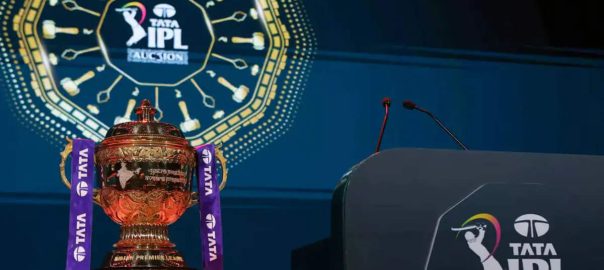
IPL 2026 auction is going to take place today. This is a mini-auction, and it will take place in Abu Dhabi. You can watch the IPL 2026 auction live on both TV and mobile. You can also get all the updates on IPL 2026 auction on abplive.com. This time, Australian all-rounder Cameron Green is expected to be the most expensive player. More than 350 players will be bid for in the IPL 2026 auction. However, a maximum of only 77 players can be purchased. Kolkata Knight Riders have the most money to spend in this auction, ₹64.30 crore. KKR will look to rebuild their squad as they have to buy around 13 players in the auction. In this mini-auction, all 10 teams will participate in the auction held in Abu Dhabi to buy a total of 77 players. All the teams have a total of ₹237.55 crore. Mumbai Indians have the least money, just ₹2.75 crore. Chennai Super Kings have more than ₹43 crore in IPL 2026 mini auction, Kolkata Knight Riders have the biggest purse of ₹64.30 crore. KKR will look to rebuild their squad as they have to buy a total of 13 players in the auction. Knight Riders may have to compete with the Super Kings while bidding for players in this mini-auction. Chennai Super Kings has the second largest purse of ₹43.40 crore. Super Kings will also try to buy good players in this mini-auction to balance their squad. Yashraj Punia was bought by Rajasthan and Prashant Solanki was bought by Kolkata. Uncapped bowler Yashraj Punia was bought by Rajasthan Royals at a base price of Rs 30 lakh. At the same time, Kolkata Knight Riders bought Prashant Solanki at the base price of Rs 30 lakh. Sushant Mishra was sold for Rs 90 lakh, Akash Madhwal remained unsold. Rajasthan Royals bought uncapped bowler Sushant Mishra for Rs 90 lakh. Sushant’s base price was Rs 30 lakh. Akash Madhwal remained unsold. Naman Tiwari sold for Rs 1 crore Naman Tiwari, who had a base price of Rs 30 lakh, was bought by Lucknow Super Giants for Rs 1 crore. Simarjeet Singh, Raj Limbani, Vansh Bedi and Tushar Raheja remained unsold. Ashok Sharma sold for 90 lakhs and Kartik Tyagi sold for 30 lakhs. Among the uncapped players, fast bowler Ashok Sharma was bought by Gujarat Titans for Rs 90 lakhs. Kartik Tyagi of UP was sold for his base price of Rs 30 lakh. Tejashwi Singh sold for Rs 3 crore and Mukul Chaudhary for Rs 2.60 crore. Kolkata Knight Riders bought uncapped wicket-keeper batsman Tejashwi Singh for Rs 3 crore. Lucknow Super Giants bought uncapped wicket-keeper batsman Mukul Chaudhary for Rs 2.60 crore. Karthik Sharma also sold for Rs 14.20 crore. Chennai Super Kings also opened their coffers for uncapped player Karthik Sharma. Chennai bought Karthik Sharma for Rs 14.20 crore. Earlier, CSK bought Prashant Veer for Rs 14.20 crore. Chennai spent Rs 28.40 crore on two uncapped players. Prashant Veer becomes the most expensive uncapped player of IPL. In the all-rounder category, Chennai Super Kings bought uncapped Indian player Prashant Veer for Rs 14.20 crore. Its base price was Rs 30 lakh. Prashant Veer became the most expensive uncapped player in IPL history. Aaqib Nabi Dar’s luck shines Jammu and Kashmir fast bowler Aaqib Nabi Dar’s luck shines in the IPL 2026 auction. This uncapped Indian fast bowler, whose base price was Rs 30 lakh, was bought by Delhi Capitals for Rs 8.40 crore. Rajasthan bought Ravi Bishnoi for Rs 7.20 crore. Leg-spinner Ravi Bishnoi was bought by Rajasthan Royals for Rs 7.20 crore. West Indies’ Akeal Hosein was bought by Chennai Super Kings for his base price of Rs 2 crore. Mujeeb Ur Rehman and Mahesh Theekshana remained unsold in the auction. Mathisha Pathirana sold for Rs 18 crores Sri Lankan fast bowler Mathisha Pathirana sold for Rs 18 crores. He was bought by Kolkata Knight Riders. Pathirana became the most expensive Sri Lankan player. Meanwhile, South African fast bowler Anrich Nortje was bought by Lucknow Super Giants for his base price of Rs 2 crore. IPL 2026 list of unsold players so far Jake Fraser-McGurk Prithvi Shaw Devon Conway Sarfaraz Khan Gus Atkinson Rachin Ravindra Liam Livingstone Wiaan Mulder Srikar Bharat Jonny Bairstow Rahmanullah Gurbaz Jamie Smith Deepak Hooda Ben Duckett bought open for Rs Delhis Ben Duckett sold for Rs Delhi 2 crore. KKR bought New Zealand’s Finn Allen for Rs 2 crore. Both transactions were done at base price. Meanwhile, Quinton de Kock was sold for just Rs 1 crore. He was bought by MI. Venkatesh Iyer was sold for just Rs 7 crore, De Kock and Finn Allen were also sold. Indian all-rounder Venkatesh Iyer, who was sold for Rs 23.75 crore last year, was sold for just Rs 7 crore in the IPL 2026 auction. Iyer was bought by RCB. KKR bought New Zealand’s Finn Allen for Rs 2 crore, and Mumbai Indians bought Quinton de Kock for Rs 1 crore. Quinton de Kock sold for just Rs 1 crore. Mumbai Indians bought South African wicketkeeper-batsman Quinton de Kock in the auction for just Rs 1 crore. This transaction was done at their base price. Wanindu Hasaranga was sold for Rs 2 crore, Liam Livingstone remained unsold. Sri Lanka’s mystery spinner Wanindu Hasaranga was bought by Lucknow Super Giants for his base price of Rs 2 crore in the IPL 2026 auction. At the same time, England’s explosive all-rounder Liam Livingstone remained unsold. Rachin Ravindra also found no buyer. Cameron Green sold for Rs 25.20 crore Australian all-rounder Cameron Green has now become the most expensive foreign player in IPL history. Kolkata Knight Riders bought Green for Rs 25.20 crore in the auction. Chennai Super Kings also made their biggest bid for this player in IPL history. However, according to the new rules, Green will get only Rs 18 crore. The remaining money goes to the Players Welfare Fund. Prithvi Shaw and Devon Conway remain unsold as the first set of IPL 2026 auctions gets underway. Many big players remained unsold in the first set. Prithvi Shaw, Jake Fraser-McGurk and Devon Conway remained unsold in the IPL 2026 auction. David Miller sold at base price, Prithvi Shaw remains unsold South African explosive batsman David Miller was bought by Delhi Capitals for his base price of Rs 2 crore. Meanwhile, Australia’s Jake Fraser-McGurk and India’s Prithvi Shaw remained unsold. Australia’s Jake Fraser-McGurk remained unsold. No team bid for Australian explosive batsman Jake Fraser-McGurk. Jake Fraser-McGurk remained unsold.

Fog wreaks havoc on Delhi-Mumbai expressway, massive 20 vehicle collision in Nuh… 4 including two police officers killed

Fog wreaks havoc on Delhi-Mumbai expressway, massive 20 vehicle collision in Nuh… 4 including two police officers killed

A fatal accident took place on Monday morning due to dense fog on the Delhi-Mumbai highway passing through Nuh district of Haryana. More than 20 vehicles collided head-on. Four people were killed and more than 15 were injured. The injured were admitted to hospital. This accident took place near Ranila-Pathakpur village in Pingawan police station area. According to eyewitnesses, visibility was reduced to less than 10 meters due to dense fog that suddenly appeared in the morning. Two overloaded dumper trucks collided with each other. A few minutes later, a truck loaded with guavas also collided with the dumper. Two policemen were also killed. After this accident, a truck loaded with guavas overturned, scattering hundreds of kilos of guavas on the road. After this, the vehicles collided one after the other. The vehicles damaged in the accident include cars, trucks, dumpers and other heavy vehicles. Two policemen on duty were also killed in the accident. This accident created chaos on the highway. Many vehicles were badly damaged and people were trapped inside. The condition of some of the injured is believed to be serious. The injured were admitted to hospital. As soon as information about the accident was received, the police, ambulance and rescue team reached the spot. Relief and rescue work was started with the help of nearby people. The injured were immediately admitted to a nearby hospital, where they are undergoing treatment. The police took the bodies of those who died into their custody and sent them for postmortem. Due to the accident, there was a complete traffic jam on the highway for several hours. Cranes were used to remove damaged vehicles and scattered guavas from the road, after which traffic gradually recovered. Share this story Tags

Trouble will mount for Sonu Sood and The Great Khali, master thug Ravindranath revealed many secrets during interrogation

Trouble will mount for Sonu Sood and The Great Khali, master thug Ravindranath revealed many secrets during interrogation

The detention of notorious fraudster Rabindranath Soni has ended. He has now been sent to prison. During police interrogation, Rabindranath confessed many shocking secrets which the police are currently investigating. Police believe that Rabindranath is not alone in these scams worth crores, many more people may also be involved. Police also believe film actors Sonu Sood, Sooraj Jumani and Vibhas Trivedi are also equal partners with Rabindranath. All of them are accused of hawala deals with many companies related to a company called Blue Chip, from which crores of rupees were earned. Rabindranath has so far only been accused of fraud, but now allegations of cyber fraud are also coming to light in this case. In an interview to a media outlet, Sonu Sood said he had attended the company’s event but had nothing to do with the fraud allegations. A few days ago Rabindranath was arrested in Dehradun, Uttarakhand and sent to Kanpur Jail on charges of fraud worth billions of rupees. SIT’s investigation SIT has taken Rabindranath into custody to investigate the entire matter. During this time, he was taken to Delhi and Dehradun, where many mobile phones, laptops, hard drives and CPUs were recovered from his house. The police are currently preparing to take legal action against two big names in this case. The biggest name is that of Sonu Sood, and the second name that has come up is that of The Great Khali. The police are preparing to send a legal notice to both of them to record their statement. Kanpur police also reported that important evidence was found against Sonu Sood. Preparation of action against Sonu Sood: During interrogation, Rabindranath Soni told the police that Sonu Sood was promoting his company, for which he paid him a fee of Rs 1.5 crore. However, the SIT found out that Blue Music Company was registered in Bangkok. Sonu Sood runs it with his friend Suraj Jumani. Police investigation has revealed that notorious fraudster Ravindranath Soni is involved in hawala business. Police consider Ravindranath, Sonu Sood, Vibhas Trivedi and Suraj Jumani as equal partners in this entire case. He is accused of committing fraud of about Rs 15 billion in about 10 countries, including Dubai, India and Japan. The police are trying to get to the bottom of the whole case. Share this story Tags

Watch speed, these are the black spots on Yamuna highway; where fog kills

Watch speed, these are the black spots on Yamuna highway; where fog kills

With the onset of winter, Yamuna Expressway and Eastern Peripheral Expressway in Gautam Buddha Nagar district have again become unsafe for road accidents. The risk of accidents on the highway increases due to dense fog, high speed and driver negligence. Data from January to November 2024 and 2025 show that administrative efforts have slightly reduced the number of deaths, but the increase in accidents has not completely stopped. According to estimated data, a total of 1,165 road accidents occurred on the Yamuna Expressway in 2024, resulting in 362 deaths and 803 injuries. At the same time, from January to November 2025, 33 deaths occurred in 797 accidents and 764 people were injured. However, this figure has decreased significantly in the last three years. Officials say the decrease in deaths compared to previous years shows the effectiveness of safety measures. Fog and overspeeding are the main reasons. DCP Traffic Praveen Ranjan said that visibility reduces significantly due to dense fog in winter. Despite this, many drivers drive beyond the prescribed speed limit. According to traffic reports, speeding remains the main reason for accidents on Yamuna Expressway. More than 59,000 overspending challenges were issued in the first few months of 2025 alone. According to sensitive areas and police station officials, Dankaur, Jewar, Tappal, Zero Point and all crossings of Yamuna Expressway are considered as high accident zones (black spots). The risk of accidents increases due to fog in these areas, especially in the morning and at night. This year an appeal was made not to drive heavy vehicles at night due to dense fog. Strict steps taken by administration and officials: Yamuna Authority and Traffic Police have taken various steps to prevent accidents. The speed limit is reduced during the winter season. From 15 December, the speed limit of all vehicles was increased to 75. The traffic police also patrol at night and place reflective tape on large vehicles. People who drive in fog are warned by repeated advertisements. Officials say that stricter steps will be taken in the coming days to reduce road accidents during the winter season. Dense fog on the Eastern Peripheral Expressway: As winter progresses, dense fog causes maximum road accidents on the Eastern Peripheral Expressway. For the past few days, the maximum number of road accidents have occurred on this highway. Visibility reduced due to fog, yet speeding vehicles cause serious accidents. The pressure of heavy vehicles, trucks, trailers and containers on the Eastern Peripheral Expressway is a major reason. This highway connects many industrial and logistics zones, making this area more vulnerable to accidents. Estimated accident data from last year shows that the total number of road accidents was between 850 and 950, with around 280 deaths and more than 700 injuries. These figures are from Gautam Buddha Nagar. In terms of police station areas, Dadri, Badalpur, Kasna and Das are the black spots with the most accidents. Police urged drivers to drive slowly in fog, maintain a safe distance, use fog lights and avoid driving when tired. A little caution can save not only your life, but also the lives of others.

Banke Bihari will have darshan on the line of Tirupati, a high power committee may decide

Banke Bihari will have darshan on the line of Tirupati, a high power committee may decide

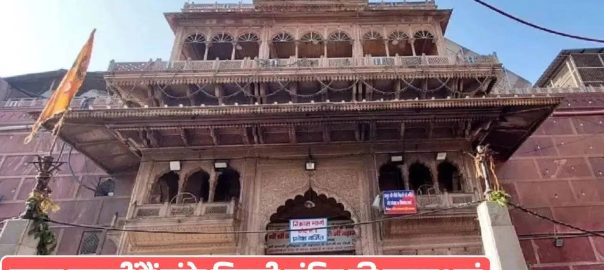
The crowd at the world famous Thakur Banke Bihari Temple in Mathura, Uttar Pradesh is increasing day by day. High Power Management Committee is making arrangements to install railings in Banke Bihari Temple. There will be discussion about arrangements like Tirupati Balaji in the temple. If similar arrangements can be made for the devotees in Tirupati Balaji also, it may become easier for the devotees to have darshan in the Banke Bihari Temple. Giving more information, Banke Bihari High Power Committee member Dinesh Goswami said that a committee meeting has been scheduled today to discuss the railing and arrangements in the Banke Bihari temple. Apart from this, arrangements like the railings installed in Tirupati Balaji are being made to facilitate darshan in the Banke Bihari temple as well. After today’s meeting it will become clear how this plan will be implemented. During the meeting, chairman Ashok Kumar and sub-committee chairman Mukesh Mishra will discuss many issues with other officials and members of the committee. Member Sevayat Dinesh Goswami said that many issues will be discussed with the committee chairman. On the one hand, there will be discussion about live broadcasting. Many other issues will be discussed. Inspection report of the half completed hall of the temple, report of the work done by the benches, darshan in the queue and report of the chartered accountant will be presented. There will be discussions on implementing the darshan reservation system, installing railings to facilitate darshan in the queue, preparing records of temple property and making reports on services not following the previous orders. Along with simplifying the payment process of the temple, repair of damaged silver on the doors will also be discussed. Share this story Tags

Trump continued to shout tariff-tariff, while PM Modi played a big game, saying – ‘India is not dependent on anybody…’

Trump continued to shout tariff-tariff, while PM Modi played a big game, saying – ‘India is not dependent on anybody…’

Donald Trump doubled the tariffs imposed on India to 50%, the initial impact of which was felt across many sectors. However, these Trump tariffs, which were implemented from August 27, seem to be losing their effect now, they have not had any significant impact on the Indian economy, and exports are now showing good growth. There was a significant increase in Indian export figures in November, while there was a decline in imports. The good news is that despite the many side effects of Trump tariffs, India’s trade deficit narrowed last month. India’s trade deficit reduced. Despite the pressure of 50% tariff attack from the US, India has done very well. Trade deficit narrowed due to increase in exports in November. This reduction in trade deficit is due to the strong performance of the engineering goods, electronics and gems and jewelery sectors. According to PTI, India’s trade deficit narrowed to $24.53 billion in November from $31.93 billion a year ago. Government data released on Monday showed that India’s merchandise trade deficit narrowed faster in November compared to October. In October, pressured by tariffs, it was $41.68 billion. This reduction in trade deficit reflects business growth due to India’s strong exports and low imports. November covered the damage The US initially imposed a 25% reciprocal tariff on India, then doubled it to 50% after Donald Trump accused India of financially supporting Vladimir Putin by buying Russian oil and weapons in the Ukraine war. This had a significant negative impact on exports in September and October, but India’s strong strategy offset the impact of the tariffs. After the release of government data, Commerce Minister Rajesh Aggarwal said that exports in November made up for the losses incurred in October this year. Strong increase in exports, decline in imports According to the report, there was a strong increase of 19.37% in Indian exports in November, which reached $38.13 billion, while Indian imports decreased by 1.88% last month, falling to $62.66 billion. Rajesh Aggarwal described November as a good month for both India’s imports and exports. He said the services sector also remained strong, and India’s exports to the US alone increased by $1.3 billion to $6.98 billion in November from a year earlier. Despite high tariffs of 50%, India’s merchandise exports to the US remained stable. Looking at India’s export-import data for the April-November period, merchandise exports increased to $292.07 billion, while imports increased to $515.21 billion. During the period, exports to the US reached $59.04 billion, compared to $53.01 billion recorded in the same period a year ago. Trade with other trading partners Among other trading partners, India’s exports to the United Arab Emirates (UAE) stood at $25.49 billion, while imports stood at $40.81 billion. Imports from China increased to $84.27 billion, while imports from Russia decreased to $40.81 billion. The Narendra Modi government has taken several steps to protect the economy from external shocks such as US tariffs, including tax cuts, export incentives and labor reforms. These government measures help India deal with global trade challenges.

Deputy Minister of Social Affairs and Bappenas discuss empowerment-based poverty alleviation

Deputy Minister of Social Affairs and Bappenas discuss empowerment-based poverty alleviation

Jakarta – Deputy Minister of Social Affairs (Wamensos) Agus Jabo Priyono today held an audience with Deputy for Community Empowerment, Population and Employment Bappenas Maliki in the 6th floor meeting room of the office of the Ministry of Social Affairs (Kemensos). The meeting discussed strengthening poverty alleviation strategies through a measurable and sustainable community empowerment approach. During the hearing, Agus Jabo emphasized the Ministry of Social Affairs’ commitment to the implementation of President Prabowo Subianto’s orders to reduce the national poverty rate to below 5 percent by 2029 and eradicate extreme poverty to zero percent by 2026. According to him, this policy must be concretely carried out through programs that have a direct impact on the target and have it. Agus Jabo explained that the Ministry of Social Affairs is currently focusing on three main mandates. First, updating the National Social and Economic Single Data (DTSEN) together with the Central Statistics Agency (BPS) so that all social assistance (bansos) is right on target. Second, strengthening the People’s School program. Third, poverty alleviation through empowerment. Scroll to continue with content “The Ministry of Social Affairs’ own schemes in the poverty alleviation program are two. One, using the graduation route carried out by PKH assistants. The Minister ordered 400 thousand KPM (graduations) in 2026. One PKH companion is targeted by the Ministry KPM graduates, at least 0 KPM graduates, 0. Affairs’ empowered villages, then the work Ministry of Social Affairs together and works with other parties,” explains Agus Jabo in his statement, Tuesday (16/12/2025). He explained that the Ministry of Social Affairs’ Empowered Village program has started in nine villages, including Pesodongan (Wonosobo), Kalisalak (Banyumas), Gambuhan (Pemalang), Wlahar (Brebes), Dimoro (Grobogan), Purwosari (Magelang), Ngesrepbalong (Kendal), Peniron (Keonpuhmen) and Keonpuhmen. “From the 9 villages we empowered under the name Kampung Berdaya Kemensos, we graduated 300 KPM PKH. So it is really concrete, they advanced to the class and dared to leave social assistance and PKH. This means that what we did with the experience of the past year is effective,” said Agus Jabo. The empowerment program is adapted to local potential. In tourist areas, the Ministry of Social Affairs encourages the strengthening of the tourism sector. In other areas, the Ministry of Social Affairs works with private partners to develop superior products. In Kalisalak Banyumas Village, for example, the Ministry of Social Affairs is working with PT MAP to develop water hyacinth handicrafts that have now entered the export market. “We have already exported to America, this is our second export. This means that the people are happy, before they did not have money because of the economic activities they had. Finally, the fathers who worked in the rice fields during the day participated to help make baskets at night,” said Agus Jabo. The Director General of Social Empowerment at the Ministry of Social Affairs, Mira Riyati Kurniasih, reported similar results. In Bogor, hundreds of KPMs left the aid program after receiving empowerment interventions. “Yesterday in Bogor, I received a report that 113 PKH KPMs left social assistance. We intervened in Bogor just yesterday for an empowerment program. Through the take-off mechanism, it is the easiest. It means that all the products are purchased directly by the company,” said Mira. Meanwhile, Deputy for Community Empowerment, Population and Employment at Bappenas, Maliki emphasized the importance of changing the mindset of the beneficiary communities. According to him, state assistance is not always synonymous with social assistance. “It must be emphasized that in fact they received assistance, but the term was promoted to class. They no longer received social assistance, but they were empowered,” Maliki explained. At the end of the meeting, Agus Jabo gave souvenirs in the form of export quality handicrafts from KPM PKH to the high-ranking officials of Bappenas who were present. For information, also present at this audience was the Director of Poverty Alleviation and Social Welfare of Bappenas, Tirta Sutedjo; Director of Social and Economic Independence at Bappenas, Dinar Dana Kharisma and Director of Empowerment of Remote Indigenous Communities and Social Entrepreneurship at the Ministry of Social Affairs, I Ketut Supena. (acd/ega)

Ministry of Cooperatives and Disaster Relief Cooperative Movement collects aid for Sumatra

Ministry of Cooperatives and Disaster Relief Cooperative Movement collects aid for Sumatra

Jakarta – The Ministry of Cooperatives (Kemenkop) together with the Disaster Care Cooperative Movement is collecting aid for victims of floods and landslides in Sumatra. This action highlights the role of cooperatives as business entities as well as pillars of social and economic resilience in the midst of the crisis. Minister of Cooperatives (Menkop) Ferry Juliantono emphasized that the cooperative movement has a responsibility to provide real solutions for communities affected by disasters. According to him, disasters not only cause material losses but also have an impact on social, economic and psychological aspects, therefore it is hoped that the aid collected can ease the burden and fulfill the basic needs of the victims. PAGE TO CONTINUE CONTENT “We need to prioritize, focus our attention on recovery there. Now we help as part of the government, we focus on how to overcome urgent problems as part of the recovery process,” he said in a written statement on Tuesday (16/12/2025). He added that the Disaster Care Cooperative Movement will continue until an indefinite time limit. The Ministry of Cooperatives also sent a letter to the Territorial Assistant to the Commander of the Indonesian Air Force to transport the cooperative’s coffee production in Bener Meriah Regency. Ferry also explained that around 200 tons of coffee belonging to the cooperative could not be marketed due to cut off access to the road. Therefore, air transport assistance is needed so that the coffee can be marketed outside the Aceh region with the sales proceeds returned to the cooperative. “We are sending a letter to the commander-in-chief so that air force planes can transport coffee from the cooperative in Benar Meriah. This will make things easier for the community because access to land transport has been cut off,” he added. As further support, the Ministry of Cooperatives will establish posts in Aceh, North Sumatra and West Sumatra as centers for coordinating aid distribution as well as socio-economic recovery. The Ministry of Cooperatives together with related parties is currently taking an inventory of cooperatives affected by the disaster, including the Red and White Village/Subdistrict Cooperative (KDKMP). Officers from the Cooperative Service, Business Assistant and Project Management Office (PMO) were also deployed as volunteers to help solve various problems in the field, especially those related to cooperatives. This move is in line with President Prabowo Subianto’s directive to provide reprieve for disaster-affected KDKMP. “Yesterday at the cabinet meeting it was announced that village cooperatives and the Merah Putih sub-district will get relaxation. This is a form of the government’s attention to recovery in disaster areas,” explains Ferry. The aid distributed includes clean water distillation equipment, toiletries, children’s toys, women’s specific needs, nappies, portable toilets and other needs. All aid will be distributed through posts in Aceh Tamiang, South Tapanuli and Agam. Meanwhile, Secretary of the Ministry of Cooperatives (SesKemenkop) Ahmad Zabadi said that almost 100 cooperatives participated in fundraising in a short time. The total cash funds raised so far reached IDR 1.64 billion. “About 90 cooperatives out of thousands of existing cooperatives participated. This shows extraordinary commitment in solidarity action,” he said. He said that the first phase of the Disaster Care Cooperative Movement will continue as a form of sustainable solidarity. “We will especially continue to provide aid for disasters in Sumatra and we will continue this as solidarity support of the Cooperative Movement,” he said. Furthermore, the representative of the Aceh Government Liaison Agency, Feronika, expressed her appreciation for the assistance provided by the Ministry of Cooperatives and the Cooperative Movement. According to him, this assistance is very useful for the people of Aceh who currently need food, baby supplies and energy to survive in the midst of emergency conditions. (anl/ega)

Sumatra disaster death toll continues to rise Now 1,053 people

Sumatra disaster death toll continues to rise Now 1,053 people

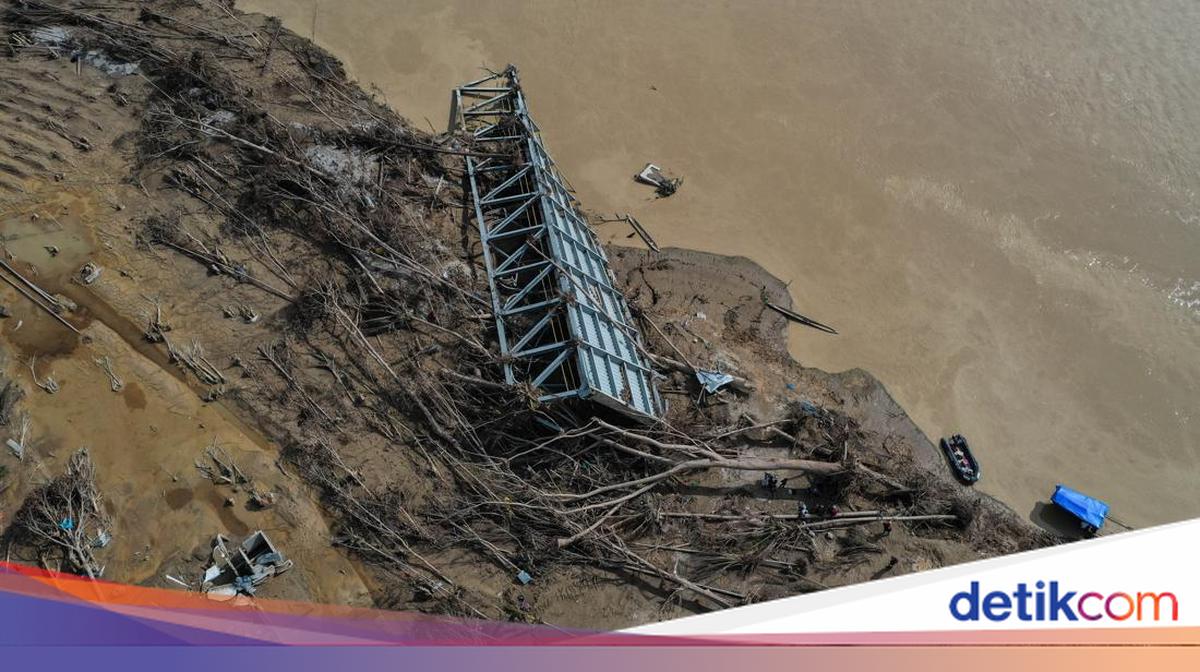
Jakarta – BNPB has updated data on deaths from flash floods and landslides in Aceh, West Sumatra and North Sumatra. The number of deaths is now 1,053 people. “Data as of December 16, 2025, the total number of victims who died as a result of floods and landslides in 3 provinces was 1,053 people,” said the head of the BNPB disaster data, information and communication center, Abdul Muhari, in a press conference, Tuesday (16/122025). Scroll to continue content The death toll found in Aceh today was 18 people. In details, 17 bodies were found in Aceh Tamiang and 1 body was found in North Aceh. Then 5 bodies were found in Central Tapanuli. So today’s search results managed to find 23 bodies. Abdul Muhari also explained that the number of missing victims today is 200 people. And as many as 606,040 refugees. The following is data on missing victims still being sought: North Sumatra:- Central Tapanuli: Sukabangun and Aloban Bair Districts (45 missing)- South Tapanuli: Garoga Village, Batang Toru (30 missing)- Sibolga City: Pancuran Gerobak, Sibolga City (1 missing) and Malalak West Regency District: Malalak West Regency5: missing)- Padang Panjang City: Batang Anai River Flow (31 missing)- Regency Padang Pariaman: Batang Anai River (1 missing)- Ranah Datar Regency: Batang Anai River Flow Aceh- Bener Meriah Regency (14 missing)- North Aceh Regency (6 missing)- Central Aceh Regency (4) Rayan Regency (3) missing (4) missing)- Aceh Tamiang Regency (idn/imk)