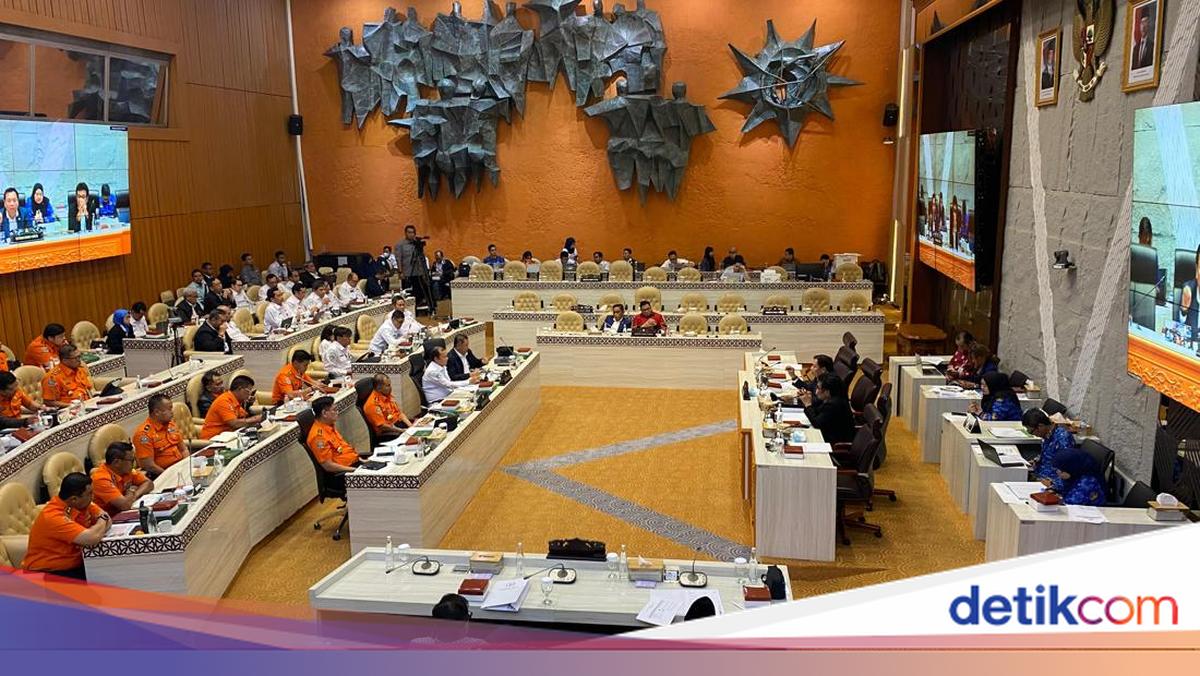
Djakarta – The rain that fell on Sumatra and caused floods and landslides is an anomaly. The Meteorology, Climatology and Geophysics Agency (BMKG) revealed that Sumatra received a month’s worth of rain in one day. BMKG initially explained that northern Sumatra was affected by the Tropical Cyclone Senyar phenomenon. BMKG predicted this about eight days before and gave a warning to the local government. “We could predict tropical cyclone Senyar about eight days before the cyclone formation process. So in the Aceh, North Sumatra, West Sumatra areas, the head of ward 1, BMKG region 1 center issued a warning eight days before, which was repeated four days before, then two days before,” said the head of BMKG Teuku Faisal Home Affair, Jakarta. Monday (1/12). Scroll TO CONTINUE CONTENT He asked regional heads to respond immediately to raise awareness. This information can also be provided directly to the public. “So there are also several regional heads who capture this information and pass it on directly to their staff at regional level,” he explained. Appeal to regional chiefs According to him, early warning of tropical cyclones causes extreme rainfall and the threat of hydrometeorological disasters, namely landslides and floods and flash floods. Regional heads must therefore react immediately and pay close attention to all available information. “Regional heads are also asked to be careful and pay attention to the information we provide through posts or coordinators for each province. There are five major centers that we have, they have the authority to give warnings directly to their provinces. They can be invited to discuss how to prepare for the next threat, they can be invited directly,” he said. There are anomalies. On the other hand, Teuku said that Indonesia is not actually a cyclone-prone area. However, sudden changes in weather and climate caused Cyclone Senyar in the Straits of Malacca to cause heavy rain and disaster in northern Sumatra. “But it seems that there was a deviation, due to atmospheric anomalies, then weather, cold weather and so on, so that what we know as Cyclone Senyar was formed in the Straits of Malacca,” he said. As a result of the cyclone anomaly, a major disaster occurred in northern Sumatra. Even though the cyclone category is low, the impact is great. “And at the same time, the temperature of the Malacca Strait was quite warm, which increased the rain, formed a lot of rain clouds, so even though Cyclone Senyar was in category 1, the lowest of categories 1 to 5, it caused a very big disaster impact,” he added. BMKG again conveyed his explanation at the Working Meeting with Commission V DPR RI. Chairman of Commission V DPR RI Lasarus said the disasters in Aceh, North Sumatra and West Sumatra were unusual because one month’s rain fell in one day. “Bazarnas can at least convey the extent of the searches that have been carried out, especially for the more than 300 victims who have not been found to date. Similarly, the BMKG will also convey it later, Sir. What is this phenomenon?” said Lazarus in a meeting at the DPR on Monday (1/12). Aerial view of the impact of flash floods that hit residential areas on Jalan Murai, Sibolga, North Sumatra, Sunday (30/11/2025). (ANTARA PHOTO/Muhammad Irsal) Lazarus considers the disaster in the north of Sumatra island an anomaly. He highlighted the large number of victims of the disaster. “Sir, we often experience floods and landslides. But, in my opinion, what happened this time was in Aceh, then in North Sumatra, and in West Sumatra, I think it is an anomaly, Sir,” Lazarus said. “The anomaly is in the category of extraordinary events, with 700 victims, almost 800 people who have died plus those who are still missing, to this day,” he continued. This PDIP politician asked the BMKG for an explanation about the disaster phenomenon in the north of Sumatra Island. At this moment, Lazarus and the head of BMKG Teuku Faisal Fathani had a conversation about a month’s rain that fell in one day during the Sumatra disaster. “Likewise, BMKG, sir, we ask for the latest information. I’m sure sir, the public certainly didn’t monitor it, that there was a tropical cyclone trapped above Sumatra, so the rain poured all over there. Earlier, the Head of BMKG told me, it’s rain for one year, sir, right?” asked Lazarus. “One month,” answered Teuku. “One month’s rain just spills in one day. So the volume of one month’s rain spills in one day. Well, this is also a phenomenon that should be, or our technology, our equipment can detect it so that people are alert,” Lazarus said. DPR Commission V asks BMKG and Basarnas to wait He asked Basarnas and BMKG not only to provide information to the public. Lazarus said that these two institutions should have been able to provide before the incident worsened. “This countermeasure should not only be about dealing with the aftermath of a disaster, sir, it should also be about working with friends there, doing work to ensure that the disaster does not happen in that place,” Lazarus said. “It’s dealt with early, that’s what anticipation is, yes, anticipating early is also part of dealing with it, sir, before disaster strikes,” he added. BMKG explains rain anomaly in Sumatra Head of BMKG, Teuku Faisal Fathani, then explained about the extreme rain that hit from 25-27 November. He said the volume of rainfall that fell was the same as the monthly rain that falls in one day. “The rainfall on November 25, November 26 and November 27 was black, it was very extreme. In fact, the highest was 411 mm per day in Bireuen Regency. It is even higher than the monthly rain there, maybe 1.5 months,” he said. “So it spilled in one day and imagine it happened for 3 days. This is now what causes a very massive hydrometeorological disaster to occur because then the country is not able or the country is unable to withstand such a large amount of rainwater spilling, causing flash floods, landslides and floods,” he continued. He also conveyed the rain that occurred in the North Sumatra region. Based on BMKG records, the volume of rain in Langkat is 390 mm per day. “Then it is in West Sumatra. So the key word is that tropical cyclones are not disasters that commonly occur in tropical areas, but this is the incident that we are facing now. So earlier in the coordination meeting at the Ministry of Interior, together with the heads of BNPB and Basarnas, we got direction that it was time that Indonesia should also be prepared for hydraulic disasters, not only hydrotropical disasters, not only hydraulic disasters. we are familiar with,” he explained. He also said there was a threat of cyclone seeds in the waters of southern Indonesia in the period November to February. Areas to be vigilant are Bengkulu, southern Sumatra, southern Java Island, Bali, Nusa Tenggara, Maluku to Central Papua and Southern Papua. “These are areas prone to cyclone seeds that can develop into tropical cyclones. Of course, there will be the threat of high rainfall, hydrometeorological disasters and also high waves,” he said. (rdp/rfs)