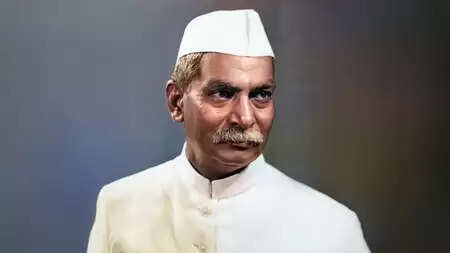
New Delhi, December 2 (IANS). Born in Jiradei village Siwan district of Bihar, a big boy, Dr. Rajendra Prasad not only played a leading role in the freedom struggle, but also made an indelible mark in the reconstruction of Republic of India. The life of Dr. Prasad, known as ‘Deshratna’, was a symbol of simplicity, sacrifice and service. From Rashtrapati Bhavan to every village and street, his memory remains a source of inspiration even today. Dr. Rajendra Prasad was born on 3 December 1884 in an ordinary farming family. His father Mahadev Sahay was a Sanskrit scholar, while his mother Kamleshwari Devi was a religious woman. Rajendra, the youngest among four siblings, was brilliant from childhood. At the age of just five, he learned Persian. After completing his primary education at Chapra Zilla School, he took admission in Presidency College, Calcutta. In 1902 he received the Robert Fellowship after passing the Intermediate examination with first division. MA in Economics in December 1907 Completed, then won the gold medal in Bachelor of Laws (LLB) in 1915. He was the first person to receive the degree of Doctor of Laws from Allahabad University. He was successful in law, but national service dampened him. Dr. Prasad’s married life was also in accordance with the traditions of that era. At the age of just 12, he married Rajvanshi Devi in 1896. He remained a widower after the death of his wife. His son Mahendra Prasad also became active in politics. Dr. Prasad’s life was filled with high thoughts. He was a lover of Vedanta, religion and literature. His works like ‘Partition of India’, ‘Satyagraha in Champaran’ and ‘Autobiography’ are relevant even today. Dr. A strong supporter of Hindu-Muslim unity, Prasad also contributed to social reforms. Dr. Prasad’s entry into the freedom movement began with the Champaran Satyagraha of 1917. At the call of Mahatma Gandhi, he reached Bihar and stood against the exploitation of indigo farmers. They were successful in subduing the government by recording the statements of about 25,000 farmers. This movement was the first application of Gandhiji’s non-violent principles, which Dr. Prasad established himself on the national stage. The Rowlatt Act of 1918 and the Jallianwala Bagh massacre of 1919 brought him closer to Gandhiji. He left the practice of law in 1920 while participating in the non-cooperation movement. Dr. Prasad was elected President of the Indian National Congress four times (1934, 1939, 1947, 1948). His activism in Salt Satyagraha, Quit India Movement and Individual Satyagraha was commendable. Despite his prison visits, he never wavered. After independence Dr. Prasad became the President of the Constituent Assembly. He finalized the Constitution on 26 November 1949. On 26 January 1950, he became the first President of India. While holding this post for 12 years (1950-1962), he strengthened the roots of democracy. His role in making the Constitution was fair and well organized. He is the only president to be elected twice in a row. Even in Rashtrapati Bhavan led a simple life – wore Khadi, ate vegetarian food and remained associated with prayer meetings. He left the post after being awarded Bharat Ratna in 1962. Dr. Prasad died on 28 February 1963 at Sadakat Ashram, Patna. In his last days he remained engrossed in spiritual contemplation. His life was the essence of ‘simple living, high thinking’. He used to say, “Service to the nation is my religion.” –IANS SCH/AS