Not only Archita Phukan, these Indian beauties have made a name for themselves in porn, you will be shocked to know their names.

Not only Archita Phukan, these Indian beauties have made a name for themselves in porn, you will be shocked to know their names.

When Assamese actress Archita Phukan announced her entry into the adult film industry, there was a wave of mourning across the country. People started searching for him on social media, his name started appearing on Google Trends, and suddenly an unknown face became part of the national conversation. Archita’s new path may come as a surprise to many, but a closer look at her journey reveals that this change has been happening for a long time. Archita Phukan started by creating roles on Instagram. Her videos reflected glamour, boldness and confidence, which soon established her as an up-and-coming social media influencer. However, its content has already been criticized, with many accusing it of promoting obscenity. But now that she’s opened up about entering the adult film industry, those same critics are quietly saying, “What’s more, Reels went way beyond that.” Is Archita Phukan the first Indian adult star? But the question is: Is Archita Phukan the first Indian woman to decide to work in the foreign adult film industry? no way Many women from India have already become part of this global industry, which has not only given them global recognition but also a lot of wealth. Let’s take a look at some adult stars of Indian origin whose stories have created both discussion and controversy. Sunny Leone It is impossible to talk about Indian or Indian-origin adult film actresses without mentioning Sunny Leone. Sunny began her career in the adult film industry, and her popularity grew so quickly that she became one of America’s top porn stars. She got into this field because of financial problems. However, his career changed completely after he came to India through “Bigg Boss”. Today she is a famous Bollywood actress, and Indian society has wholeheartedly accepted her. Priya Anjali Rai Born in New Delhi, Priya Anjali Rai was adopted by an American couple and moved to the United States at the age of two. She entered the adult film industry in 2007 and retired in 2013. At the time, she was considered one of America’s most popular and famous adult stars. Priya’s story shows the gap between India and the western world, which a woman has bridged with her courage. Anjali Kara Anjali Kara was also born in Delhi, India. He made his mark in the adult film industry not only as an artist but also as a director. Within a few years she became a household name in the industry in England. He acted until 2007 and then started directing. Anjali is one of the few women of Indian origin who has understood and developed the production of adult content technically and artistically. Also Read Lee Jay Lee Jay, whose real name is believed to be Lia Joshi, is another mature star of Indian origin who entered the industry at the age of 21. He quickly made a name for himself due to his bold acting and ease in front of the camera. JD Jewel Born in Hyderabad, JD Jewel entered the adult industry at the age of 21. She spent her childhood in India and later moved to England. She is also said to have been one of the first women to start an adult website in India. This meant that she was not only an artist, but also involved in the technological expansion of digital pornography. Destiny Devil: Destiny Devil’s real name is said to be Shabina. He started working in the industry while living in England and changed his name to gain recognition. Today, she is considered one of the most popular adult stars of Indian origin.

X also serves porn content to minors, children can also create accounts, so why isn’t action taken?

X also serves porn content to minors, children can also create accounts, so why isn’t action taken?

While the Indian government is cracking down on pornographic and offensive content on OTT platforms, the global social media platform X is not only promoting pornography, but has also become a very profitable platform that acts like porn sites. The minimum age to open an account on X is 13 years. This is where the problem begins. The platform does not have a strong age verification system or any proactive measures to keep content away from children. As a result, 13- or 14-year-olds watch adult content on X. In India, it is legally prohibited for anyone under the age of 18 to view adult content, but X is not forced to comply. Subscription trap in the name of free clips: Many fake profiles on X share short clips of pornographic videos, which link users to the official website or third-party portal. When visiting these portals, users are either asked for huge subscription fees or they are infected with malware and viruses. These viruses also steal personal information, photos and videos, paving the way for blackmail. In many cybercrimes, it has been found that users involved in similar pornographic promotion activities have been threatened by hackers, extorted money and in some cases even forced to commit suicide. Disregarding Supreme Court Guidelines The Supreme Court of India has clearly ordered a complete ban on pornographic content, especially videos that are non-consensual and insult the modesty of women. However, the situation is different on X. Several videos have emerged allegedly depicting sexual exploitation, violating the privacy of women bathing in public events like the Kumbh Mela, and promoting criminal activities. Government acted on 5 July 2025. The central government has ordered 25 OTT platforms promoting pornographic content to be shut down on July 5, 2025. Major platforms like ALTT, Ullu and Desi Flix were also affected. But no permanent ban has been imposed on social media platforms like X because they operate at the international level and are outside the legal purview of India. According to cyber law expert Virag Gupta, under the “Moderation Guidelines” in India, social media companies will have to create a clear control system against such content. But this absence on X is a matter of concern for now. The conflict between technology and ethics The current system of monitoring content on digital platforms is technically limited and not clear in terms of policy. Although the government has issued certain guidelines through IT regulation in 2021, it seems to be very difficult to actually follow them. Under these guidelines, social media companies are required to appoint a “grievance officer” and clearly categorize content. But platforms like X do not have such officers, nor is there any transparency in content moderation. Rapidly increasing popularity of OTT platform The OTT craze in India started in 2013 when TV channels started growing digitally. Then, in 2015, when Hotstar started streaming IPL, the popularity of OTT increased rapidly. But the close of 2020 has led to a huge increase in the number of viewers on platforms with pornographic content. Viewership on platforms such as ALTT and Ullu grew by 60% in 2020. ALTT’s active users increased by 21%. Although the government has now banned these platforms, global platforms like X have not been affected. What to do now?: Looking for solutions Strengthening the age verification system: The government should implement mandatory age verification tools for X and other such social media platforms. AI-based content filtering: Advanced artificial intelligence tools should be used to identify obscene content. International cooperation to bring platforms under Indian law: International diplomatic efforts should be made to make platforms like X liable under Indian law. Digital Literacy: Parents and children need to be made aware of online threats and digital safety.

Tesla sales boom in car market! Worst global sale in 4 years, situation is even worse in India

Tesla sales boom in car market! Worst global sale in 4 years, situation is even worse in India

Tesla, the world’s most popular electric car company, is currently going through a difficult sales phase. Its sales in the US fell sharply, hitting a four-year low, while its entry into emerging markets such as India also fell short of expectations. Despite the launch of affordable models, the company is facing declining demand, raising serious questions about the future strategy of the world’s largest automaker. What the numbers say A recent Reuters report citing Cox Automotive said that Tesla’s US sales fell about 23% in November to 39,800 units, the lowest figure since January 2022. Interestingly, this decline came at a time when the company introduced cheaper standard variants of its most popular electric vehicles, the Model Y had even cheaper models and the Model Y failed to keep up. hoped that these lower-priced models, which cost about $5,000 less, would help meet demand after the tax credit expired. However, demand across the US EV market has fallen sharply since the Trump administration eliminated the $7,500 federal tax credit in late September. According to Stephanie Valdez Streety, director of industry insights at Cox, “This decline clearly shows that Tesla’s cheaper standard variants are not as in demand as expected. Moreover, their introduction has had an impact on the sales of premium models, especially the Model 3. Standard variants are very important for the company as Tesla is currently working on two big plans for the future – robotaxi.” Tesla’s slow start in India Tesla entered India’s fast-growing luxury EV market in September, but initial sales fell short of expectations. According to the state vehicle portal, Tesla sold just 157 units between September and November. In November, Tesla’s sales were just 48 units, while BMW sold 267 electric cars in the same month. Mercedes-Benz also maintains its strong hold in the premium segment. Tesla entered India in July this year with the Model Y electric SUV. This electric car is brought to India as a fully imported vehicle. In India, its prices start at ₹59.89 lakh and go up to ₹73.89 lakh (ex-showroom) for the top model. Although the launch has generated a lot of excitement, early data shows that the company faces stiff competition from existing luxury brands. Growing network in India Despite slow sales in India, Tesla is expanding its network. On July 15, the company opened its first Indian showroom at Bandra Kurla Complex (BKC) in Mumbai. Later, on August 11, the company opened its next showroom in Aerocity, Delhi. Recently, the country’s first Tesla center was opened at Orchid Business Park in Sector 48, Gurugram. The facility provides retail, after sales service, delivery and charging infrastructure under one roof.

If you are on you too, Shani Dev’s Half -Century and Dhayya, then this good solution is this Navratri! You will get benefits right away, go to the video all

Saturn will change the game of fate in 2026, these zodiac signs will live like a king, there will be rain of wealth and respect

In astrology, Shani Dev has a special place. While the unfavorable position of Saturn can bring many problems, the favorable position can also awaken the sleeping destinies. When Saturn is in a favorable position, the person’s life becomes like a king. According to astrologers, when Saturn is in a favorable position, it offers great opportunities for stability, progress and achievements in life. In 2026, Saturn will be in Pisces and will shower special blessings on some zodiac signs. Let us know which zodiac signs will be blessed by Shani Dev in 2026: Aries: The full blessings of Saturn will give a new direction to the career of Aries people. There will be opportunities for promotion, advancement and leadership. Protracted conflicts will come to an end, and hard work will yield rich rewards. The economic situation will also be strong. Leo: 2026 will be very special for Leo people. The transit of Saturn will bring them social respect and recognition. Artists, journalists, civil servants and people associated with management will get important benefits. The pending work will be completed, and happiness will increase in the family. Scorpio: The fortunes of Scorpio people will be strong in 2026. With the blessings of Saturn, there is a possibility of financial gain, profit from property and fulfillment of long cherished dreams. The impact of the work done this year will be visible for many years to come. Capricorn: Capricorn is Saturn’s own zodiac sign, so 2026 will bring special results for these people. From work to business, there will be improvement in every area. There will be steady progress in property, family life and career. Enemies will be defeated, and confidence will increase. Pisces: 2026 will bring enlightenment and a new beginning for Pisces. With the help of Saturn there will be stability in life. Opportunities related to work, study, career and new work abroad will be strong. Spiritual peace and family harmony will also increase. Share this story Tags

New Mini Cooper Convertible launched in India at ₹58.50 lakh. Top 6 facts

New Mini Cooper Convertible launched in India at ₹58.50 lakh. Top 6 facts

The new Mini Cooper Convertible is the most affordable drop-top car in India. Limited time offers on popular models With its 7-speed DCT, the Cooper S Convertible flies to 100 km/h from standstill in 6.9 seconds before reaching 240 km/h. Mini may not be as popular as the other luxury car brands like Mercedes-Benz, BMW or Audi in India, but the British car brand certainly has its own fans. The BMW Group-owned carmaker has launched its latest generation Mini Cooper Convertible in India at a price of ₹58.50 lakh (ex-showroom), making it the most affordable convertible car in India. The Mini Cooper Convertible commands a premium of ₹14.80 lakh over the standard Cooper S and is priced ₹4.1 lakh higher than the JCW trim. This drop-top iteration of Mini Cooper S hatchback is the third launch from the OEM in three months, following the JCW All4 and Countryman SE All4 in October and November of this year, respectively. The Mini Cooper Convertible was launched in India as a CBU (Completely Built Unit) import model. Bookings for the car have already opened at all dealers of the company, with deliveries expected to begin immediately. If you’re thinking of buying the new Mini Cooper Convertible, here are the most important facts you should before you make the deal. Mini Cooper Convertible: Most Affordable Convertible in India With a price tag of ₹58.50 lakh (ex-showroom), the Mini Cooper Convertible is the most affordable drop-off car you can buy in India. The closest to this model is the MG Cyberster, the electric convertible available in India, which is priced at ₹75 lakh (ex-showroom). No wonder, the Mini Cooper Convertible is much cheaper than the MG Cyberster. The top Mini is already available for booking and deliveries of this CBU car are expected to start immediately. It is ₹14.80 lakh more expensive than the standard Cooper S and ₹4.1 lakh more than the JCW trim. The Convertible comes with a standard two-year unlimited kilometer warranty and 24×7 roadside assistance. Mini Cooper Convertible: 4 colors offered The Mini Cooper Convertible is available in four different exterior color choices. These color options are British Racing Green, Chili Red, Sunny Side Yellow and Ocean Wave Green, along with black or white mirror caps. Mini Cooper Convertible: Classic Mini with updated details In terms of design, the new Mini Cooper Convertible comes with the signature Mini silhouette, but with updated details. The front profile features redesigned circular LED headlamps with multiple lighting cues. There is also a new radiator grille layout. Moving to the side profile, it gets white or black mirror caps, contrasting with the exterior color. The car rides on 18-inch dual-tone aerodynamically designed alloy wheels. Moving to the rear, it has received vertically-aligned LED taillights finished in a flat-surface styling. Mini Cooper Convertible: A retractable fabric roof operates at 30 km/h One of the main highlights of this convertible is the electrically operated fabric roof that can be opened in 18 seconds and closed in just 15 seconds, while the vehicle is traveling at a speed of up to 30 km/h. The retractable fabric roof can also be partially opened to act as a temporary sunroof. With the roof closed, the luggage compartment stands at 215 litres, while with it folded the storage capacity is reduced to 160 litres. Mini Cooper Convertible: A cabin full of features The Mini Cooper Convertible gets a cabin full of features. Despite the signature minimalist theme of Mini, the car gets a round OLED center touchscreen infotainment system powered by BMW OS 9, which also serves as the instrument cluster. It gets integrated navigation, Apple CarPlay, Android Auto and Intelligent Personal Assistant. Other notable features include a HUD, Harman Kardon sound system, digital key functions, wireless charging, electric sports seats with Vescin upholstery, etc. Mini Cooper Convertible: What drives it? The new Mini Cooper Convertible is powered by a 2.0-litre turbocharged petrol engine mated to a seven-speed dual-clutch sports automatic gearbox. The engine produces 201 bhp of peak power and 300 Nm of maximum torque. The convertible is capable of running 0-100 kmph in 6.9 seconds and it has a top speed of 240 kmph.

Agri-tech woes: Why India’s new e-NAM portal failed its Rajasthan pilot

Agri-tech woes: Why India’s new e-NAM portal failed its Rajasthan pilot

Copyright © HT Digital Streams Limited All rights reserved. Center rolls back use of revamped agri-trade portal in most Rajasthan mandis. The 10 mandis using e-NAM 2.0 will run e-NAM 1.0 in parallel to guide farmers through the transition. (Bloomberg) Summary The Union government has significantly scaled back the use of its revamped electronic agricultural trade portal, e-NAM 2.0, across Rajasthan. NEW DELHI: The Union government has rolled back the use of the revamped version of the electronic agriculture trading portal (e-NAM 2.0) across most of Rajasthan for now and will continue to operate the previous version of the platform in all 173 mandis, or wholesale markets, limiting the upgraded platform to just 10 mandis of the two people with direct knowledge of the development. The 10 mandis where the electronic National Agricultural Market (e-NAM 2.0) is currently in use will also run e-NAM 1.0 in parallel, so that farmers get a proper handle during the transition to the new system, they said. “The ministry opted for a phased approach to avoid any disruption to auctions, invoicing or payments during peak arrivals, to ensure that farmers can continue to use the current platform until the upgraded system is proven stable,” said one of the two people quoted above. Under the revised plan, e-NAM 1.0 will remain fully operational while e-NAM 2.0 will be piloted in the selected mandis to gauge trading volumes, settlement efficiency and system reliability, this person said. The ministry will roll out the new platform across all 173 mandis in Rajasthan only after the pilot shows smooth, uninterrupted operations, the second person said. In response to a Mint query, the agriculture ministry’s Small Farmers Agri-Business Consortium (SFAC) said that after the pilot launch of e-NAM 2.0 in Rajasthan, certain suggestions and issues were reported. The team is working to incorporate the suggestions and resolve the issues. “Meanwhile, it has been decided to conduct operations through e-NAM 1.0 in Rajasthan and to limit the deployment to 10 mandis in Rajasthan,” it said. Tonk, Jodhpur and Sujangarh are among the 10 mandis where the pilot version of e-NAM 2.0 is being operated. Plenty of glitches Mint reported on December 8 that the government’s move to help farmers with greater market access through its revamped digital platform, the electronic National Agricultural Market, had experienced glitches and Rajasthan’s market committees reported data mismatches, user identification problems and disruptions in Mandi operations after the old system was shut down, even as the new version was on board. Key takeaways The Union government was forced to roll back its flagship e-NAM 2.0 platform from 163 of Rajasthan’s 173 mandis due to critical operational and technical glitches reported after its November 3 rollout. The new strategy involves running the older, stable e-NAM 1.0 in parallel with e-NAM 2.0 in the 10 pilot mandis to prevent disruptions and provide farmer handholding. The initial shutdown of e-NAM 1.0 resulted in farmers losing access to competitive bids from multiple mandis, forcing them to sell to local traders and possibly receiving lower prices during the peak arrival season. Specific technical errors included incorrect mapping of users to newly created districts, non-visible user profiles and mixing of lots from different mandis in the bidding process. The central objective of e-NAM 2.0, to enable smoother cross-mandi trading through a mandatory unified license, was seriously challenged by the failed initial rollout. E-NAM is one of the government’s flagship digital reforms for agriculture, connecting around 18 million farmers through 1,522 mandis on the platform, out of nearly 7,500 regulated mandis nationwide. The platform aims to improve price discovery, reduce cartel formation and enable farmers to sell outside their local mandis, thereby helping them secure better returns and increase their income. “Farmers have now been allowed to work through e-NAM, which was completely discontinued after the launch of e-NAM 2.0 on November 3,” said Raghunath Ram, secretary, Krishi Upaj Mandi Samiti, Nagaur, Rajasthan. The transition disrupted the sale of produce, and as a result, farmers had no choice but to sell their agricultural goods at the physical mandi. “They lost access to competitive bids from various mandis and had to rely only on the traders who were present locally on that day, which reduced competition and could lead to lower prices,” he said. Nagaur is one of the mandis that sees huge arrivals of major cash crops, especially spices like cumin (jeera) and fennel seeds (saunf). In Nagaur mandi, located in the west of the state, peak arrivals also include green gram (moong), cluster bean (guar) and moth bean. This will help farmers adapt to the new version without any disruption in selling their crops, Ram said, adding that the government’s decision is timely as the arrival season is at its peak. Increase farmers’ access “Allowing farmers to move back to e-NAM 1.0 is a practical step because the sudden rollout of e-NAM 2.0 has disrupted on-ground sales,” Dharmendra Malik, national spokesperson Bhartiya Kisan Union (Arajnaitik). With both systems running in tandem for now, farmers can continue to receive fair prices while they gradually get used to the new platform, he added. The rollout of the e-NAM 2.0 pilot began on November 3 across all 173 mandis in Rajasthan, following the selection of Akal Information System Ltd as the technology partner through a competitive tender process. The contract, worth over ₹25 crore for four years, is extendable for four years. In a written reply in the Rajya Sabha on July 25, Minister of State for Agriculture and Farmers Welfare Ramnath Thakur said that 1.79 crore farmers, 2.67 lakh traders and 4,518 Farmer Producer Organizations (FPOs) were registered on the e-NAM platform as of June 30 and 30 million agricultural products. traded on the portal. Get all the industry news, banking news and updates on Live Mint. Download the Mint News app to get daily market updates. more topics #agriculture #trade Read next story

Hailee Steinfeld is expecting! Actress Announces First Baby With NFL Star Josh Allen | Watch video

Hailee Steinfeld is expecting! Actress Announces First Baby With NFL Star Josh Allen | Watch video

Hailee Steinfeld and her husband, Josh Allen — both 29 — are expecting their first child together, according to a report by PEOPLE. Steinfeld announced the news in her Substack newsletter while celebrating her 29th birthday with a list of her 29 favorite moments from the past year, the report said. At the end of the recap, she included a video announcing the pregnancy, which shows her standing in the snow with her baby bump while Allen kisses her belly. The clip ends with the two smiling and posing together, Steinfeld wearing a fleece labeled “mom,” celebrating the exciting news of becoming parents. Watch the video: In her November interview with Bustle, Steinfeld said that “life makes sense” since marrying Allen. She also talked about their relationship and shared that she feels endlessly grateful to have found her lifelong partner. Steinfeld and Allen, who started dating in 2023, were married on May 31 in Santa Barbara, California. In the June edition of her Beau Society email newsletter, the actress noted all the “magical” moments of their wedding weekend. In the newsletter, she wrote: “I’m sitting here with Josh, and we’re thinking about the best weekend of our lives for the millionth time. Over the past two weeks, random yet very specific memories have come back into our heads, and we’ve blurted them out to each other, often through smiles, laughter and tears.” She went on to add, “It felt like love ran through the veins of every tree at our beautiful venue in Santa Barbara. Our family and friends coming together reinforced it.” (This is a developing story, check back later for updates)

Rising costs are forcing employers to rewrite employee benefits

Rising costs are forcing employers to rewrite employee benefits

Copyright © HT Digital Streams Limited All rights reserved. Companies are phasing out benefits like telemedicine, which were indispensable during the pandemic but no longer essential, as they seek to cut unnecessary costs. (iStockphoto) Summary The move comes as employee costs escalate and health insurance premiums balloon, prompting companies to redesign their benefits programs to fit the needs of a multigenerational workforce and ensure financial discipline. Indian companies are rethinking the benefits they offer their staff, such as health care, retirement plans, wellness benefits and leave, as they try to control budgets while retaining top talent without compromising on employee experience. The move comes as employee costs escalate and health insurance premiums balloon, prompting companies to redesign their benefits programs to align with the needs of a multigenerational workforce and ensure financial discipline. “Rising costs—driven by medical inflation at 11% more than general inflation—force organizations to optimize benefits strategies without compromising employee experience. The real cost of benefits depends on utilization, which is a recalibration of what remains standard versus what becomes flexible,” said Vinod VK, head of health and benefits, India, WTW, a global consulting and solutions company. Companies are phasing out benefits like telemedicine, which were indispensable during the pandemic but no longer essential, as they seek to cut unnecessary costs, he said. WTW’s Benefits Trends Survey 2025, shared exclusively with Mint, shows that 55% of the more than 500 employers studied in India highlighted the pressure of rising benefit costs on budgets as a “key business issue”. Some 38% said that financial constraints limit their ability to deliver wellness programs, while 34% admitted that a tighter budget affects the health benefits offered to employees. To be sure, technology is reshaping employee profiles, prompting companies to look at their benefits programs through a new lens. According to a C-suite executive at one of the top three private banks in India, employee costs along with the advent of artificial intelligence (AI) have pushed them to rethink what benefits will work for the firm. “AI has forced the banks to re-check whether certain profiles are necessary. In that case, the kind of benefits offered also change,” said this CEO, who did not want to be named. The new labor codes also instruct firms to ensure annual health examinations for employees over 40. “That benefit will increase our expenses and therefore one has to look at which benefits stay and which go away,” added the CEO. In its 2025–26 Benefits Scorecard, Mumbai-based Prudent Insurance Brokers said that while more firms are switching to flexible benefits to offer employees greater choice, scaling these programs remains difficult due to year-round engagement needs, inconsistent participation and rapidly changing workforce expectations. “It’s more than just flexibility; it’s about building a benefits ecosystem that is intuitive, inclusive and deeply personal,” it said, adding that “forward-thinking companies” are adopting choice-based and personalized benefits programs, including both insurance and non-insurance options, often powered by wallet-based solutions. These may include wellness plans that cover physical fitness, elder care, pet care, pregnancy care, financial wellness, health screening plans, health coach, women’s specific wellness and disease management. In November, the government consolidated the country’s employment statutes into four codes guaranteeing minimum wages, early gratuity, social security and occupational safety, likely to increase costs for employers. Pradeep Chauhan, founder and chief economic officer of Finfinity, a fintech focused on employee financial well-being, said legacy firms are looking at ways to introduce benefits that deepen employees’ connection to their workplace. For example, refining medical plans to focus on high-impact care, directing wellness efforts to common medical needs, giving employees more choices within the same budget, or financial guidance tools that help employees manage their money better, without the companies incurring any extra costs. “Today’s flexible hiring market gives employers more room to explore new approaches with less risk. This transition gives companies the opportunity to redesign benefits in a way that is practical, mutually beneficial and aligned with real needs,” Chauhan told Mint. Companies are also tailoring health insurance benefits and offering them to those who need them, in a reflection of the multi-generational workforce profile. Many young employees still have their parents working and may not need separate or additional health care insurance. A Coin analysis shows that employee costs for the Nifty 500 firms were 15% of net sales in the September quarter, up from 15.4% in the same period last year. Employee costs fell to 14.4% at the end of March, before rising again over the next three months. Anand Rathi Insurance Brokers highlighted that companies are “scuttling benefits that have become expensive or ineffective”, mainly in group health insurance. This comes on the back of rising medical inflation and high claim ratios forcing the introduction of co-payments, room rent limits, sickness-wise sub-limits and employee-funded co-payments. A co-payment is a fixed amount that the beneficiary must incur, with the insurer paying the rest. Outpatient and wellness benefits are being redesigned as they often lead to excessive, unnecessary use. As a result, many employers are moving to models with restrictions or compensation to combat abuse. Parental covers, maternity limits and dependent cover are also being restructured as they are the key contributors to premium escalation. “The shift to an employer’s market certainly gives organizations more confidence to tighten or redesign their benefits, but the real pressure comes from rising healthcare costs and unsustainable premium increases,” says Milind Tayde, head employee benefits, Anand Rathi Insurance Brokers. London-based Howden Insurance Brokers said in a November 19 report titled ‘The Changing Face of Employee Health’ that globally, 93% of businesses expect medical costs to rise, even as health and wellness emerge as a top priority for employees. As a result, more than two-thirds or 67% of businesses are investing in preventive health care to cope with rising medical inflation. Around 61% of employees are more likely to stay with an employer that offers a good healthcare package, and 47% see this as an important factor in looking for a new role, the report said, adding that while “this highlights the need for businesses to address their healthcare offering, it is challenging to navigate in a high-cost environment”. Get all the industry news, banking news and updates on Live Mint. Download the Mint News app to get daily market updates. more topics #employment Read next story


Construction of schools damaged after a disaster in Sumatra from February 2026

Construction of schools damaged after a disaster in Sumatra from February 2026

Jakarta – Minister of Basic Education Abdul Mu’ti is working to rebuild schools damaged by floods and landslides in the regions of Aceh, North Sumatra (North Sumatra) and West Sumatra (Sumbar). Construction of damaged schools is targeted to begin in February 2026. Abdul Mu’ti said that his party is currently continuing to collect data on all schools affected by natural disasters in the three provinces and the extent of the damage. “Now we have collected the data, hopefully in February 2026 we will start rebuilding the damaged schools,” Abdul Mu’ti said as reported by Antara, Saturday (13/12/2025). Scroll TO CONTINUE CONTENT Furthermore, he said that his party has currently created three emergency learning scenarios by classifying the scale of damage to schools affected by the natural disaster. One of these scenarios is emergency learning for 0-3 months for schools that are affected but still have several classrooms suitable for holding teaching and learning activities. In such school conditions, his party implemented an alternating learning system while his party repaired the damage to the school. Meanwhile, the second scenario is emergency learning for 3-12 months, and the third scenario is emergency learning for up to 3 years for schools experiencing severe damage or even total collapse. “Because if a school has completely collapsed, building a new one will obviously take a long time. Some of them even have to relocate. This means that if you build a new building in a new place, it will also take time to find the land,” he said (rfs/rfs)

The moment Cabinet Secretary Teddy greeted Acehnese residents who were left behind the president’s entourage

The moment Cabinet Secretary Teddy greeted Acehnese residents who were left behind the president’s entourage

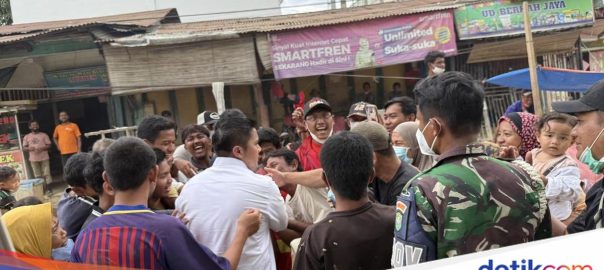
Jakarta – President Prabowo Subianto visited and greeted residents in areas affected by flash floods in Aceh Tamiang. There was a moment when Cabinet Secretary Teddy Indra Wijaya greeted the residents until Prabowo’s group was left behind. The moment began with screams from residents calling Teddy’s name and waving their hands in Aceh Tamiang, Friday (12/12/2025). “Mr. Teddy, Mr. Teddy,” shouted a number of mothers, holding up their cellphones. Teddy then approached, shaking hands and joking to calm the residents who seemed nervous about being able to meet him in person. When he returned to the vehicle, Teddy was still in the crowd of residents wanting to shake hands. Scroll TO CONTINUE CONTENT When Teddy was done with the residents, Prabowo’s group had already moved. Teddy was left behind and had time to run to catch Prabowo’s car. Unable to catch up, Teddy ended up riding in a journalist’s car at the back of the convoy. “(The group left behind) yes, I had time to meet the residents first. It’s not nice for them to wait,” Teddy said. In the journalist’s car, Teddy sat near the door, which was deliberately left slightly open. From that gap he continued to wave to the residents standing along the road. Teddy Indra Wijaya greets residents after missing Prabowo’s group in Aceh Tamiang. (Eva Safitri/detikcom) Sometimes Teddy responds to calls from residents who seem to be able to see him up close. “Just saying goodbye to them is very happy,” he said. Residents along the road reacted loudly. Some shouted Teddy’s name, some jogged while holding up their cell phones, and some just smiled when they saw Teddy. During a short chat with journalists, Teddy also talked about Prabowo’s habits when he goes through disaster areas. “The car is slow because of the dust. The train in front is also slow so the dust doesn’t get high,” he added. (eva/rfs)