There is a chance for skydiving adventure in Mahakal city, know the booking and timings

There is a chance for skydiving adventure in Mahakal city, know the booking and timings

There is a chance to do skydiving adventure in Mahakal city, know the booking and timings Last Updated: December 14, 2025, 15:12 IST Ujjain News: The excitement was at its peak on the very first day of the skydiving festival. The contestant and the coach jumped together from a height of 10 thousand feet. Both of them rapidly descended into the air for about 6 thousand feet at a speed of about 220 km per hour. Once they reached a distance of about 4 thousand feet from the ground, the parachute opened and their hover mode began. Ujjain: Tourists coming to Mahakal city can now enjoy more. Now here we get a chance to live the thrill of sky heights. In which it has now become possible in Ujjain to see adventure lovers parachuting safely from thousands of feet above. It has already started in the city, in which many people had an exciting experience by jumping from a height of 10 thousand feet on the very first day. Modern and Safe Skydiving Experience: This event is conducted by Sky-High India, a DGCA and USPA certified organization. The aircraft used is registered with the Directorate of Civil Aviation. This adventure is launched with trained skydivers and high safety standards, providing complete safety and excellent guidance to the participants. Parachute opened at 4 thousand feet. On the first day, the participants jumped from a height of 10 thousand feet with the coach. For about 6 thousand feet they continued to descend in the air at a speed of about 220 km per hour. Once it reached about 4 thousand feet above the ground, the parachute opened and an exciting 5 to 7 minute aerial ride was completed. Healthy people between 18 and 60 years old can be part of this experience. The participant told that the experience of seeing the city of Mahakal from the sky was unforgettable. There was definitely a fear of jumping from 10 thousand feet, but as soon as I sat in the plane, it felt like the blessings of Mahakal were with me. He said, “When the great and the great are together, there is no place for fear.” And concluded his talk by shouting ‘Jai Shri Mahakal’. Discussion and its timing: In view of the growing enthusiasm after four successful events held so far, the festival is being held for two months this time. More than 700 people participated in the last four editions. This time the fee for skydiving is fixed at Rs 30 thousand plus GST. The activity will be from 08:00 to 17:00 every day. Booking can be done on skyhighindia.com. This event, which started at Datana Airstrip, will continue till February 15. Tourists will be able to see the amazing view of the land of Mahakal from the air by jumping from a height of 10 thousand feet. On the very first day, around 100 adventure lovers from many cities including Ujjain registered. LP Tourism Council’s additional managing director Abhay Arvind Bedekar and joint director (Adventure) dr. Santosh Kumar Srivastava inaugurated the festival. According to Bedekar, this is the fifth edition of skydiving and adventure activities reaching Ujjain, lovers from all over the country. About the Author Rajneesh Kumar Yadav I am Rajneesh Kumar Yadav, associated with journalism since 2019. Worked as a city reporter in Amar Ujala for three years. I have been associated with News18 Digital (Local18) for three years. Was a reporter for Local 18 for two and a half years. Mahakumbh 2025 … read more Location: Ujjain, Ujjain, Madhya Pradesh First published: December 14, 2025, 15:12 IST homemadhya-pradesh There is a chance for skydiving adventure in Mahakal city, know the booking and timings.

New bus service from Ballabhgarh to Alwar has started, know the route, timing and fare here

New bus service from Ballabhgarh to Alwar has started, know the route, timing and fare here

New bus service from Ballabhgarh to Alwar has started, know the route, timing and fare here Last updated: 14 December 2025, 15:11 IST Ballabhgarh Bus Depot has restarted bus service to Alwar in view of increasing demand of passengers. The new 52 seater bus goes from Ballabgarh to Alwar via Sohna, Firozpur Jhirka and Nuh at 07:30 every day. The journey is completed in four and a half hours. The fare has been kept at Rs 175, senior citizens and children will get half the fare. Faridabad: Considering the comfort of the passengers, Ballabhgarh Bus Depot has started running buses for Alwar again. This bus will go to Alwar via Sohna, Firozpur Jhirka and Nuh. This service used to be available as well, but for some reason it had to be discontinued. Now seeing the continuous increasing demand from passengers, the depot has started it again. Every day around 160 buses ply on different routes from Ballabhgarh depot. Many of these are also long distance. Depot officials say that according to the needs of the passengers, they also have some extra buses, so that whenever the crowd increases, they can immediately arrange new buses. For this reason this new bus is again started for Alwar. Buses for Alwar started from Ballabhgarh. Talking to Local18, DI Narendra Rana of Ballabhgarh Bus Stand said that earlier buses were plying for Alwar as well, but now it has started again. This bus leaves Ballabhgarh at 07:30 and stops on the way at Sohna, Firozpur Jhirka and Nuh. People from intermediate towns and villages can also travel directly by this bus, due to which they also benefit a lot. How many seats are there? Rana told that it is a new 52 seater bus in which good seating arrangements have been made. Passengers can travel comfortably. He also said that the bus fills up almost as soon as it leaves, which clearly shows that there is a lot of demand for this route among the people. What is the timing? After reaching Alwar, this bus returns from Alwar to Ballabhgarh at 1:00 PM. Those who travel daily get the benefit of timing from this. Rana told that the bus covers the distance from Ballabhgarh to Alwar in about four and a half hours. What is the rate? He also told about the fare, the fare from Ballabhgarh to Alwar is Rs 175. It is fixed at Rs 45 for Sohna, Rs 65 for Nuh, Rs 90 for Firozpur Jhirka and Rs 130 for Naugama. The fare has been kept reasonable for all ordinary passengers, elderly and children. Children will have to pay half the fare. DI said that senior citizens aged 60 years or above will have to pay half the fare. There is also half fare for children between 3 and 12 years. Children over the age of 8 who have a Happy Card will also get the benefit. Passengers will get relief. He admitted that when this bus was stopped, people had to face a lot of trouble. People traveling to Alwar and surrounding areas became dependent on other means, which cost a lot of time and money. Now that the bus started again, the passengers got great relief. The depot administration says that if the crowd on the route increases further, more buses can also be operated. If we see the response of the people so far, it seems that this bus service started for Alwar is beneficial for the passengers. About the Author Vivek Kumar Vivek Kumar is a senior journalist with 10 years of media experience. Currently he is associated with News 18 Hindi and keeps an eye on the local news of Haryana, Uttar Pradesh and Uttarakhand. Apart from this, the country-… read more Location: Faridabad, Faridabad, Haryana First published: 14 December 2025, 15:11 IST homeharyana New bus service from Ballabhgarh to Alwar has started, know the route, timing and fare here.

The woman officer who took on the Naxalites created history, the unheard story of the lady leader of CRPF

The woman officer who took on the Naxalites created history, the unheard story of the lady leader of CRPF

The woman officer who took on the Naxalites, who created history, the unheard story of the lady leader of CRPF Last Updated: 14 Dec 2025, 15:08 IST CRPF IG NITU BHATTACHARYA: Nitu Bhattacharya in Balaghat came to the post of CRPF IG in Balaghat about 18 months ago. She said when Union Home Minister Amit Shah set the deadline to end Naxalism, they realized that it was a teamwork fight. CRPF IG NITU BHATTACHARYA: There was a shadow of red terror on Balaghat for about 35 years, which ended completely before the end of 2025. To eliminate Naxalism in Balaghat, MP Police, MP Police’s special unit Hawk Force, CRPF and other security forces have conducted more than 2350 anti-Naxal operations in the last one year. It is a joint success of all the security forces to make Balaghat Naxal free. Consequently, Deepak, being the last Naxalite, also surrendered by going to the CRPF camp in Korka village of Birsa police station area. Local 18 spoke to the security forces to whom Deepak, the last Naxalite of the district, had surrendered. Yes, there were units of different security forces for anti-Naxal operations, in which except CRPF, all men were prominent. But for the last one and a half years, there was also 1991 batch IPS officer Neetu Bhattacharya, who led the CRPF. Know what she told Local 18 … This lady officer came to Balaghat one and a half years ago Neetu Bhattacharya came to the post of CRPF IG in Balaghat about 18 months ago. She said when Union Home Minister Amit Shah set the deadline to end Naxalism, she realized that it was a teamwork fight. In such a situation, all the security forces and the states that fall in the Red Corridor must fight together. GP Singh, Director General of the CRPF, had clear instructions that the target should be achieved ahead of time. And we did it and it is a matter of pride for us. A year ago, more than 100 Naxalites were active. Local 18 asked him that a year ago there were four platoons of Naxalites, in which more than 100 Naxalites were active and they had the support of the villagers, which has changed now. He told that people used to run away after seeing the power, but now they come to us as soon as they see our vehicle and talk to us. Naxalites were not recruited for a long time. Conducted many operations in conjunction with Cobra. Now the situation has changed, I am very happy. Naxalite IG Neetu Bhattacharya reached CRPF camp, told that it was a matter of pride when the last Naxalite came to the CRPF camp and surrendered. It is also a matter of pride for our camp CO. In such a situation, she will now reach Korka camp tomorrow and celebrate with the soldiers. What was the biggest challenge was that the forests were very dense, which is different from other areas. In such a situation, special policies have been made here. Earlier, a large number of soldiers went. But after the little girl launched more operations. Youths began to be sent into these, who could stay in the forest for longer periods. Stayed active day and night and could work in dense forests. The forests here are different from other forests. In such a situation, a new strategy was made on the dying board, in which the IG of Balaghat Range was very helpful. Local 18 asked her, here are so many security forces, in which you are the only woman, how did you feel different. To this he said that everyone had achieved a goal together. But being a woman is a matter of pride for me. Hopes rose because of Sunita’s surrender. 26 months after the new surrender policy was made, Sunita surrendered for the first time in Chauriya camp. Then surrendered in the CRPF camp itself. Since then, a ray of hope has arisen and the goal has been achieved. Now Know Who IG Neetu Bhattacharya Neetu Bhattacharya is an experienced CRPF officer of 1991 batch, currently working as Sector IG in Balaghat. She has been working in Balaghat for one and a half years. He was awarded the Police Medal, Internal Security Medal and Hard Service Medal for meritorious service. Apart from this he is also a writer. He wrote Resurrection, A Woman Reborn, a collection of English poems. At the same time, he also wrote books called Half Life and My Life My Horizon. About the Author Deepti Sharma Currently working with News18MPCG (Digital), Deepti Sharma has been creating, curating and publishing impactful stories in Digital Journalism for over 6 years. Before joining News18, she worked with Re… read more Location: Balaghat, Madhya Pradesh First Published: December 14, 2025, 15:07 IST

Chaos in Indigo, discontent reaches its peak, new letter increases problems

Chaos in Indigo, discontent reaches its peak, new letter increases problems

There was chaos after the crisis in IndiGo, dissatisfaction of airline staff reached its peak, new open letter added to the problems. Last Updated: 14 Dec 2025, 15:08 IST Open Letter from IndiGo Staff: The round of open letters continues on the ongoing chaos within IndiGo. Now an Indigo staff member has written an open letter in the name of the airline’s founder Rahul Bhatia. This letter was posted by senior pilot Captain Shakti Lumumba. Open letter from IndiGo staff: Though flight cancellations have stopped at airports, this crisis is not over for IndiGo. In fact, with the onset of this crisis, the anger of many airline employees, who had suppressed their pain for years, also came to the fore. Airline employees continuously issue open letters to IndiGo management exposing the irregularities going on within the company. In this context, a new open letter has come out which is going viral on social media these days. In this open letter, the airline employee told how the work environment within IndiGo has changed in the last few years. In the open letter, allegations were openly made against many senior officials of the airline. It was also told how IndiGo, after reaching new heights, suddenly got caught in such a huge crisis, due to which thousands of passengers not only had to suffer, but the image of the airline also took a deep hit. Let us tell you what the IndiGo staff wrote in this open letter to the management and what allegations were made against the senior officers. Senior pilot posted an open letter from IndiGo staff. This open letter written in the name of IndiGo founder Rahul Bhatia was shared by senior pilot Captain Shakti Lumumba from his social media handle X. Regarding this letter, Captain Shakti Lumumba wrote that… I recently received an anonymous open letter written by a staff addressed to IndiGo founder Rahul Bhatia. In my opinion, many important issues related to pilots have been raised in this letter, so I am sharing the screenshots of this letter. Obviously, the staff member who sent this letter is a whistleblower and fears action or retaliation from Flight Operations and the COO. I believe that this letter is very important for the Civil Aviation Ministry and also for the Union Civil Aviation Minister Ram Mohan Naidu. Especially since the content of this letter is very relevant in the context of the ongoing investigation into the great chaos and disorder witnessed at airports across the country between December 3rd and 5th. – Captain Shakti Lumumba Read the things written in the open letter in ten points: On the day when 1,500 flights were canceled, there was neither bad weather nor lack of system pilots. Despite this, the 19-year-old airline has stalled with on-time performance. About 10 years ago, IndiGo’s employer-employee relationship was strong, even in a major crisis like Covid, pilots supported the company by facing 25-50% salary cuts. After salary restoration in 2022 and increase in 2023, the atmosphere started to change against frontline staff, pilots, cabin crew, engineers and ground staff from 2024. HR almost disappeared and after the arrival of an authoritarian-minded COO, experienced department heads were replaced by people who only focused on cost cutting. Many old pilot welfare policies have been changed in the name of cost savings. Payouts for medically grounded pilots were reduced, special days off ended and leaves were reduced. International-domestic standoff allowances were reduced, night flight allowances were restructured and compensation was reduced and basic amenities such as catering and reclining seats were also taken away. These decisions were made by the Deputy Chief Flight Operations who had no flying or simulator experience in recent years and who prioritized cost cutting over pilot welfare. No attention was paid to rostering, fatigue management and implementation of new FDTL. Schedules continued to arrive late, night stops increased and service hours became longer. OCC and HR failed to solve the problems of pilots. No efforts were made to stop the resignations and experienced staff were replaced by new, inexperienced people. This whole crisis is the result of failure of leadership and decision-making; To drive improvement, founders are encouraged to re-engage with employees, restore employee-centric policies and rebuild the strong foundation built over two decades. I have just received a hard copy of an anonymous open letter from an employee to the founder of @IndiGo6E #RahulBhatia: As it contains material very relevant to pilot issues in my opinion, I am posting screenshot of the letter. Obviously the transmitter is a whistleblower of fear of… No bad weather There was no system failure and there were enough pilots on duty. Yet our well-established 19-year-old airline, with an excellent on-time record, canceled 1,500 flights in a single day. To understand the current crisis, we go back 10 years. Indigo grew rapidly and the employer-employee bond was strong and motivating. The biggest crisis that Indigo has seen before was Covid. Despite the huge 25-50% pay cut of pilots during Covid, they remained motivated. Thanks to those policies that promoted support and transparency. That period created so much commitment among the employees that they were ready to work more than usual, due to which the airline emerged stronger and continued to increase flights, serving both the country and the company. Pilots’ salaries were fully restored in 2022 and raises were given in 2023, which were appreciated by the pilots. From 2024, The situation gradually started to change against frontline personnel such as engineers, cabin crew, pilots and ground staff. HR has almost disappeared and only appears for irrelevant events or to send routine automated digital emails. Matters escalated when the COO, known for his authoritarian style, took over. Soon, seasoned department heads, who were professionals with decades of experience and played a key role in IndiGo’s growth, were ousted. People who focused only on cost cutting were brought in their place. His narrow mindedness led to some savings but serious damage to employee morale. Many long-standing policies for pilots have been changed or withdrawn. The Temporary and Permanent Medically Disabled policy has been changed to limit payouts to medically qualified pilots. The special day off policy, which previously provided automatic leave for family gatherings, was replaced by a points-based system with restrictions, while the IndiGo Pilot cricket team continued to get weekends off. All old leave policies were abolished and a forced contract was introduced, in which annual leave was less. International and domestic recreation allowances were reduced and night flying compensation allowances were restructured so that pilots’ compensation was reduced. All this was done just a few days before large-scale flight cancellations began. In addition, the catering menu, which was designed with long or irregular service hours in mind, has also been reduced. In terms of the stretch policy, for the first time such a restriction was introduced that pilots may not use stretch seats even in service flights, which caused great dissatisfaction. All these policies were created and imposed by a person who recently became the Deputy Chief of Flight Operations. It’s a shame this gentleman has barely done any flight or simulator work in the last decade. He promoted himself by touting these cost-cutting measures as his achievement, but instead of benefiting the company, it created serious conflict between the pilots and the company. Instead of improving pilot rostering, looking at fatigue risk management and implementing new FTDLs, pilot welfare was constantly under pressure. The head of flight operations and head of human resources could have stopped these decisions, but they allowed them to be implemented. Both of them and the head of operations were responsible for the appointment of the deputy head. Flight operations leadership appeared to bow to the orders of COO Isidre Porquer and CEO Peter Albers, who avoided meeting directly with the pilots. In the first meeting with the pilots, the COO clearly stated that I am not here to make friends, but to do business. On the one hand policies have changed, on the other hand working conditions have not improved. Grills arrived late, partial grills became common, night stops increased and duties grew longer. OCC became inaccessible, old communication channels were removed and chatbots were installed. OCC Chief Jason Hurter and his deputy have failed to resolve issues related to rostering and fatigue. During this period, HR remained almost invisible to the pilots. No attempt was seen to stop those who resigned or to get feedback. Pilots and cabin crew are moving to foreign airlines and there are reports that other staff including OCCs are also leaving. As a result, experienced employees were replaced by new and inexperienced people. Human resources has completely ignored recruitment, retention and talent development. is done The harsh language of VP HR and VP Line Operations further increased the dissatisfaction. To make matters worse, the authoritarian CEO, whose background was limited to a small airline, was given free rein to impose his aggressive style on the senior leadership. The irony is that pilots’ leave is being cut, while chief operating officers and CEOs are spending more time in their own countries. Yes culture seems to be taking root. Cabin crew are instructed by managers to respond to CEO emails with happy emojis and this has been described as mandatory. I have spent hours in uniform watching our ground staff, engineers, cabin crew and pilots face the wrath of passengers. This anger that is completely justified. Leadership was nowhere to be seen. This crisis is the result of failures in leadership, decision-making and implementation. To drive recovery, I urge IndiGo’s founders to reconnect with their people, strike a balance between employee welfare and core business objectives, redesign employee-centric policies and restore the strong foundation built over two decades but weakened in the last two years. I am deeply saddened by what I see today, yet hopeful because there is still much strength and goodness left in this organization. Jai Hind About the Author Anoop Kumar Mishra Assistant Editor Anoop Kumar Mishra has been associated with News18 Digital for the past 6 years and is working on the post of Assistant Editor. He writes on health, aviation and defense sector. He also covers development related to … Read more First published : 14 December 2025, 15:02 IST homemenation There was an uproar in Indigo, discontent reached its peak, new letter added to the problems.

Ram Janmabhoomi movement leader, former BJP MP Ram Vilas Vedanti dies of heart attack; last rites in Ayodhya

Ram Janmabhoomi movement leader, former BJP MP Ram Vilas Vedanti dies of heart attack; last rites in Ayodhya

Rewa/Ayodhya, Dec 15 (PTI) Ram Janmabhoomi movement leader and former Bharatiya Janata Party MP Ram Vilas Vedanti died of a heart attack at the age of 67 in Madhya Pradesh’s Rewa on Monday, an official said. Vedanti’s disciple Chhote Das Maharaj said his last rites will be performed in Ayodhya. Uttar Pradesh Chief Minister Yogi Adityanath and Deputy Chief Minister Keshav Prasad Maurya expressed their condolences on Vedanti’s death, calling it an irreparable loss to the Sanatan Dharma. Vedanti had been ill for some time and was admitted to the Superspecialty Hospital, affiliated to Shyam Shah Medical College, here on the morning of December 14, the official added. “When he was admitted, he had blood poisoning (septicemia) infection, which had spread significantly. His blood pressure dropped, and his kidneys also stopped functioning,” Super Specialty Hospital Superintendent Akshay Srivastava told PTI Videos. “Vedanti suffered a heart attack on Sunday night, after which he was on a ventilator. He passed away this morning,” Srivastava said. After the heart attack, an attempt was made to transport him by air ambulance to All India Institute of Medical Sciences (AIIMS), Bhopal. However, the dense fog scuppered the plan, Srivastava added. Ayodhya Mayor Girishpati Tripathi told PTI that Vedanti had come to Rewa on December 10 to narrate “Katha Bhathwa” in Lalgaon, Rewa district. During this time, his health deteriorated, and he was admitted to a hospital. Born on 7 October 1958 in Gudhwa (Gudh), Rewa district, Vedanti was the executive president of the Shri Ram Janmabhoomi Trust and was a Member of Parliament on the BJP ticket from Uttar Pradesh’s Machhlishahar (1996 to 1998) and Pratapgarh (19998). Vedanti’s body was brought to Ayodhya on Monday, his successor, Mahant Raghavesh Das, said. Ram Vilas Vedanti was a disciple of Mahant Abhiram Das of Hanumangarhi, who was the key person in placing the idols of Ram Lalla in Babri Masjid in 1949, said Mahant Raghavesh Das. Vedanti lived at Hindu Dham Naya Ghat in Ayodhya and also has an ashram called Vashishth Bhavan, he added. Expressing his condolences, Uttar Pradesh Chief Minister Yogi Adityanath said in a post on X: “The demise of Dr Ram Vilas Vedanti Ji Maharaj, a prominent figure in the Shri Ram Janmabhoomi movement, former Member of Parliament, and revered saint of Vashishtha Ashram in Ayodhya Dham, is an irreparable loss to our spiritual world and our humble loss to our San Dharte!” “His departure is the end of an era. His life, devoted to the service of religion, society and the nation, is an inspiration to us all,” Adityanath said. “We pray to Lord Ram to give the departed soul a place at His divine feet and to give strength to his bereaved disciples and followers to bear this immense grief. Om Shanti!” Adityanath said on X. Expressing grief over the demise of Ram Vilas Vedanti, Deputy Chief Minister Keshav Prasad Maurya, in a post on X, said: “The news of the demise of Dr Ram Vilas Vedanti Ji Maharaj, a revered saint, former Member of Parliament, and a leading figure of the Vishva Hindu Parishad, who played an important role in the Shmi Ramma movement, Janbhoo-Ramma movement. is saddened.” “His demise is an irreparable loss to the spiritual world. His life of selfless service dedicated to religion, society and the nation will always be a source of inspiration for us all,” Maurya said. Disclaimer: This story was published from a wire agency feed without modifications to the text.

Gold rates today: MCX gold rises for third straight session, gains ₹1,870 per 10 gram on safe haven buying

Gold rates today: MCX gold rises for third straight session, gains ₹1,870 per 10 gram on safe haven buying

Gold prices remained higher for the third consecutive session on Monday, December 15, hitting another historic high on MCX, as investors weighed expectations of looser US monetary policy next year and continued geopolitical risks, which keep pressure on the US dollar, thus increasing gold’s safe-haven appeal. The February futures contract on MCX opened higher at ₹1,34,204 per 10 grams, compared to the previous close of ₹1,33,622, and maintained momentum to ₹1,35,496 per 10 grams”>hit another record high of ₹1,35,496 per 10 grams. 75.5%, putting the yellow metal on track for its biggest annual gain since 1979. At 20:10 IST, MCX gold was trading at ₹1,081, or 0.80%, up from ₹1,34,689 per 10 gram in March futures, which rose nearly ₹6,000 a kilo to touch ₹1,99,500, the prices crossing ₹2 lakh for the first time, touching a record high of ₹2,01,615 2025 prices up 130%, nearly double gold’s gains Safe-haven gold buoyed by global tensions, weak dollar Uncertainty surrounding peace talks in Eastern Europe, along with tensions in the Middle East and Latin America, has boosted gold’s appeal as a safe haven The US dollar, which measures the currency against six major peers, is near a two-month low hit last week. hovered, making gold more affordable for overseas buyers, while the benchmark 10-year U.S. Treasury yield fell lower. Non-yielding assets such as gold typically benefit in a lower interest rate environment. Investors are also looking ahead to upcoming U.S. economic data this week, which could signal the prospect of a rate cut by the Federal Reserve October retail sales figures delayed due to US government shutdown The US Federal Reserve delivered a 25 basis point rate cut last week, with further easing dependent on labor market and inflation levels The continued rise in gold prices, according to Jateen Trivedi, VP Research Analyst currency, LKP Securities, is driven by renewed safe-haven demand and expectations about upcoming US economic data. “With non-farm payrolls and the Core PCE price index due this week, focus has shifted firmly to US macro cues, which are expected to keep volatility elevated. Gold prices are now seen trading in a higher range between ₹1,33,000 and ₹1,36,500,” he further added. Axis Securities said the metal has been forming higher highs and higher lows for the past few months, indicating a positive trend for prices. On the weekly chart, it is comfortably placed above the 9- and 60-day EMAs, indicating that momentum is strong on the upside. They expect the yellow metal with a positive bias will trade as long as the ₹1,25,000 level holds.It recommends buying MCX Gold around ₹1,28,000 and targets of ₹1,35,000 and ₹1,37,000.Disclaimer: This story is for educational purposes only analysts or brokerage firms, and not from Mint.We advise investors to check with certified experts before making any investment decisions.

Spotify for thousands of users worldwide, users experiencing streaming and login issues

Spotify for thousands of users worldwide, users experiencing streaming and login issues

Streaming giant Spotify is down for several users worldwide, according to outage detection platform Downdetector. The outage tracking platform saw a spike around 8:04 PM with more than 1,200 users reporting issues accessing the audio streaming platform in India. The outage appears to be even worse in the US, where more than 30,000 complaints have been registered on Downdetector, with a peak seen at 9:15 AM Eastern Standard Time (EST). Similarly, more than 3,000 complaints were registered about Spotify in Canada where outages peaked around 9:17 a.m. ET. According to Downdetector data, 70% of users complained about ‘Server Connection’, 16% of users complained about ‘Search’ functionality and 14% complained about ‘Audio Streaming’. Spotify acknowledged the issue via its ‘Spotify Status’ page on X (formerly Twitter), writing: “We are currently aware of some issues and are looking into them!” How is social media reacting to Spotify outage? I can still listen but can’t search for artist or see my own profile.” wrote one user on Reddit “I found a playlist in my library and selected some songs but nothing would play. I’m in the US.” another user said: “I can’t even login to the site to set up a new premium month so they are having big problems,” another user commented. A user who explained the login issues with the platform said, “I deleted the app to reinstall it, thinking it was a me problem. Now I’m logged out of the app and can’t even log in.” “Someone please fix this before I’m left to my own devices or coworker conversations,” another user wrote

Curved monitor: Important setup tips to improve postural focus and screen comfort

Curved monitor: Important setup tips to improve postural focus and screen comfort

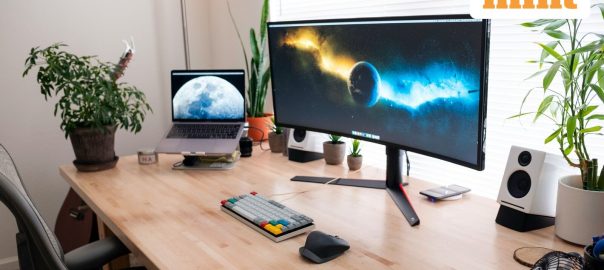
Curved monitors improve focus and reduce eye strain when properly positioned. This article covers practical setup tips, including viewing distance, posture, lighting and screen alignment, to help users get the most out of curved screens. Get the best viewing comfort and clarity with the best curved monitors. (Unsplash) Curved monitors are built to provide a viewing experience that feels more natural and immersive than flat screens. Their shape is designed to follow the curvature of human vision, allowing the eyes to take in more of the display without constantly refocusing. Despite this thoughtful design, many users do not fully experience these benefits. The reason is often simple and overlooked. The monitor can be curved, but the setup does not support how it is intended to be used. A curved screen isn’t just a visual upgrade. Its effectiveness is highly dependent on positioning, viewing distance, desk layout and lighting conditions. When these elements work together, the screen feels comfortable and intuitive. When they don’t, even an expensive curved monitor can feel awkward, tiring, or overwhelming. Understanding how to set it up correctly helps unlock the ease and clarity it’s designed to deliver. You may be interested in 33% OFF Lenovo L22e-40, 21.4 Inch (54.48 cm), FHD 1920×1080, 75Hz, Gray, 4ms, 16.7Mn Colors, AMD FreeSync, TUV Eye Comfort, Low Blue Light, Smart Screen Adjustment distance Get this distance from the correct view of the artery, HDMI view, the most important view. factors in a curved monitor setup. Each curved screen is built with a specific radius of curvature, which determines the ideal distance between your eyes and the screen. Sitting too close exaggerates the curve and can restrict peripheral vision, making the edges feel distorted. Setting it too far away reduces the immersive effect, causing the curve to lose its purpose and feel similar to a flat screen. By maintaining the right distance, the screen can gently rotate around your field of view. This creates a more uniform focal point, reducing the need for constant eye adjustment. As a result, long work sessions feel less tiring and visual focus naturally improves. Height adjustment is equally important and often neglected. The center of the screen should be in line with your natural eye level when sitting comfortably. If the monitor is placed too high, your neck tilts upwards, which puts stress on the upper spine. If it’s too low, your posture collapses forward, leading to shoulder and back discomfort. Over time, any position can cause fatigue and reduce productivity. The curved design works best when your eyes stay centered horizontally and vertically. This ensures that light reaches your eyes evenly from all parts of the screen, improving clarity and reducing visual distortion. Proper height and distance together create a balanced viewing zone that feels effortless rather than forced. Desk placement and lighting conditions Desk depth plays a surprisingly important role in curved monitor comfort. A flat desk forces you to sit closer than recommended, making the curve feel aggressive and uncomfortable. A deeper desk allows you to maintain the ideal viewing distance while maintaining a relaxed posture. Ideally, the monitor should sit slightly away from the desk edge, leave enough room for your arms and allow for small posture adjustments throughout the day. Monitor placement should also consider surrounding objects. Items placed too close to the screen can distract the eyes and interrupt visual flow. A clean, uncluttered desk helps the curved display remain the natural focal point. Lighting conditions matter more with curved screens than with flat screens. Because the surface curves inwards, reflections behave differently and can become more noticeable if lighting is poorly positioned. Strong overhead lights or windows directly behind you often cause glare that moves across the screen as you shift position. It becomes distracting and increases eye strain. Soft ambient lighting placed behind or next to the monitor works best. This reduces contrast between the screen and the surrounding area, helping the eyes to adjust comfortably. This type of lighting also improves perceived contrast on the screen without overwhelming brightness. Using multiple curved monitors requires careful alignment. The screens should follow a continuous arc rather than meeting at sharp angles. When aligned correctly, the transition between screens feels smooth and natural. Poor alignment breaks visual continuity and negates the ergonomic benefit that curvature is intended to provide. Using the Curve to Reduce Eye Strain One of the less discussed benefits of curved monitors is their ability to reduce eye movement. Because the screen gently wraps around your field of view, your eyes travel shorter distances when scanning content. This reduces strain during tasks that require frequent movement from side to side, such as editing documents, analyzing data or multitasking across applications. To obtain this benefit, display settings must be adjusted correctly. Resolution and scale should ensure that text remains sharp and legible without forcing your eyes to refocus repeatedly. Incorrect scaling can make even a high-quality curved monitor feel tiring as the eyes work harder to maintain brightness. Brightness and contrast should also be adjusted to match the room environment. A screen that is too bright or too dim increases fatigue, especially during long sessions. Balanced settings allow the curve to support comfort rather than become a distraction. When properly configured, a curved monitor blends seamlessly into your visual space. Instead of drawing attention to itself, it supports quiet focus and ease. The screen feels natural, allowing you to concentrate on work or entertainment without constantly adjusting posture or straining your eyes. This is when the curved design really delivers on its promise of a better viewing experience.

Why Everyone Got Trump’s Tariffs Wrong

Why Everyone Got Trump’s Tariffs Wrong

As businesses and consumers tried to make sense of the mixed messages, the president doubled down on promises he made during his 2024 presidential campaign. “The markets are going to boom, the share [market] is going to boom, the country is going to boom,” he said on April 3. Economists and business leaders have recorded predictions of a fallout. BlackRock’s Larry Fink said “most CEOs I talk to would say we’re probably in a recession right now.” JPMorgan Chase said a global recession is even likely. An economic collapse has not materialized. Neither has an economic revival. Much federal data has been delayed, but the numbers to So far, the U.S. economy has fallen below 25%. While Trump’s promise on tariffs has come to pass, the U.S. has seen little evidence of large-scale relocation, while uncertainty over tariffs has kept many companies from making big investments at home Six bold predictions made by Trump, economists and business leaders.Eight months after the tariff regime, Trump’s policies haven’t done much to boost employment.In fact, a slew of layoff announcements and other worrisome labor data point to tough times for workers.The US added 119,000 jobs in September, far more than economists expected figure was an outlier from previous months, in which job growth lagged at 4.4%, the highest in four years. Economists don’t rule out higher hiring on the way. Many manufacturers still have to import materials, many of which are more expensive. The sector has cut about 54,000 jobs since Trump took office. of tariffs. Arnold Kamler, owner of Kent International, an importer and manufacturer of bicycles, says high tariffs on Chinese-made bicycle components have led to the closing of his South Carolina factory and the loss of 64 jobs. His business continues to import entire bicycles from China and other parts of Asia, but the millions of dollars in tariffs Kamler has had to pay on imported frames and parts this year have made it unfeasible to assemble bicycles in the U.S. “It was challenging,” he said. “After the April reciprocal rates, we were done.” Prices Trump and economists have largely missed the mark on inflation. Tariffs quickly hit Americans’ wallets as major retailers from Macy’s to Best Buy raised prices in response to the duties. “The magnitude and speed at which these prices are coming at us is somewhat unprecedented in history,” Walmart Chief Financial Officer John David Rainey told The Wall Street Journal in May. But the worst inflationary fears have not happened yet. Inflation has hovered around 3% for months—higher than the Federal Reserve’s 2% target, though still lower than many economists’ expectations. Tariffs are closely related to consumer prices; housing and gasoline helped keep overall inflation in check. Another factor at play: Trump’s repeated policy shifts on tariffs. Many companies said they want to see where rates will eventually settle before introducing more price changes. The still-undecided Supreme Court case over Trump’s authority to impose tariffs gives them another reason to wait a little longer. Economists predict higher prices as companies draw down their pre-tariff inventory and renegotiate contracts with retailers and distributors. If no new rates are announced, the Fed estimates that the current ones will take nine months to work their way through the economy. This could push down goods inflation in the back half of 2026. But “we couldn’t predict that with any accuracy,” Fed Chairman Jerome Powell said. “No one is.” Trade revenue The administration scores points on this one; tariffs generated significant revenue. Federal coffers averaged $25 billion a month in tariffs between April and September, when Trump quickly raised tariffs, according to Treasury Department data. In 2024, $6.6 billion in customs duties were collected on average every month. But Trump has proven less forthcoming about his other bold revenue forecast. “It can replace the income tax,” he told Fox Noticias in April. Fare revenue does not come close to the levels needed for this. Total duties collected in fiscal 2025 — which includes both Trump’s new tariffs and existing ones — hit about $195 billion, more than double the $77 billion collected the previous year. In 2024, individual income taxes totaled $2.4 trillion, or about half of total federal revenue. Future collections depend on the Supreme Court’s decision on Trump’s authority to impose the tariffs, which is expected in the coming days. If the court abolishes rates imposed under the International Emergency Economic Powers Act, monthly revenue collected will drop by more than half. More than $100 billion already raised may also have to be repaid. Trump will likely try to recoup lost revenue by raising taxes using other laws. Economic growth rates have not hurt the economy. In fact, in the second quarter, GDP achieved its strongest quarterly growth in nearly two years: a seasonally and inflation-adjusted annual rate of 3.8%. The third quarter follows shortly at around 3.5%. Few economists could have foreseen at the start of 2025 the extent to which the AI investment boom would outpace any negative effects of tariffs on the economy. Barclays estimates AI-related spending in the first half of the year increased GDP by an annualized 0.8%, roughly half the period’s growth. A resulting stock market rally, in turn, helped fuel continued consumer spending – a key economic driver. Trump has also stepped back and postponed many of his threatened duties. For example, the president raised tariffs on China to 145% in April. It was reduced to 30% a few weeks later, and in October, capping a series of trade deals, the administration reached an agreement in which it further lowered the duties to 20%. American importers pay less than the stated tariff rate on many products as they have substituted lower tariff items for those that had higher duties, sometimes by sourcing from other countries. The Tax Foundation estimates that while the weighted applied tariff rate on all imports rose to 15.8%, the effective rate only rose to 11.2%. In 2024, the effective tariff rate was around 2.5%. Heading into 2026, economists expect continued AI investment and tax cuts to boost economic growth. Manufacturing Trump’s tariff strategy may be working against his own goals with manufacturing. US factory activity contracted for nine straight months, with the Institute for Supply Management’s manufacturing purchasing managers’ index at 48.2 in November, below the 50 mark that separates expansion from contraction. Many manufacturers pointed to the ever-changing rate landscape, which they say makes it impossible to plan ahead or move forward with major investment decisions. The White House points to announcements by a host of companies that plan to invest billions to bolster American manufacturing, including Apple, Toyota, Nvidia and TSMC. Some of those plans may have gone forward regardless of the rates. Major projects are likely to take years to materialize, if at all, as government policy can change again during that time. For tariffs to bring back manufacturing that has moved overseas over decades, duties would have to be high enough to make American production of those products competitive. But tariffs that high could also hurt the sector in the short term, because many supplies and other manufacturing inputs currently needed in the US can only be found abroad. Balance of trade tariffs have undoubtedly messed up US trade this year. The country’s goods shortage rose in March as companies rushed to stock up before “Liberation Day” duties hit. It then fell in April, after the global baseline rate of 10% came into effect. During September, the goods deficit narrowed to $79 billion, down from $86.1 billion in August. This was the lowest level in about five years, largely driven by short-term trading in gold. Year-to-date, the goods deficit is still higher than it was in the same period last year, data from the Department of Commerce shows. Trump casts the trade deficit as inherently harmful and touts his tariff program as the solution. Many economists say his premise is off. A deficit isn’t automatically a red flag for the economy—it can actually be a good thing. When Americans spend more than they save, the resulting deficit provides foreign investors with dollars, which are often reinvested in American assets. That steady inflow of capital has long supported U.S. economic strength, economists say. In contrast, the deficit typically narrows during recessions as spending and import demand fall. As long as Trump continues to surprise the market with tariffs, trade will remain volatile. Write to Chao Deng at [email protected] and Drew An-Pham at [email protected]

John Cena Retired With $80 Million Net Worth – Who Are The Top 5 Richest Wrestlers?

John Cena Retired With $80 Million Net Worth – Who Are The Top 5 Richest Wrestlers?

John Cena, a record-setting 17-time world champion, has officially retired from World Wrestling Entertainment (WWE), closing the curtain on a professional wrestling career that spanned nearly two decades. Widely regarded as one of WWE’s biggest and most influential Superstars, Cena has become the face of the company for years, headlining countless marquee events and winning over fans across generations. The pro wrestling business has grown into a billion dollar industry, with many people involved building extremely wealthy and luxurious lifestyles throughout their careers. Some of the biggest names in professional wrestling have gone far beyond the ring and used their fame to build successful careers in movies, television and other businesses. Here are the five richest wrestlers of all time. 1. Vince McMahon -$3.2 billion The richest figure in wrestling history is also one of the most controversial names in the business. Vince McMahon, whose net worth is estimated at $3.2 billion. A former pro-wrestling promoter and the co-founder of the modern WWE, McMahon is known for turning the business into a global entertainment empire. While he was best known as an executive, he also stepped into the ring on several occasions, according to Sports Illustrated. 2. The Rock – $800 million Dwayne “The Rock” Johnson is second on the list of the richest individuals in the pro wrestling industry. Johnson became a 10-time WWE World Champion and transitioned to TV and movies in Hollywood. He has starred in several multi-billion-dollar film franchises, such as Fast & Furious, Jumanji and Moana. 3. Stephanie McMahon – $250 million Stephanie, the daughter of billionaire Vince McMahon, has an estimated net worth of around a quarter of a billion dollars. While she has competed in the ring on occasion, she is best known for her leadership roles within WWE, having served as the company’s CEO and Chairman during her time there. 4. Triple H – $250 million Next on the list is Paul “Triple H” Levesque, whose net worth has skyrocketed over the past decade as he moved into senior management roles with WWE. He is also the husband of Stephanie McMahon. After an iconic career as an in-ring performer for the company. he transitioned to the corporate side of the business to become the Chief Content Officer for WWE. He owns tens of millions of dollars worth of stock in the promotion, according to Sports Illustrated. 5. John Cena – $80 million John Cena, whose retirement news came just days ago, is one of the most famous wrestlers in recent times. The 16-time WWE World Champion set a record by placing himself at the top of the industry throughout his two-decade career. After moving from the top position in WWE to Hollywood, Cena also became a famous face in the film industry. He is best known for his role as “Peacemaker” in the Suicide Squad film and his own TV series on HBO. John Cena’s recognizable personal brand has earned him endorsement deals and appearances in commercials, TV shows and on various platforms, further adding to his annual income. Even if his in-ring time ends in 2025, Cena continues to earn from residuals, licensing and future acting opportunities.