Gajkesari Yog 2026: The beginning of 2026 will bring wonderful news, these 3 zodiac signs will get the special blessings of Goddess Lakshmi.

Gajkesari Yog 2026: The beginning of 2026 will bring wonderful news, these 3 zodiac signs will get the special blessings of Goddess Lakshmi.

The year 2026 is around the corner. As the new year begins, a rare and auspicious planetary conjunction is about to occur. According to astrological calculations, the conjunction of Jupiter and Moon on January 2, 2026 will create Gajakesari Yoga. On this day, in the afternoon, the Moon will move into Gemini, where Jupiter is already present. This union of these two planets in Gemini will create Gajakesari Yoga. According to astrologers, this Gajakesari Yoga formed at the beginning of the year will be beneficial for three zodiac signs. The formation of Gajakesari Yoga at the beginning of the Taurus year indicates that people born in the Taurus star sign will get the blessings of Goddess Lakshmi in 2026. This auspicious yoga will bring happiness to Taurus people. You will be financially strong. Employees will get opportunities for promotion with new responsibilities. You will get family happiness. Your health will improve. Both your respect and income will increase. Gemini Gajakesari Yoga is formed only in Gemini. Therefore, people born in this zodiac sign can get the most benefits. Employees will get promotion. Economic benefits will increase. New avenues of profit will open up for businessmen. Your speech and thoughts will attract people. Your creative work will be appreciated everywhere. You can also get good marriage proposals. In general, this time will be full of happiness, prosperity and progress for you. Gajakesari Yoga formed at the beginning of Libra year can also open the destinies of people born in Libra zodiac sign. Your luck will become even stronger. This auspicious yoga will bring some positive changes in your career. Positive changes will be seen in wealth, prosperity and relationships. There will be new opportunities at work, and your efforts will be appreciated. There are signs of increase in position, prestige and influence. Continuous improvement in income is possible. There will be love and harmony in your family life. Share this story Tags

Celebrate New Year amidst snow and cold, know the 5 best destinations of India where it will be hard to go back after seeing the views of snowfall.

Celebrate New Year amidst snow and cold, know the 5 best destinations of India where it will be hard to go back after seeing the views of snowfall.

The last month of the year is underway, and the new year is just around the corner. For this reason, people have already started planning for New Year celebrations. Many people choose beach destinations, while some prefer mountains and snowy places. If you are planning to celebrate New Year amidst snowy mountains this year, then this news is for you. Today we are going to tell you about 5 such places in India, where you can enjoy snowfall on New Year. The views of snowfall here are so beautiful that you won’t want to leave from there. 1. Gulmarg, Jammu and Kashmir Gulmarg is a famous winter destination of India, attracting tourists from far and wide. Here you can enjoy a gondola ride and see a spectacular view of snow-capped mountains. If you also want to experience knee-deep snow, adventure activities and beautiful winter views, then Gulmarg is one of the best places to visit. For accommodation you will find cheap hotels in nearby towns. 2. Manali, Himachal Pradesh Manali is considered to be one of the most budget-friendly snow destinations in India. During the winter season, the hills here are covered with white sheets of snow. Here you can enjoy snow activities such as skiing and ATV riding. Guest houses, hostels and cheap hotels are easily available here. This place can be a good option to celebrate New Year in a snowy place with a low budget. 3. Auli, Uttarakhand If you want to celebrate your New Year in a less crowded place, then you can go to Auli in Uttarakhand. The clean slopes and snow-covered meadows here look very beautiful. This place is also considered very good for winter sports activities. The quiet, snow-covered paths here also give peace of mind. 4. Shimla and Kufri, Himachal Pradesh You can visit Shimla and Kufri on New Year to enjoy snow and snowfall. You can enjoy many types of snow activities in Kufri. Easy travel, budget friendly hotels and beautiful views make both these places a good option to celebrate New Year. 5. Tawang, Arunachal Pradesh You can go to Tawang, Arunachal Pradesh to celebrate the New Year amidst snowy views. The temperature here remains at least -2 to 5 degrees Celsius. The snowy views here will definitely win your heart. Share this story Tags

While swinging on the bridge with the help of a rope, the robber stole the phone from the moving train, everyone was shocked.

While swinging on the bridge with the help of a rope, the robber stole the phone from the moving train, everyone was shocked.

You must have seen many cases of cell phone robbery. For example, when someone is walking on the road, robbers riding bicycles come from behind and snatch his mobile phone and run away. Sometimes robbers snatch cellphones from people riding bicycles or scooters. They snatch mobile phones even while sitting near the train window. Sometimes people are seen grabbing cell phones even while sitting at the train gate. In such cases, the robbers standing on the platform snatch the mobile phone and run away. But you will be shocked to see how the video of cellphone robbery goes viral on social media. In the video, a robber is seen standing on a river bridge where he snatches a young man’s mobile phone from a moving train. This unique video of cellphone rapping is going viral on social media. In the viral video, two youths are sitting at the gate of a moving train, making a video of the river and listening to music. Suddenly a man grabs the mobile phone. It all happens so quickly that you are left stunned for a moment. For a moment, the boy whose cell phone was taken was stunned. When he takes out his headphones and says: “They took my mobile phone away,” the whole situation becomes clear. Awesome hit “hawk”! You’ve probably heard the news about phones being snatched from the gate and window of a moving train, but have you ever heard of a phone being snatched from the gate of a moving train on a railway bridge? pic.twitter.com/nIu8Y0ppd6— news for you (@newsforyou36351) September 28, 2024 In the viral video, the train can be seen going over a bridge. At that time, the boy was sitting by the gate of the train and was making a video of the river with his mobile phone. Then a gang member suddenly grabbed his cell phone. Another passenger standing behind the boy captured the live video on his mobile phone, which is going viral. In the viral video, two youths can be seen sitting at the gate of a moving train, making a video of the river and listening to music. Then a man suddenly snatched the mobile phone. It happens so fast that nothing is understood for a moment. For a moment, the boy whose cell phone was taken away was shocked. When he takes out his headphones and says: “They took my mobile phone away,” the whole situation becomes clear. In the viral video, a train ran over a bridge. A young man was sitting at the gate of the train and was making a video of the river with his mobile phone. A gang member snatched his phone. Another passenger standing behind him captured this live video on his cellphone, which is now going viral. Share this story Tags

After Lucknow, now dense fog in Delhi-NCR! Zero visibility, road and air traffic affected

After Lucknow, now dense fog in Delhi-NCR! Zero visibility, road and air traffic affected

Severe cold, dense fog and smog continue to wreak havoc in northern India. Yesterday, the fourth T20 match between India and South Africa was abandoned at the Ekana Stadium in Lucknow due to thick smog. Delhi-NCR was also covered with a thick blanket of mist and fog in the morning due to which visibility became almost nil. Due to dense fog and mist, the speed of vehicles on the roads has slowed down. Dense fog engulfed many areas of Delhi-NCR since late Wednesday night, reducing visibility to zero. Due to dense fog, vehicles move slowly on the highway, thereby increasing the risk of accidents. Speed ​​limits have been reduced on routes like Yamuna Expressway and NH-48. Air India and Indigo have issued advisories to passengers to check the status of their flights. More than 100 flights have been affected in the past few days. IMD has also issued a dense fog warning for Punjab, Haryana and Uttar Pradesh. According to IMD, there will be light to dense fog in the morning from December 18 to 20. Due to poor visibility at the airport, flights are delayed and cancelled. Trains also run late. The air quality index (AQI) remains between ‘very poor’ and ‘severe’, making it difficult for people to breathe. GRAP IV implemented in Delhi-NCR A thick layer of toxic smog was visible around Jawaharlal Nehru Stadium, where AQI was recorded at 349, which falls in the ‘very poor’ category. According to the Central Pollution Control Board (CPCB), the AQI remains between ‘very poor’ and ‘severe’ in many parts of Delhi. The Commission for Air Quality Management (CAQM) has imposed all measures under GRAP Phase-IV in Delhi-NCR, including a ban on construction, restrictions on vehicles and other stringent measures. appeal to people to wear masks In light of the dangerous level of pollution, the Department of Health has appealed to people to wear masks and be careful while going out. This combination of pollution and fog is dangerous to health. T20 match canceled in Lucknow Meanwhile, the match had to be canceled before the toss due to dense smog at the Ekana Stadium in Lucknow on Wednesday. AQI (Air Quality Index) crossed 400. It is said that this decision was taken considering the poor visibility and safety of the players. After the cancellation of the match, questions are being raised by BCCI’s Tour and Match Committee regarding the scheduling of international matches in North and East India during the winter season. People are also criticizing the decision to hold the day-night match in Lucknow as fog and smog are common during the winter months. Share this story Tags

See how death rained from the sky on a car moving on the road, it caused havoc in an instant.

See how death rained from the sky on a car moving on the road, it caused havoc in an instant.

Sometimes things happen that we can’t even imagine. Suddenly, unexpected events happen, due to which no one understands how it happened. One such video is going viral on social media. In this video, death rains down from the sky on a car moving on the road. This video is going viral on social media very quickly. A terrifying video of aerial death has been caught on camera, which viewers have described as terrifying. A car was driving through an empty road, when suddenly a plane crashed into the car and burst into flames. This incident is said to have happened around a year ago, and this video has now been shared on Twitter. This video is two years old. The incident took place in Pembroke Pines near North Perry Airport in Florida in June 2022. In the video, it is seen that when the plane collided with the car, a fire broke out on the road. The people nearby were confused for some time as to how this happened. Flames rose from the plane. When the plane crashed, it engulfed a car. Plane crash on car#viralvideo #PlaneCrash #Viralnewsvibes pic.twitter.com/IF0MoCLTSK— Viral News Vibes (@viralnewsvibes) September 28, 2024 Three people died in this crash. It also includes a 4-year-old son named Taylor Bishop. He was riding with his mother in the car that collided with the plane. However, his mother survived. After the accident, the mother got out of the car and screamed for help and begged for her child’s life, but no one could reach her. After some time, the rescue team arrived, but the child could not be saved. This video is two years old. The incident occurred in June 2022 in Pembroke Pines near North Perry Airport, Florida. In the video, it is seen that when the plane collided with a car, a fire broke out on the road. For a while, people in the area were confused as to how this happened. Flames rose from the plane. When the plane crashed, it engulfed the car. Three people died in this accident. It also includes a 4-year-old son named Taylor Bishop. He was with his mother in the car that collided with the plane. However, his mother survived. After the accident, the mother got out of the car and screamed for help and begged for her child’s life, but no one could reach her at that time. After some time, the rescue team arrived, but the child could not be saved. Share this story Tags

Stock recommendations for October 10 from Marketsmith India

Stock recommendations for December 18 from MarketSmith India

Copyright © HT Digital Streams Limited All rights reserved. Stock Recommendations: MarketSmith India recommends two stocks for December 18. Summary MarketSmith India reveals its top recommendations for today, December 18. Get expert insights on the best performing stocks to guide your investment decisions. Stock market roundup: Indian stock market benchmarks – the Sensex and the Nifty 50 – ended in losses for the third straight session on Wednesday, December 17, on continued concerns over the rupee’s weakness, foreign capital outflows and a delay in the India-US trade deal. The Sensex ended with a loss of 120 points, or 0.14%, at 84,559.65, while the Nifty 50 ended at 25,818.55, down 42 points, or 0.16%. The decline was steeper for the mid- and small-cap segments. The BSE Midcap index ended 0.53% lower, while the Smallcap index fell 0.85%. The overall sell-off dragged the overall market capitalization of BSE-listed firms to ₹466 trillion, causing investors to lose ₹1.6 lakh crore in a single session. Two stock recommendations by MarketSmith India for December 18: Buy: State Bank of India (current price: ₹976) Why it is recommended: Strong credit growth momentum, led by expansion of retail, SME and corporate loans, improved asset quality, with declining GNPA/NNPA ratios Key metrics: P/E: 11₹9, ₹₹ high: 52₹ crore Technical analysis: Regains its 21-DMA and also has given a trendline breakout. Risk factors: Exposure to large corporate lenders, creates potential stress, regulatory and macroeconomic sensitivity Buy at: ₹970–980 Target price: ₹1,050 in two to three months Stop loss: Tubes Ltd. ₹1,764) Why it is recommended: Market leadership in structural steel tubes, capacity expansion and technological upgrades Key Stats: P/E: 60; 52-week high: ₹1,936; volume: ₹ 132 crore Technical analysis: downward sloping trendline breakout Risk factors: High sensitivity to steel price volatility, dependence on cyclical sectors like construction and infrastructure Buy at: ₹ 1,750–1,770 Target price: ₹ 1,900 in two to three months Stop loss: ₹ 9ft: 5 Index that performed on Dec 17 Indian stocks were lower on Dec 17 ended, with the Nifty 50 down 0.16% to 25,818.55, weighed down by weakness across financials, FMCG and consumer durables. The index oscillated within a narrow range of 25,770-25,929, reflecting cautious sentiment ahead of global central bank commentary and lingering geopolitical uncertainties. Market breadth remained particularly weak, as the advance-decline ratio weakened to 1,055 advances versus 2,084 declines, indicating broad-based pressure across the broader market. On the sectoral front, IT (+0.29%), Metals (+0.25%), PSU Banks (+1.29%) and Oil and Gas (+0.23%) provided pockets of support. On the other hand, Financial Services, Auto, FMCG and Consumer Durables dragged down the benchmarks. Private Banks also underperformed, reflecting risk-off positioning. Nifty continued to trade within a narrower range, hovering between its 21- and 50-DMA, reflecting an indecisive yet controlled pullback within the broader bullish structure. Price action indicates that the index is consolidating below the upper boundary of its ascending channel. The RSI remains subdued and continues to drift lower within a descending trajectory, indicating continued bearish momentum divergence relative to recent price swings. This indicates waning upside, even as the index attempts to stabilize above intermediate moving averages. Meanwhile, the MACD has slipped into a negative crossover, with the histogram extending further into negative territory, reinforcing the current momentum cooling phase. According to O’Neil’s methodology of market direction, the market status shifted to a “Confirmed Uptrend” as it decisively surpassed its previous rally high of 25,670 to register a new 52-week. The index, after failing to move above its 21-DMA and facing renewed selling pressure, is now trading marginally above the 50-DMA. On the downside, 25,700 serves as the initial support, while 25,300 remains a critical demand area for sustaining the broader uptrend and preserving overall market stability. Conversely, a decisive close above 26,300 would substantially strengthen the technical setup and pave the way for a continuation of the move towards 26,500–26,700 in the near term. How has the Nifty Bank performed? Nifty Bank ended the session on a subdued note, falling 0.18% to 58,926.75, weighed down by weakness in selected large-cap lenders despite intraday efforts to stabilize near the 58,800 support zone. The index traded within a narrow band of 58,801-59,127, reflecting cautious sentiment ahead of key global macro cues. Market breadth was marginally positive with 8 advances and 4 declines, mainly supported by PSU Banks. State Bank of India (+1.58%), Bank of Baroda (+1.47%), Canara Bank (+2.06%) and Punjab National Bank (+1.73%) outperformed, extending their recent momentum as investors continued to turn to value-driven public sector names. Among private lenders, AU Bank (+1.01%) and Axis Bank (+0.52%) posted modest gains. However, heavyweights like ICICI Bank (-0.92%), HDFC Bank (-0.92%) and IndusInd Bank (-1.13%) dragged the index, keeping the overall sentiment subdued. Nifty Bank continues to show a mild consolidation phase, with today’s candle reflecting indecision that saw the prices of the short-term rate close to the October short-term rate. Despite intraday volatility, the index held above this trendline, indicating that buyers are still defending the structure even as momentum cools. RSI has slipped below its midline and is now following a short-term downtrend, reflecting weakening momentum and a shift to a more neutral-to-soft sentiment in the near term. MACD is also showing a bearish crossover with widening histogram bars, reinforcing signs of momentum loss after weeks of steady gains. The index continued to fall below 59,000. However, the pullback appears orderly and remains consistent with the prevailing uptrend. While some profit taking may persist in the short term, any move towards the 50-DMA around 58,300 is likely to attract new buying interest. A quick close above the 21-DMA will help reassert bullish momentum and confirm the broader positive structure. On the downside, 58,800–58,000 provides a meaningful cushion, supported by steady participation across key banking components. Improving sectoral breadth further strengthens the underlying tone, and a sustained move above key resistance markers could draw incremental institutional flows, potentially accelerating the index’s upward trajectory. MarketSmith India is an equity research platform and advisory service focused on the Indian stock market. It provides tools and resources to help investors make informed decisions based on the CAN SLIM methodology, founded by legendary investor William J. O’Neil. You can access a 10-day free trial by registering on its website. Brand Name: William O’Neil India Pvt. Ltd. Sebi Registration No.: INH000015543 Disclaimer: The views and recommendations given in this article are those of individual analysts. It does not represent the views of Munt. We advise investors to check with certified experts before making any investment decisions. Get all the Business News, Market News, Breaking News Events and Latest News Updates on Live Mint. Download the Mint News app to get daily market updates. more topics #markets premium # stocks to buy # stock recommendations # stock recommendation # Stock Markets Read next story


India loves its movie stars – and OTT deserves the obsession

India loves its movie stars – and OTT deserves the obsession

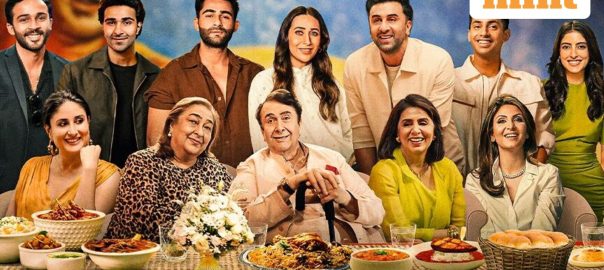
Copyright © HT Digital Streams Limited All rights reserved. Cinema about films: Bollywood discovers its most bankable subject— Lata Jha herself 5 min read 18 Dec 2025, 06:00 am. IST Many of these, commissioned by the families themselves, help build brand equity and make for a valuable marketing exercise in a cluttered digital content environment. Summary Recent family documentaries such as The Romantics and Dining with the Kapoors tap into audience curiosity while helping families build brand equity. These shows offer a personal look into the lives of stars, promoting legacy and creative control for the next generation, experts say. A barometer test of India’s obsession with its movie stars can be taken on weekends outside an unmistakable bungalow in Juhu, central Mumbai. Bollywood star Amitabh Bachchan, when in town and able, walks on Sunday evenings on a raised platform at the gates of his home, Jalsa, to wave to a throng of fans. Sunday after Sunday, fans from far and wide gather just for a glimpse of the man and return excited that the superstar of their time recognized them. Such a fixation with stars is now saturated on screen by a wave of documentaries about film celebrities and families such as The Romantics about filmmaker Yash Chopra, Angry Young Men about writer duo Salim-Javed, and Dining with the Kapoors launching on streaming platforms. The Romantics was on Netflix, Amazon Prime Video had Angry Young Men, and Dining with the Kapoors is on Netflix. The popularity of the documentaries points to the intrinsic curiosity around stars, which OTT, short for over the top media services, is what companies make money from, industry experts said. At the same time, some of these, requested by the families themselves, help brand equity and drive marketing in a cluttered digital content space. “The Indian audience is a die-hard supporter of fandom. OTT platforms have found an opportunity to showcase documentaries that will satisfy this latent need,” says Dr Abha Wankhede, Associate Professor – Marketing and International Business at KJ Somaiya Institute of Management, Mumbai. Documentaries about movie celebrities are a growing but niche content category. According to data from media consultancy Ormax, The Romantics and Angry Young Men had 6.1 million (2023) and 6.6 million (2024) viewership respectively. While it may seem dwarfed by 2024 shows like the third season of Bigg Boss OTT which attracted 17.8 million viewers and the top fiction show Mirzapur season three (30.8 million), the level of intimacy in the relationship between audiences and the stars is striking, an expert said. “‘Cinema on film’ has always been a fascinating field. Movie stars are highly revered in our country, and people have always been curious about what happens behind the curtain,” said Harikrishnan Pillai, CEO and co-founder, TheSmallBigIdea, a digital marketing agency. Access to film stars through social media is still curated, controlled and strategic, he added. “These shows, on the other hand, make it deeply personal.” The Indian docu-series is different from The Kardashians which was presented on the Hulu platform in the US. While the idea that there was more for viewers to derive vicarious pleasure from the lives of the rich, famous and controversial, those serving in India focus slightly more seriously on the careers and journeys of iconic film figures. Apart from being a way for film families to stamp their legacy and position their journey for posterity, the shows also serve as launching pads for the next generation where younger members of film families can take creative control as in the case of Armaan Jain, the late Raj Kapoor’s grandson, who helmed the production of Dining with the Kapoors. Real footage, relatively speaking Even if bits are edited out in documentaries, they still remain believable compared to other story forms. Jitendra Hirawat, co-founder and CEO of ad company TITO Films, said feature films about movie celebrities streamline and polish reality with even biopics smoothing out the rough edges to fit the dramatic arc. Documentaries, on the other hand, keep contradictions, the awkward pauses and the unfinished emotions alive. That honesty creates a level of believability that fiction cannot fully replicate. Prof. (Dr.) Supriya Chouthoy, Associate Professor of Marketing, BITS Law School agreed that feature films made about the Indian film industry rely on a narrative that portrays concepts of fame, success and motivation, but not a “real” account of a cultural personality’s life. This probably explains the increasing use of such documentary series on Bollywood. Documentaries have other advantages over films. Vaibhav Gupta, co-founder chief product officer of KlugKlug, an influencer marketing technology platform, said feature films about filmmakers or industry icons are relatively rare in Bollywood, in part because biopics and studio dramas often require significant investment and box office risk. On OTT, by contrast, documentary shows do not need theatrical revenue; they benefit from subscription models. Unlike films, these docu-shows can deliver an episodic narrative without the typical commercial constraints, allowing deeper exploration of creative processes, personal histories and industry impact. Such series are 50-60% cheaper to make as the only costs are related to production and marketing without star fees. That said, industry experts point out that these titles also serve as branded content marketing for the respective film families. Rajnish Rawat, co-founder and CEO of digital marketing agency Social Pill, calls it branding films disguised as documentaries, noting how Angry Young Men was produced by the writers’ families, The Romantics listed Yash Raj Films’ Uday Chopra as producer, and Dining with the Kapoors was created by the late Raj Kapoorhy and produced by his grandson Jainavas Media. The Kapoor family series was to celebrate the 100th birth anniversary of the late patriarch Kapoor. “The families are very much in control. Branded content has matured to the point where brands can be relevantly integrated without being too obvious about it. These documentaries celebrate legacies, remind younger audiences why these families matter, and ensure that the next generation keeps the family brand alive in Bollywood,” added Rawat. Another industry insider called it “a subtle form of heritage building.” Vishal Prabhu, creative director – strategy at digital agency White Rivers Media, said: “These projects sit at the intersection of storytelling and soft branding. They preserve history while shaping how the next generation interprets Indian cinema.” The trend in the celebrity film docu-series for now seems to meet several needs: a streaming platform wants content, the movie family wants its story told its way, and sometimes there’s production house money involved. In a win-win situation, the platform gets guaranteed buzz, family gets to control the story, and audiences get something more interesting than another rom-com – peaking into the lives of their favorite stars without the trip to a Mumbai suburb. Get all the industry news, banking news and updates on Live Mint. Download the Mint News app to get daily market updates. more topics #OTT platforms #Indian Cinema #Entertainment Read next story

Speciale Invest to launch ₹1,600 crore growth fund for deep tech investment

Speciale Invest to launch ₹1,600 crore growth fund for deep tech investment

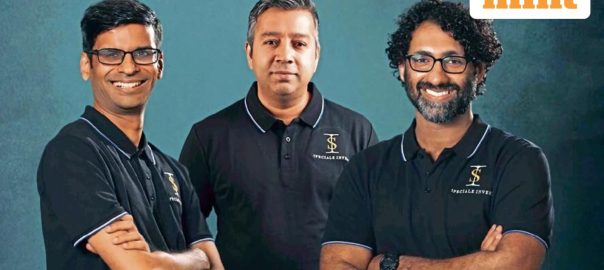
Left to right: Arjun Rao, Founding Partner; Vishesh Rajaram, Founding Partner; Vijay Jacob, General Partner. (special arrangement) Summary While 60% of the fund will be for new investments, 40% is allocated to follow-on rounds in new and old portfolio companies. Deeptech-focused venture capital firm Speciale Invest is set to launch its second growth-focused fund, targeting ₹1,400 crore-1,600 crore ($177 million), according to top executives. With Speciale Invest Growth Fund II, the firm will write larger checks of $5 million-8 million, in addition to leading funding rounds. Over the course of the fund, he plans to invest in 12 to 15 companies. Although Speciale has not announced the first closure, the firm will do so sometime in 2026, said Vishesh Rajaram, co-founder and managing partner. While 60% of the fund will be for new investments, 40% is allocated to follow-on rounds in new and old portfolio companies. “These check sizes will also improve over the second and third year of the fund. This allows us that 3x leverage where we will be able to do round sizes of up to $20 million with just two or three investors,” said Rajaram. “The capital gap for deeptech has moved from pre-seed, seed and series A to the growth stage,” Vijay Jacob, general partner at Speciale Invest, told Mint in an interview. He is the latest addition to the firm’s investment team and will focus on its growth investments. Speciale’s first growth fund was launched in 2023 with a corpus of $25 million. “With that fund, we validated a couple of things in the market: whether there was a need in the market, and leverage with respect to doing our own pro-ratas,” Rajaram said. “Whether we led, co-led or just did our pro-rata allocations, it allowed companies to raise between two and five times more capital.” Pro-rata rights in venture capital give early investors the chance to maintain their initial level of ownership interest in a company during additional funding rounds. Even with the new fund, Speciale will continue to invest in sectors it has traditionally looked at: space, advanced manufacturing, energy and health. In the next year, the fund expects sectors such as quantum computing, semiconductor manufacturing, space and nuclear energy to see a lot of interest. Larger financing rounds Nuclear energy in particular will have venture capital funds scrutinizing the sector as the government debates opening it up to private players. Earlier this week, Minister of State for Science and Technology Jitendra Singh introduced the Sustainable Use and Promotion of Nuclear Energy for the Transformation of India Bill, 2025 in Parliament. Deeptech attracted significantly larger funding rounds this year, even in the early stages, a testament to how the sector has evolved over the past 24 months. Early-stage funding rounds of more than $15 million-20 million in the sector were unheard of just a few years ago. And yet, this year alone, EKA Mobility raised $23 million in April from Enam Holdings, with the NIIF India-Japan Fund leading the company’s $57 million Series A round. Fiber optic company Mixx Technologies has raised $33 million in a Series A led by Singapore’s ICM HPQC Fund with participation from TDK Ventures, SystemIQ Capital, AVITIC Innovation Fund, and others. Space tech hasn’t been left out either, with space intelligence startup EtherealX raising $20 million in its Series A round. In the coming year, experts said that deeptech will see a lot of interest. General funds, recognizing the significant alpha to be made on specialized IP-led startups, have piled into the sector, boosting the availability of capital. “Deeptech is no longer an early-stage-only story – it is becoming a growth asset class, attracting bigger checks from investors looking for durable moats and long-term value creation,” says Amit Nawka, partner, transactions, at PwC India. There is also greater policy support. The government’s Research, Development and Innovation Scheme, a ₹1 trillion initiative spread over the next six years, is meant to boost private sector participation. “Given this, the private equity and venture capital funds are keen to invest in the sector and in my view we will see more surge in funding to enable growth of deep technology companies in 2026,” says Raja Lahiri, partner and technology industry leader at Grant Thornton Bharat. Changing the LP mix Speciale has traditionally raised funds from domestic high-net-worth individuals and family offices, but given the size of its second growth fund, the firm it is starting talks with is changing. “With early-stage rounds, investors or our limited partners generally take on a lot of the risk because the startup is still finding its legs, product-market fit,” says Rajaram. “The risk profile and return profile of a growth fund in deeptech is different.” For deeptech, growth rounds are more about scaling the business because they have found their use cases are generating revenue and now need capital to become a bigger company. What’s more, fund managers can take a larger stake in a startup at an early stage compared to when it’s looking for growth funding. “Institutional investors would be an excellent match for this fund, but we are not going to rule out family offices,” Rajaram said. Over the course of its last four funds, Speciale has had more domestic limited partners.

Fear of counterfeiting may spur premium dairy boom in urban markets

Fear of counterfeiting may spur premium dairy boom in urban markets

India’s food safety regulator on Tuesday ordered all states and Union territories to launch an enforcement drive against adulterated milk and milk products. (Pixabay) Summary Tighter regulation, increasing health awareness and fresh capital are helping organic dairy brands deepen farm control, strengthen traceability and test whether premium pricing can scale beyond niche urban consumers. Bengaluru/New Delhi: A renewed crackdown on adulterated dairy products, combined with a shift among urban consumers towards farm-to-table food, is reshaping the dairy market in the world’s largest producer of milk. Companies like Akshayakalpa Organic, Two Brothers Organic Farms, Sid’s Farm and Anveshan, which produce natural or organic milk, ghee and other milk products, stand to gain. Banking on premium portfolios that include organic milk, A2 ghee, curd and yogurt, these companies are positioning themselves as credible alternatives to loose and mass market dairy products in urban markets, where the trust deficit surrounding counterfeiting persists. A2 dairy products contain only the A2 type beta-casein protein, which makes it easier for the human body to process. Their pitch, which includes traceable sourcing, controlled farm practices and minimal processing, is increasingly appealing to health-conscious middle-class households. For Mumbai-based consultant Ananya, the switch to organic dairy followed repeated concerns about milk purity. “I started buying farm brand milk after my daughter got sick twice,” she said, adding that the higher prices feel justified due to claims of transparent sourcing, consistent taste and direct access to farms that offer reassurance of quality. Akshayakalpa, based in Tiptur in Karnataka, manages 2,700 farms and has encouraged efforts to control adulteration by introducing daily farm-level tests for antibiotics and toxins. “There is a lot of consumer skepticism about quality. We have now opened our farms for consumers to inspect and familiarize themselves,” says Shashi Kumar, founder and chief executive officer of the company. India’s food safety regulator on Tuesday directed all states and Union territories to launch an enforcement drive against adulterated milk and milk products, including paneer and khoya. This includes improved inspections and testing across the entire dairy value chain, driving increased consumer scrutiny about purity and sourcing. In August, the Food Safety and Standards Authority of India suspended Dindigul-based AR Dairy’s license for ghee due to adulteration and false information, Mint reported. Investor interest The developments coincided with increased investor interest in organic and natural food businesses. Several farm-led dairy and staple food brands have raised growth capital in the past year to expand capacity, strengthen cold chain logistics and broaden their direct-to-consumer and modern retail presence. In October, Two Brothers Organic Farms, which sells A2-grown ghee, khapli atta, peanut butter, honey, pickles and cold-pressed oils, raised ₹110 crore in a Series B funding”>₹110 crore in a Series B funding round led by 360 Narotter ONE investment office, Rainmat Assaria, Rainmat, the Family Office, Rahul Garg of organic food brand Nourish You raised nearly $2 million in March, led by SIDBI Venture Capital, while Akshayakalpa is said to be in talks to raise ₹350 crore from Temasek’s ABC Impact and others, according to Entrackr. 1,900 crore to create a ‘health and wellness platform’ in April 2025, which sells organic foods under the ₹ 472 crore category, said Akshali Shah, executive director of the Pune-based Parag Milk Foods, which launched its premium milk in 2011, is expanding its presence across the top metros. Shah said premium dairy is no longer a niche trend, reflecting a fundamental shift in how Indian consumers think about food and nutrition prioritize provenance. These are consumers who read labels, ask questions and are willing to pay a premium for products that offer real differentiation, transparency and trust,” she said. “They are typically urban professionals, young parents and households who see food as an investment in long-term well-being rather than a mere daily necessity.” Price premium However, the portfolio of organic and natural products comes at a huge price premium. Two Brothers sells one liter of A2 Gir Cow-Cultured Ghee for ₹ 3,370, while Akshayakalpa prices its one-litre bottle at ₹650. Sumit Keshan, managing partner at Wipro Consumer Care Ventures, said there is a market for these price points and some of that is built over a period of time regular oil, but health wise it is on another level. If you have a certain offer and quality, repeat purchases are very high. There is a market price point of ₹1,800-2,000 per liter for ghee, for oils it is ₹370-360. Clearly, for some consumers, health comes first. Not everyone can afford it.” Increasingly, these companies are doubling down on deeper farm involvement, investing in long-term relationships with dairy farmers, on-ground veterinary support and feed control, while strengthening cold chain and processing infrastructure. The strategy aims to ensure traceability, consistent quality and supply reliability as they scale premium dairy products in urban markets. Akshayakalpa’s premium pricing will aid its expansion plans. It is looking for new farming groups closer to its biggest markets, minimizing the transport of milk and other products that have a shorter shelf life. “We also keep farmer profitability in mind. The cost of producing milk is rising and farmers need to be compensated much better than the industry standards,” noted Kumar. Farmers and customers Two Brothers’ Organic Farms, located near Pune, will continue to invest in technology that supports farmers and also expands to consumers by providing traceability, said co-founder Satyajit Hange. from sowing to harvesting, irrigation practices, pest management, and more. It took us three to four years to build this system,” he said. Hange noted that it is also expanding its presence abroad, with the US and UAE already accounting for about 20% of its overall business. “Our prices are premium compared to the wider market, but the idea is that with scale, we can pass those savings on to consumers and lower prices. There are also some categories where we are experimenting with more aggressive pricing, such as cold-pressed oils and jaggery powder,” said Hange. “Prices at around ₹120 per 500 grams (for jaggery) are very competitive because we have our own manufacturing units and our own farms. With scale, the intention is clearly to pass on efficiencies to consumers and reduce prices over time.”

COFFEE clash: Automakers push for relaxed emissions rules, bigger EV credits

COFFEE clash: Automakers push for relaxed emissions rules, bigger EV credits

Copyright © HT Digital Streams Limited All rights reserved. The Society of Indian Automobile Manufacturers (Siam) is preparing to raise these concerns with the Union ministry of heavy industries, which oversees India’s EV incentive schemes. (HT) Summary India’s automakers are pushing for easier fuel efficiency rules, more EV credits and softer annual targets, even as policymakers weigh climate goals against industry competitiveness. NEW DELHI: India’s auto industry is pushing the government to ease fuel efficiency rules and extend incentives for electric vehicles (EVs), even as it remains divided over concessions for small cars. The negotiations could shape the country’s vehicle mix, technology investments and competitiveness for the next decade. Automakers are particularly upset about the September draft of the corporate average fuel efficiency (CAFE) rules, which tighten efficiency targets, set annual improvement milestones and revise incentives across powertrains, including EVs, hybrids and flex-fuel vehicles. The Society of Indian Automobile Manufacturers (Siam) is preparing to raise these concerns with the Union ministry of heavy industries, which oversees India’s EV incentive schemes, according to two people familiar with the discussions. Stricter fuel efficiency norms are pushing car manufacturers towards cleaner technologies and helping to reduce emissions. However, the pace and design of the targets may have implications for vehicle costs, product cycles and the competitiveness of domestic manufacturers during the global transition. A key industry demand is additional “super credits” for zero-emissions vehicles and a re-examination of annual fuel efficiency targets, which carmakers argue are too steep and operationally unviable, said one of the people quoted earlier. Industry fault lines The car industry itself is divided over proposed relaxations for small cars weighing less than 909kg and less than four meters in length. These concessions disproportionately benefit Maruti Suzuki, India’s largest carmaker by sales, whose portfolio is dominated by compact models such as the Alto. Maruti Suzuki argued that the norms unfairly penalize small cars, which are inherently more fuel efficient than larger vehicles. However, other automakers have resisted special treatment, especially those that have invested heavily in larger and premium vehicles. The draft CAFE norms suggest a relaxation of up to 9 grams of carbon dioxide per kilometer for small cars when calculating fleet-wide emissions. “Small cars are one small issue, there are still multiple topics that need to be discussed and addressed when it comes to CAFE norms,” ​​the person quoted above said on condition of anonymity. “On the CAFE chart, small cars and even the recreations that are suggested to them make up a limited number of vehicles. There are still much heavier and more polluting vehicles that could be more fuel efficient,” the person said. Super credit debate Under the CAFE framework, cleaner vehicles are counted as multiples to incentivize their production. In its September CAFE-3 draft, the government proposed counting each electric vehicle sold as three units, strong hybrid flexible fuel and plug-in hybrid vehicles as 2.5 units, strong hybrids as two units, and flexible fuel ethanol cars as 1.5 units. Earlier, in June 2024, the Bureau of Energy Efficiency (EBE) proposed more generous credits—five units for hydrogen fuel cell vehicles, four for EVs, two for plug-in hybrids, 1.2 for strong hybrids and 0.95 for flex-fuel ethanol vehicles. The industry argued that the revised September proposal significantly lowers the incentives for EV adoption. Email queries to the Ministry of Heavy Industries, Minister HD Kumaraswamy’s office and to Siam remained unanswered. The second person quoted above, also speaking on condition of anonymity, said a meeting between Siam, ministry officials and the minister is on the agenda. Queries sent to Maruti Suzuki, Tata Motors, Mahindra & Mahindra, Hyundai and Kia also remained unanswered. Annual targets concern The September draft also introduces annual fuel efficiency improvement targets for the first time, which has emerged as another flashpoint. “The annual targets will be difficult to implement for the industry as significant improvement can be made every year. It becomes difficult to manage investments, for all manufacturers using different technologies, if these annual targets are set,” said an industry executive, requesting anonymity. According to the proposal, car manufacturers will have to reduce fuel consumption per 100 km from 3,726 liters in 2027 to 3,013 liters by 2032. To be sure, CAFE norms are notified by the Bureau of Energy Efficiency (BEE) within the Union Ministry of Power, with the Ministries of Heavy Industries and Road Transport and Highways. A second operations executive said on condition of anonymity that the CAFE targets are too steep, and that it is not possible to increase the efficiency of engines within the given time frame. Other options, such as increasing the share of electric or hybrid models in a manufacturer’s fleet, will depend on consumer acceptance of these emission-reduction technologies, the CEO said. CAFE 3 norms will be implemented for five years starting in April 2027. They require automakers to improve fuel efficiency across their fleets, not just individual models. By setting limits on a company’s sales-weighted average CO₂ emissions, the norms push manufacturers to produce and sell more fuel-efficient cars, including electric and hybrid vehicles, to balance the emissions of larger, less efficient models. Expert Views “Stylish CAFE targets play an important role in shaping the long-term direction of the automotive sector, but their ultimate effectiveness depends on how well ambition is balanced with market feasibility,” said Saket Mehra, partner and automotive and EV industry leader at Grant Thornton Bharat. The proposed norms call for a 63% improvement in fuel efficiency compared to CAFE-2, “putting significant pressure on product development cycles, supply chains and capital planning,” Mehra said. “The challenge really lies before the regulator and the line ministries, and not so much for the industry,” says Sharif Qamar, associate director of transport and urban management at The Energy and Resources Institute (Teri). “This is especially true in light of what is happening in the European market where the policy makers have fallen for the requests of the OEMs – which will have a huge negative impact on their manufacturing competitiveness vis-à-vis non-European OEMs, especially the Chinese,” he said. OEMs are original equipment manufacturers. European regulators relaxed their green policies on Tuesday, abandoning a proposal to ban all cars powered by fossil fuels from 2035 following pressure from the region’s auto industry, news agency Reuters reported on December 16. “This rigor is crucial to aligning India’s automotive sector with global decarbonisation pathways and ensuring competitiveness in markets where efficiency standards are becoming increasingly stringent,” Mehra added. Small-car slowdown To be sure, India’s compact car segment has shrunk sharply. Sales declined from 4.6 lakh units in FY19 to 1.52 lakh units in FY24 and further to 1.33 lakh units in FY25. “Given that India’s small car segment – once the backbone of mass market mobility – has experienced a sharp decline over the past six years, such calibrated regulatory support becomes even more critical,” Mehra said. Still, Qamar argued the framework remains fair. “KAFE regulation has been strict at the industry level but accommodating at the individual OEM level… It has in fact rewarded the OEMs and improved their overall image in the market by introducing efficient cars,” he said. Get all the automatic news and updates on Live Mint. Download the Mint News app to get daily market updates and live business news. more topics #electric vehicles #EVs #SIAM #Auto #carbon emission Read next story