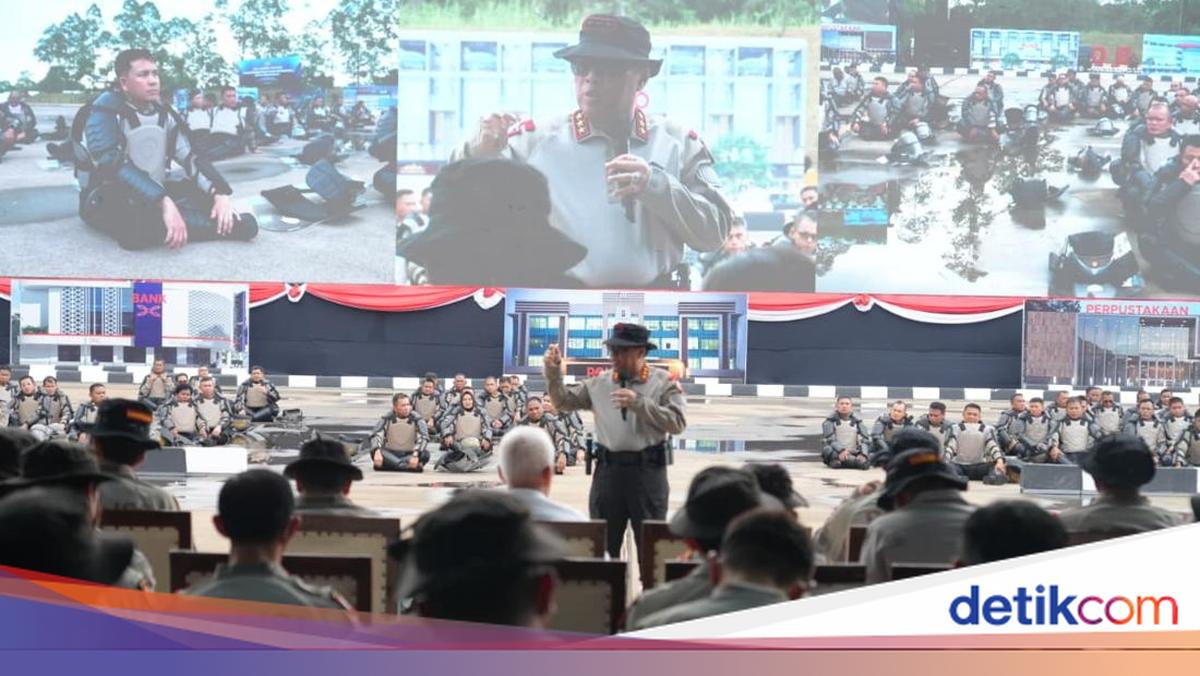
Jakarta – Deputy Chief of Police, Commissioner General Dedi Prasetyo, said that the National Police is currently drafting a new Perkap on handling protests. Komjen Dedi said this was part of the change of the National Police to make it better. “The National Police is currently drafting a new Perkap regarding the handling of protests as part of institutional change in a better direction,” Commissioner General Dedi said while attending the 2025 simulation of the handling of the Unras Regional Chief of Regional Police Headquarters at Nagara Yanottama Field, Cikeas Mobile Brigade Unit, on Wednesday (26/11/2025). SCROLL TO CONTINUE CONTENT Dedi said that the preparation of the Perkap was carried out by considering inputs from a coalition of civil society, experts, academics, and based on studies. Dedi said that the preparation will take references from England to deepen the concept of code of conduct. “The preparation of the Perkap was carefully carried out by taking into account input from a coalition of civil society, experts, academics, as well as based on comparative studies, including plans for references to England to deepen the concept of a code of conduct,” he said. Dedi said a comparative study with England will be carried out in January 2026. It was aimed at five cycles of action that are standard in British police. “In January, a comparative study will be carried out in England to examine the five cycles of action that are standard in policing in that country,” he said. “The new rules will replace the three-stage pattern (green-yellow-red) with five stages with six modes of action,” he added. Dedi also gave directions to each field commander to make a detailed report on how to act in the five stages of the demonstration. The report will be used as evaluation material to improve the professionalism of handling demonstrations. “Each field commander is required to make a detailed report on how to act in the five stages of unras in the form of a decision-making record as evaluation and accountability material to increase professionalism in dealing with unras in the future,” he said. The police chiefs, Dedi said, are future leaders of the National Police. According to him, changes to the National Police in a better direction are determined by the quality of human resources. “Police chiefs are future leaders of the National Police, so changes to the National Police in a better direction are determined by the quality of the human resources that fill them,” he said. He said the National Police is not an anti-critical institution. He said input from the public, academics and observers was accepted and became the basis for improvements. “Polri is not an anti-criticism organization. Input from the public, academics and observers is the basis for Polri to change to become more professional and trusted by the public,” he said. Dedi also appreciated all levels of the National Police for their performance in the past year. He recalled the importance of aligning the vision with the National Police Transformation Acceleration and Quick Wins programmes. “To take lessons from Black August and Black September, especially about the suitability of staff tents in the field, which need to be repaired to make them more suitable for troop rotation lasting up to one month,” he said. (whn/haf)