The Rolling Stone Interview has featured the likes of Bob Dylan, Jim Morrison, Ray Charles, Eddie Murphy, Axl Rose, Jack Nicholson and Taylor Swift since it launched in 1967.
It is now being turned into a video podcast series.
The publication, which is owned by Deadline owner PMC, is turning to Florence + The Machine’s Florence Welch to kick off its move.
The idea is that long-form interviews that were previously published in the magazine will be retuned for a new multi-platform format. Episodes will be available on Rolling Stone’s YouTube channel, Spotify Video, and all audio streaming platforms. The series will also still live in its print format.
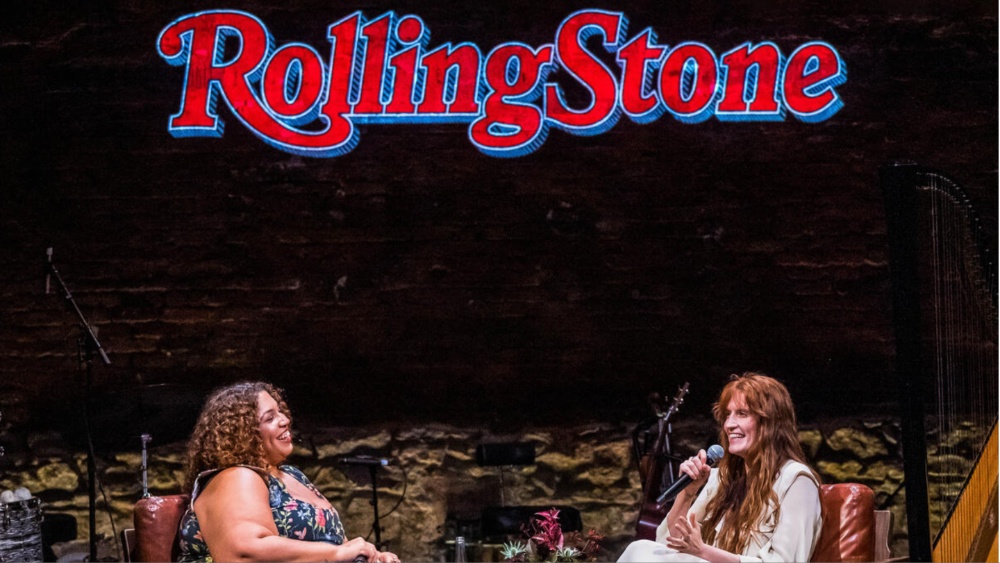
The first episode, which launches on October 31, featuring Welch, in conversation with Rolling Stone senior writer Brittany Spanos, was recorded live at New York City’s A24-owned Cherry Lane Theater. Welch talks about her creative process and the making of her new record Everybody Scream. It also includes a three-song acoustic performance.
The podcast will be produced and overseen by Alexandra Dale, Head of Rolling Stone Films & Premium Content, and Waiss Aramesh, Head of Video & Socials.
The video podcast series comes as Rolling Stone unveils its digital archive of The Rolling Stone Interviews.
“The Rolling Stone Interview has defined cultural conversation for more than five decades,” said Julian Holguin, CEO of Rolling Stone. “By launching this as a video podcast, we’re meeting our audience where they are — across screens, platforms, and formats — while continuing to deliver the kind of depth, authenticity, and storytelling that only Rolling Stone can provide.”
A teenage girl was found shot to death in an East Side alley Sunday morning, Chicago police said.
Gabriella Arellano, who was shot twice in the head, was found around 10 am in the 11000 block of South Mackinaw Avenue, according to police and the Cook County Medical Examiner’s Office.
She was pronounced dead at the scene, and no one is in custody, police said.
The federal judge who sought to meet daily with US Border Patrol Commander-at-Large Gregory Bovino said Wednesday she “was a little surprised” to see the feds challenge that arrangement — especially after Bovino’s recent appearance on Fox News.
US District Judge Sara Ellis made her comment Wednesday evening, after the 7th US Circuit Court of Appealsagreed to put a temporary hold on her standing appointment with Bovino.
Even though the appeals court called off Bovino’s appearance, lawyers still met with the judge in her courtroom, according to a transcript posted on the court docket.
“I did see Mr. Bovino’s.” interview on Fox News today, where he did state that he was excited to come to court and that this would not impede his activities or his ability to manage the operation at all,” Ellis said during the hearing. “So I was a little surprised just to see that the government’s position … was directly contradicted by Mr. Bovino.”
There’s still a chance Bovino could wind up spending more time in Ellis’ courtroom. The appeals court asked for additional briefing on the issue by the end of business Thursday. Plaintiffs in the underlying case wound up echoing Ellis’ comments in their 25-page brief.
“Bovino himself has stated publicly that the reporting requirement the government now challenges poses no obstacle to his work,”they told the 7th Circuit. “Indeed, he said after the district court’s order that he ‘looks forward’ to reporting to Judge Ellis.”
Bovino was also expected at the Dirksen Federal Courthouse Thursday for a deposition behind closed doors. Ellis said it could go as long as five hours.
Ellis noted that she’d been “receiving emails from the public.” She said she’d shared them with lawyers in the lawsuit that prompted Bovino’s appearance in her courtroom earlier this week. The case also led to a temporary restraining order this month.
“I do want to note that, certainly, any decision that I made to monitor the effectiveness and compliance of the (temporary restraining order) that I entered was based solely on the evidence submitted in this case,” Ellis said. She added, “It was not, as the government asserts, based on anything outside of the record.”
Ellis is presiding over a lawsuit about the feds’ treatment of protesters and journalists during the deportation campaign known as “Operation Midway Blitz.” The lawsuit was brought by media organizations, including the Chicago Headline Club, Block Club Chicago and the Chicago Newspaper Guild, which represents journalists at the Chicago Sun-Times.
The judge earlier this month forbade federal agents from using gas and other “riot control” weapons without two warnings or against people who pose no immediate threat. Then, last week, attorneys in the case accused Bovino of personally tossing tear gas into a crowd in Little Village without justification.
The Department of Homeland Security said agents were being threatened by “hostile” members of the crowd at the time, and that warnings were given before “riot control measures” were deployed.
Still, Ellis ordered Bovino into her courtroom Tuesday, triggering a high-profile hearing in which the Border Patrol boss spent about an hour on the witness stand. The judge told Bovino she wanted to keep meeting with him every weeknight during the week that followed.
Justice Department lawyers objected, and they later told the 7th Circuit it amounted to an “extraordinarily disruptive requirement.”
Neither the reporters nor editors who worked on this story — including some represented by the Newspaper Guild — have been involved in the lawsuit described in this article.
In the first round, the higher seed hosts the game. In subsequent rounds, the school that has hosted fewer times during the current playoff series hosts the game. If both teams have hosted an equal number of times, the higher seed hosts. The game must be played on Saturday, unless both schools agree to play the game on Friday.
One playoff round will take place each week, starting with the first round games on Friday, Oct. 31 and Saturday, Nov. 1. This season’s state championship games will be held at Hancock Stadium in Normal. The Class 1A thru 4A title games will take place on Friday, Nov. 28. The Class 5A thru 8A title games will be Saturday, Nov. 29.
Working hard or hard working? Woody Harrelson apparently chooses the latter. In a statement to The Daily Beast, Harrelson clarified why he’s not in The White Lotus season 3: it would have gotten in the way of a real vacation with his family. Harrelson was in talks to play the role which eventually went to Sam Rockwell, that of “path of degradation” Buddhist Frank. Rumor had it that Harrelson balked at being paid the same as other cast members, but Harrelson says the reason was much more drama-free. “I was set to do.” White Lotus and very excited. Unfortunately, their production schedule shifted, and conflicted with a pre-planned family vacation, forcing me to make an extremely hard decision,” he said. “Things must be meant to be though, because I couldn’t have done as fantastic a job as Sam, who is killing it.” And if the White Lotus s3 shoot was as tumultuous as Jason Isaacs made it out to be, who’s to say Woody’s time wasn’t better spent with his family? Sam Rockwell did indeed kill it with that monologue. You know the one.
The face of someone who accidentally kicked off a class war. Photo: Dimitrios Kambouris/Getty Images
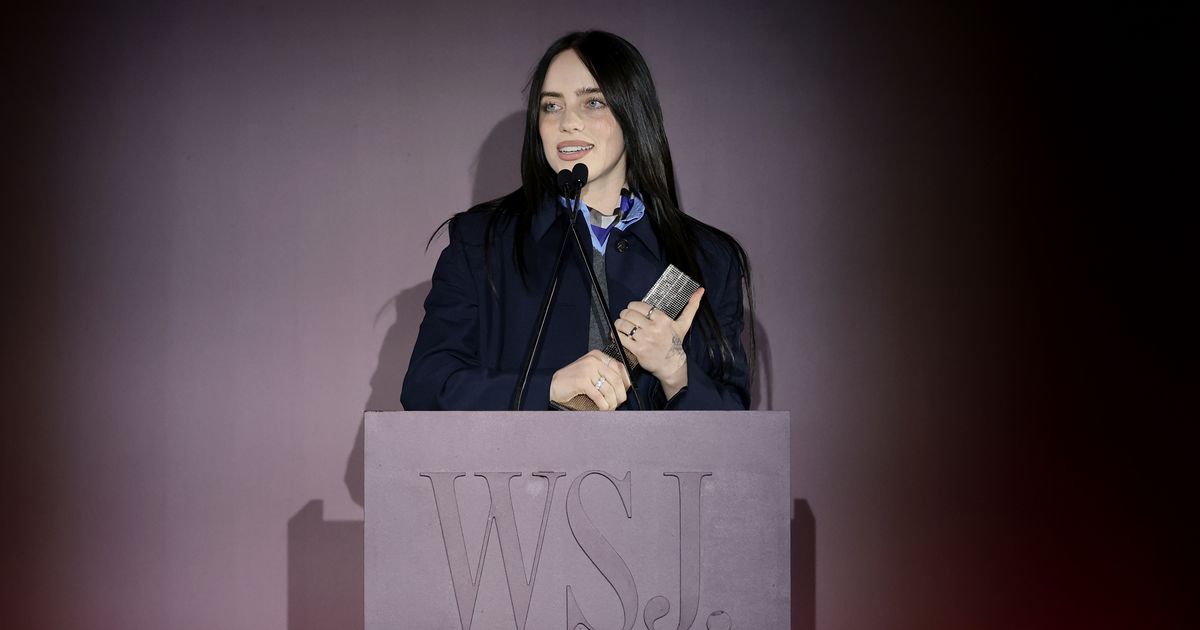
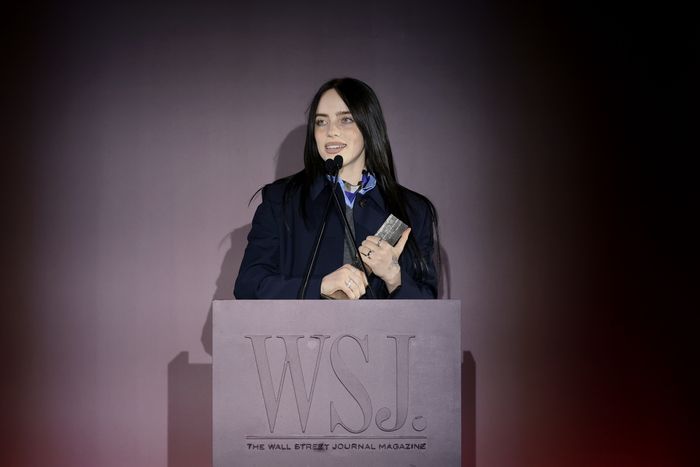
“I love you all,” Billie Eilish told a big group of peopleincluding Mark Zuckerberg, Hailey Bieber, and Chris Rock, at TheWall Street Journal‘s Innovator Awards on October 29, “but there’s a few people in here that have a lot more money than me.” She sang the last word of her sentence and flashed the audience a toothy smile. “If you’re a billionaire, why are you a billionaire? No hate, but yeah, give your money away, shorties. Love you guys.”
Her comments were anodyne as far as those about wealth inequality go. No “Tax the rich,” no “Eat the rich,” no “Class war — now.” Eilish couched her criticism in love, not once but twice; she even added “no hate.” In a video of the event, it’s clear from the way Eilish scans the room as she speaks that she’s talking directly them the Innovator Awards audience. Her initial not-quite-joke about people in the room having more money than she does is met with awkward laughter, but the rest of the comment goes otherwise unacknowledged. Everyone applauded when Eilish took her leave from the stage, probably because they were happy they didn’t have to think about wealth inequality anymore.
But you know who else is a billionaire? Taylor Swift. You know who Eilish may be indirectly talking about? Taylor Swift. Let me tell you stan wars commence. Since Eilish was gutsy enough to speak on the subject, most of the responses have audited her own net worth, rather than digging into the literal billionaires who sat in the room with her. Whether these commenters are largely Swifties or not, it’s weird to see platforms like X and Instagram — which are run by billionaires — full of people arguing on behalf of billionaires. Do those arguing with Eilish know the filthy rich won’t give tell any money for coming to their defense?
neither many have been quick to point outEilish comes from money. Her parents had a not-insignificant role in the gentrification of Highland Parka once more affordable neighborhood of Los Angeles. Every net worth is approximately $50 millionwhich isn’t billions of dollars, but it’s certainly a more comfortable lifestyle for a 23-year-old than most people have. Her boyfriend, Nat Wolff, is the nephew of billionaire Tim Draper, but she’s not likely to be benefiting from that connection in any meaningful way.She is far from an indie artistbut she’s not speaking on their on behalf — or even on behalf of “regular people.” Eilish herself could probably afford to have less money, but she looks like a wee Victorian peasant next to the net worth of someone like Zuckerberg or Jeff Bezos. Her willingness to articulate how crazy it is that people in that room have so much money is commendable. It’s not likely to change anything with any immediacy, but it made Zuckerberg look really weird in context — weirder than normal — and at the end of the day, that’s priceless. She’s not really a David in the face of big technology’s Goliath, nor is she spitting on The Life of a Showgirl. She’s saying what we’re all thinking whenever we see billionaires rocking ugly outfits at a gala: Give your money away, shorties. You may even like it.
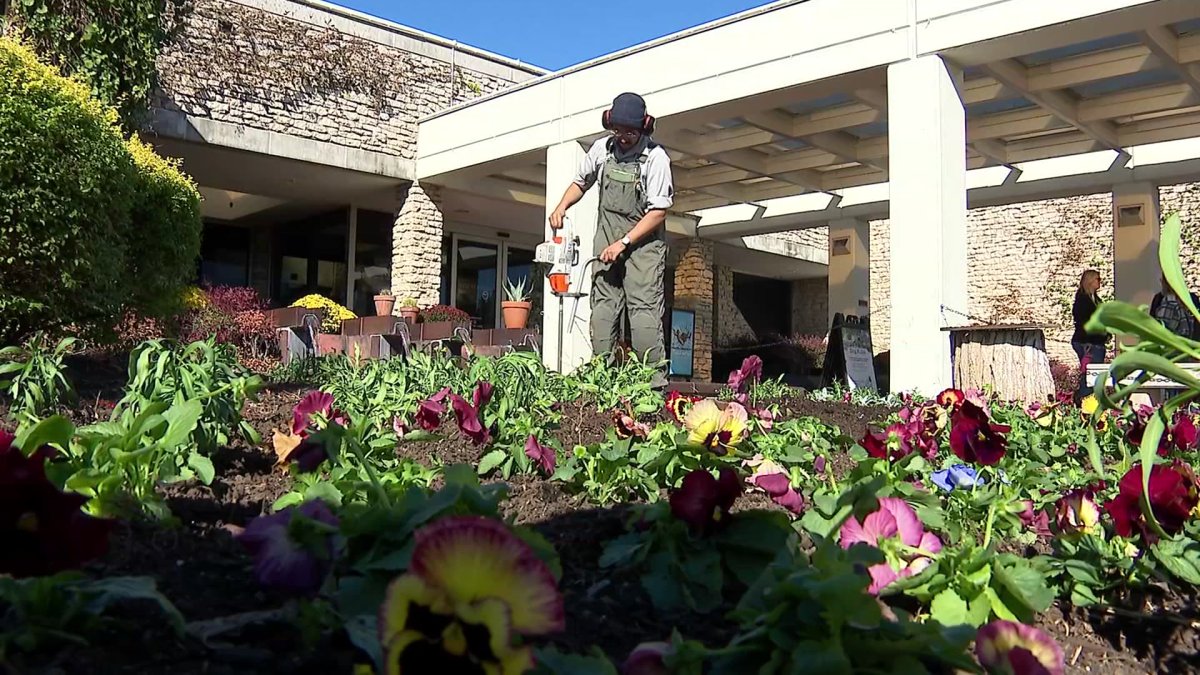
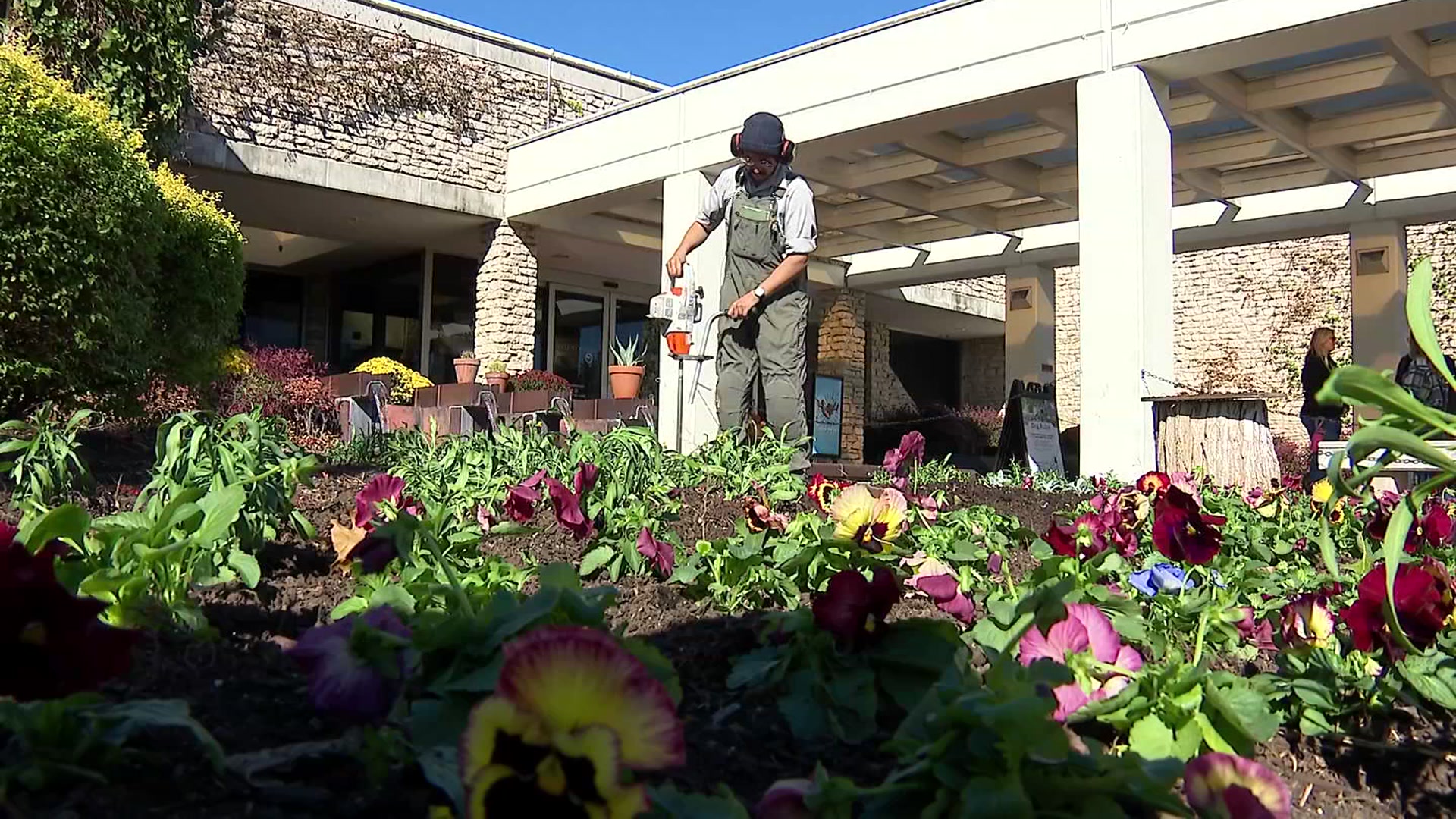
The weather has finally caught up to the calendar. It feels like fall, and at the Fort Worth Botanic Garden (FWBG), it looks like fall, too.
Gardeners have switched over flower beds and started planting fall blooms in preparation for the FWBG’s annual Fall Japanese Festival, one of its biggest events.
“What’s special to me is you can kinda get away from the real world; kinda distance yourself and find some peace in a bit of a chaotic world,” FWBG Japanese Garden Horticulture Manager Chris Ransom said, looking out over the peaceful garden.
Gardeners spent two months preparing the grounds for the FWBG Fall Japanese Festival.
“So, the whole thing I’m trying to represent with the lines is trying to make a scenery that represents water, that represents something fluid, something moving,” Gerardo Chavarria said as he raked lines into the bed of the dry garden. “In reality, nothing is moving here except for me.”
Over the two-day Fall Japanese Festival, an estimated 14,000 visitors will come to the FWBG.
“It’s an oasis of calm,” FWBG Director of Events and Exhibits George Cripps said. “We’re right here in the middle of Fort Worth, and if you can find a place like this where you can just come and let the world fade away for however long you’re here, nothing that’s outside these gates matters while you’re here.”
The FWBG partners with the Fort Worth Japanese Society to bring a cultural experience of food, shopping, demonstrations, and entertainment to the festival. That includes Japanese drumming from Dondoko Taiko Fort Worth.
“We always get a big crowd,” Dodoko Taiko Fort Worth drummer David Bakutis said. “It’s always a lot of fun when you’re playing for a whole lot of people that enjoy playing Taiko.”
This is the Year of the Wood Snake, which symbolizes transformation, wisdom, and thoughtful reflection; a fitting match for the Fall Japanese Festival setting at the FWBG.
The FWBG Fall Japanese Festival is Saturday, October 31st, and Sunday, November 1st. Parking is free. Tickets are available at the door and onlinebut online sales are discounted.
Neutrals instead of colors. An earlier alarm in the morning. A new coffee habit.
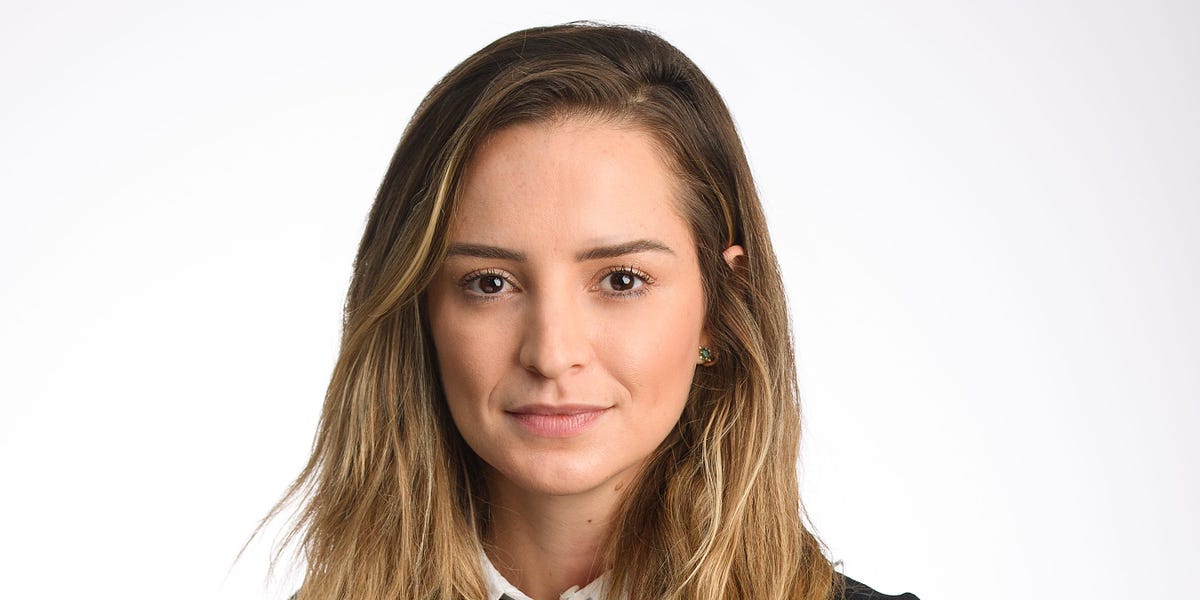
Wilma Ramony de Souza spent 14 years at JPMorgan and switched from the São Paulo branch to a New York City office in 2019 as a vice president. Although de Souza,37, would often travel to New York during her years working in Brazil, she said the differences in office culture at 383 Madison Avenue stillhit her hard when she arrived.
“How do you behave? How do you take calls? How do you talk to people? How do you go to meetings?” de Souza said, remembering how she would observe New York City employees.
She rose through the ranks of the bank during her time there, becoming an executive director by her 30s and eventually relocating to the London office, before deciding to quit last August. Business Insider has verified her employment and roles within the company. JPMorgan declined to comment.
Get in early
During her years in São Paulo, de Souza said she would arrive at the office around 9 am and leave around 6 pm, except on days when she’d be closing deals until the early morning hours. In New York, traders would usually arrive at the office by 7 am, and others would trickle in between 8 and 8:30.
Dress up
Both offices had dress codes, but whenever de Souza traveled to New York, she said her boss would advise her to ditch the usual color for black or gray dresses and slick her hair back in a ponytail.
Related stories
Business Insider tells the innovative stories you want to know
Business Insider tells the innovative stories you want to know
“Formally dressed every day: trench coat, nice shoes, you always had to dress up,” de Souza said.
de Souza said she remembered wearing an off-white suit one October, only to have someone say there was an unofficial rule not to wear the color after Labor Day — to this day, she’s not sure whether they meant a fashion rule or an office rule, but stopped opting for all white.
New York-style clothing seeped into de Souza’s life before the move, though. She said she bought a Burberry trench coat while she was still an associate in Brazil with her own money, and loved wearing it on trips to the bank’s headquarters.
Lunch isn’t social
In Brazil, everyone took an hourlong break for lunch, de Souza said, but New York employees ate at their desks. They’d get a salad or a sandwich and bring it back to their monitors, eating as they worked.
“I remember my first week in New York, it was around noon, and I was like, ‘Who is going to invite me to lunch?’ she said. “After a year or so, I was soaked in and I kind of embraced it, but at first I felt so lonely and thought nobody was going to eat.”
Food itself became another point of contrast — de Souza said people would sometimes be surprised when she brought rice and beans into the office, not knowing the dish is typical of Brazil. When she did buy lunch from the office cafeteria in New York, she said she opted for pre-set salads during her first months in the city because she worried about taking too long to place her order.
de Souza said she started drinking coffee after the move, and lattes in particular, partly because of all the coffee chats.
Time is money
New York felt like “the eye of the storm,” and de Souza said people worked nonstop, had higher standards, and expected more preparation.
“I felt like the intern always spoke five languages and went to an Ivy League school,” de Souza said. “It was like ‘Oh my God, if I breathe too slowly I’m losing time.’
Have an executive presence
Beyond dressing and eating differently, de Souza said she also learned to alter her corporate presence, partly because there was a culture of total excellence in New York. With so many talented people in the room, she said she had to figure out how to be even better at her job. She also enrolled in — and appreciated — training courses about everything from her accent to doing business in English throughout her career.
“You learn a lot from being in that environment,” de Souza said of her time in New York. “My boss was like, ‘You need to speak slower, look at people, eye contact, no hand gestures.’”
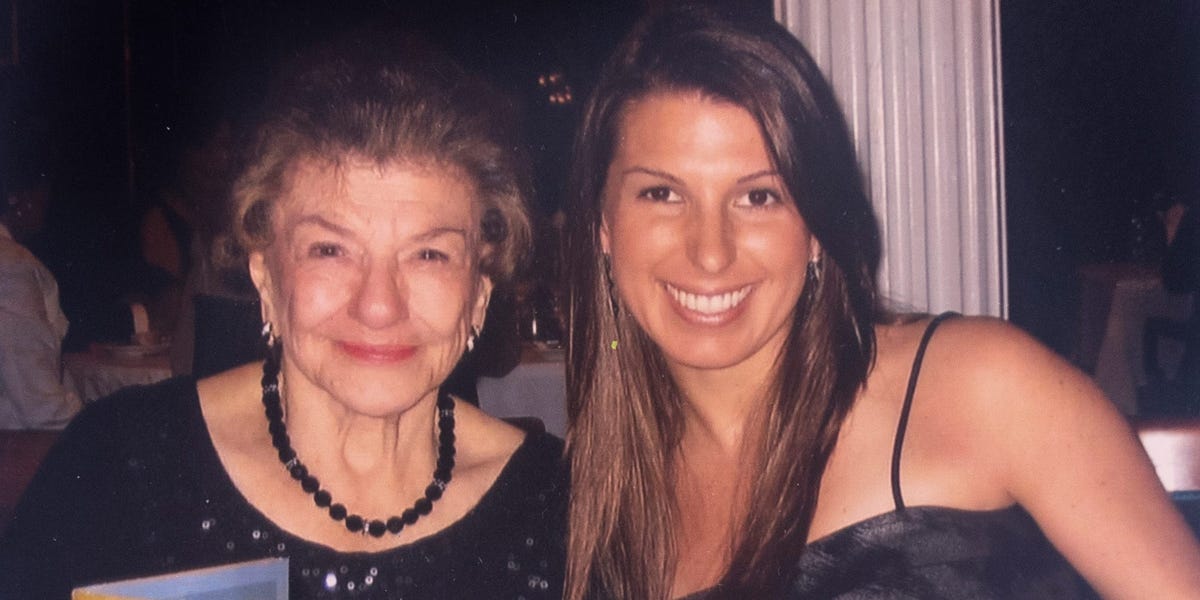
In her 103 years on the planet, my grandmother has accumulated plenty of wisdom, but she keeps most of it to herself.
If I were in my 10th decade of life, I’d be holding court constantly, dispensing advice to anyone who would listen. But my hunch is that my grandmother, whom my extended Southern family affectionately calls Mema, doesn’t want to be presumptuous. (Apparently, humility isn’t genetic.)
Every so often, though, she’ll share an insight so unexpected — and so on point — that it shifts something inside you, edging you closer to the version of yourself you want to be.
I still think back to one thing she told me over a decade ago that changed the course of my life for the better.
I felt stuck in my 20s and dreamed of a life on the East Coast
I moved to Washington, DC, right after college, and the city quickly burrowed into my heart with its 19th-century buildings, passionate people, and intellectual hum.
Although I loved DC, I left after a few years to get a master’s degree in journalism in New York City and later landed a reporting fellowship in South Africa. Then, the 2008 financial crisis struck, which seemed to just put an already struggling journalism market on life support.
Jobless, I moved back to my hometown of Fort Wayne, Indiana, to live with my parents and eventually found work at the city’s local newspaper.
I was gaining valuable reporting experience, building up my savings, and spending time with friends who gave me some of the funniest (and booziest) nights of my life — but I still felt stuck.
Related stories
Business Insider tells the innovative stories you want to know
Business Insider tells the innovative stories you want to know
Fort Wayne was a good place, but it wasn’t my place. That title still belonged to Washington, DC.
After four seemingly endless Midwest winters and countless cover letters aimed mostly at jobs in the capital, I got an idea: What if I quit my job and moved back with nothing lined up?
When I floated the plan to my parents, they were skeptical. I was torn.
Then one day, driving home from an interview with a prominent newspaper in Chicago, I called the last person I wanted to run the idea by: Mema.
My grandmother’s opinion was something I truly valued
My grandmother is our family’s matriarch and inspiration.
Devon Haynie
My grandmother has lived the kind of life I hope for — long, purposeful, and joyful — so seeking her advice seemed natural.
A Cajun woman of understated elegance, Mema lives independently in a spotless Texas home filled with mementos from her travels, family photos, and her own paintings.
She’s lived through the Great Depression, World War II, 9/11, a painful divorce, and the deaths of far too many loved ones. And yet, she rises each day to weed her garden, feed the squirrels, fire off a few emails, and get something brewing in the kitchen. She’s on Facebook, learning French on Duolingo, and still refining her painting skills.
When she answered the phone, I gave her the scoop: I’d just had a promising interview at a paper I admired, but I wasn’t sure I wanted it. Maybe it was finally time to make the 600-mile leap back to DC
I paused, nervous for her verdict. What had all those years taught her about balancing risk and reward, about stability’s tug-of-war with yearning?
“Sounds like a great idea,” she said, almost giddily, in her barely Southern, old-world lilt. “Do what makes you happy.”
Every advice gave me the confidence to trust my intuition
I’ve built a happy, successful life for myself in DC.
halbergman/Getty Images
After those 10 words, I knew what to do.
The scales tilted towards possibility, and a month later, I packed up my belongings, said tearful goodbyes to friends, and set out on a road trip back to Washington.
I moved into an apartment with a close friend from graduate school, quickly landed a journalism job I was excited about, and eased back into the city’s familiar, soothing rhythms.
Fifteen years later, I’m still here.
I followed the listen-to-your-heart ethos, married an Argentine teacher, and stayed in the journalism industry. (We’re not rich, and the industry is far from stable, but I am happy.)
DC remains a center of gravity, but I have others now, too — including two (mostly) lovely kids.
If my children have children, and I’m lucky enough to know them, I hope they’ll seek me out when they’re wrestling with a big decision.
Whether by phone, hologram, or whatever they’ll invent next, I’ll tell them to trust their intuition, just as a wise woman once told me.
Developer IQHQ made one of the hot real estate bets of the pandemic era when it acquired the triangular-shaped office building in Redwood City, California, for $164 million in late 2021.
The San Diego-based landlord planned to raze the property at 10 Twin Dolphin Drive and erect a trio of lab buildings on the 15-acre site catering to the life sciences sector. At the time, the industry was booming as it played a leading role in combating COVID.
IQHQ has put the property up for sale this month, the firm confirmed to Business Insider.
The offering is the latest sign of retreat in a once-soaring segment of the real estate market, as life sciences properties across the country face record vacancy rates and tenants in the sector struggle with funding challenges that could drag on for years.
“We routinely evaluate our portfolio for opportunities to recycle capital by selling land assets that may not be strategic to IQHQ at this point in time,” an IQHQ spokeswoman said in a statement.
The sector’s problems have also been reflected in the stock market, where shares of Alexandria Real Estate Equitiesa large public life sciences real estate company, have tumbled from a record high of about $220 per share in late 2021 to roughly $80 today.
Chief among the ongoing disruptions is a pullback in federal research funding, which is critical to the ecosystems of startups that eventually fill commercial lab spaces. The National Institutes of Health, which gives out the majority of federal money to the life sciences sector, is running roughly $5 billion behind on grant awards this year compared to 2024, according to the Association of American Medical Colleges.
Venture capital, another key source of funding for the industry, has also pulled back. Life sciences companies raised $24.9 billion in venture investment through September, putting 2025 on pace for the lowest venture haul since before the pandemic, according to PitchBook.
Compounding the situation is a building boom in recent years that has left the market oversupplied just as leasing activity has slowed.
“Cycles in the past, you might see dips in venture funding, but federal funding remains stable — or there might be record layoffs occurring, but venture funding and research funding remains high,” said Travis McCready, the chair of the real estate services firm JLL’s global life sciences advisory practice. “This is the first cycle I can think of in my professional history where all of the black squirrel events are happening at the same time.”
From COVID-fueled growth to record vacancies
The average vacancy rate for life sciences spaces in leading markets across the country has ballooned from 6.6% in 2022 to 27% today, according to JLL — a record level. That number exceeds the 22.5% average vacancy for office space nationally, according to JLL, an area of the commercial real estate market that has grabbed attention for its headwinds.
Unlike the office market, where new buildings are outperforming, brand-new labs have been a focal point of the brewing problems. Projects completed between 2022 and 2024 have a 48% vacancy rate, according to JLL, demonstrating how newly delivered real estate to the sector has been met with moribund demand.
Life-sciences real estate, once a pandemic-era star, is grappling with record vacancies.
liujunrong/Getty Images
Boston, the Bay Area, and San Diego, which are the top three life sciences markets, have been beset with once-unthinkable vacancies, in part, because they were magnets for new construction in the sector. About 51.7 million square feet of the roughly 70.8 million square feet of life sciences space built in the last five years in the US was erected in those three markets.
According to JLL, Boston and San Diego now have a 33% availability rate, a statistic that measures the total amount of space landlords are marketing to potential takers, and the Bay Area’s availability rate is 35%.
Related stories
Business Insider tells the innovative stories you want to know
Business Insider tells the innovative stories you want to know
Incubators that used to feed the life sciences sector now feel the pinch
Even incubators, collaborative and multi-tenanted spaces that are usually resilient to downturns because they cater to larger constellations of small users, have begun to feel the strain.
Louis Kassa, the CEO of the Baruch S. Blumberg Institute, which operates incubator spaces in Doylestown, Pennsylvania and Philadelphia, said the nonprofit has delayed plans to expand both facilities because of budding vacancies.
The space in Doylestown, called the Pennsylvania Biotechnology Center, has grown steadily since opening more than a decade ago to about 150,000 square feet today and has never had appreciable vacancy, Kassa said.
Now, about 16% of its lab space is empty, Kassa said, and it has delayed plans to enlarge the facility by about 38,000 square feet. In Philadelphia, it manages almost 100,000 square feet from the large landlord Brandywine Realty Trust at an office property known as Cira Center. That space, called B+labs, has also accrued vacancy and Kassa said the Blumberg Institute has similarly postponed plans to take another floor.
In Doylestown, Kassa said that four tenants had recently been denied Small Business Innovation Research, or SBIR, grants from the NIH, which is a division of the US Department of Health and Human Services.
“What’s really ironic is the MAGA platform — and I don’t want to get too political — is making America great again,” Kassa said. “Well, we are great in science. And what’s going on this past year has basically been cutting the legs out of science. It’s disheartening.”
Mike Carnes, vice president for emerging company development at NCBiotech, a state-sponsored life sciences support initiative in North Carolina, said that 10 startup companies in the state had recently been rejected for about $15 million in SBIR funds. In 2024, a total of $124.5 million in NIH funding was awarded in the state.
President Trump’s executive budget, meanwhile, has proposed cutting NIH funding by 40%.
“The many decadeslong, stable partnership between the federal government and academia to reliably and continuously advance science and scientific progress has really been interrupted in ways that we’ve not seen before,” Heather Pierce, the senior director for science policy and regulatory counsel at the Association of American Medical Colleges, said.
She added that the research funding plays a large role in the health of the life sciences sector.
The “seeds of the exploratory research that may eventually move to a commercial product,” often come out of academic research funded by federal money, she said.
Amid the AI boom, life sciences have seen less venture capital
Venture capital has also pulled away from life sciences.
Kassa, the head of the Blumberg Institute, said that much of the venture capital flowing into life sciences was favoring larger, more established companies over speculative startups — a concerning sign for future life sciences space demand.
“There are some investments being made, but it’s mostly larger rounds for more advanced companies and technologies,” Kassa said.
In 2020, Spear Street Capital, a San Francisco-based real estate investor, purchased a 500,000-square-foot building at 705 Mt. Auburn Street in Watertown, Massachusetts — one of the nation’s top biotech hubs — for about $300 million. The lab space has sat largely vacant ever since.
John Grassi, the CEO of Spear Street, said the ecosystem of smaller life sciences firms was a “little engine driving things” by taking space and incentivizing larger firms in the sector to follow suit.
He’s now hoping the space can be “converted to alternative uses,” including the growing application of AI to life sciences functions or even drug manufacturing, he said.
He didn’t want to specify exactly how he was planning to pivot his strategy for the property, but said he was optimistic.