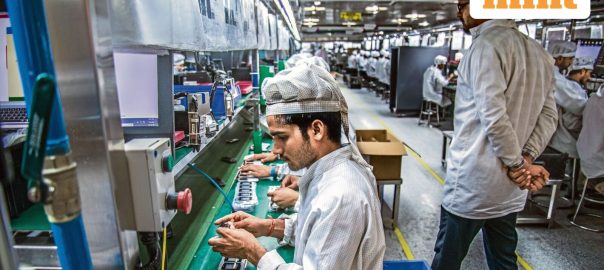
Summary Each BNP release elicits both cheers and skepticism. But the real problem is our aging statistical apparatus. As a base-year revision of our GDP series planned for 2026 approaches, here are five reforms we should adopt to improve data accuracy. Every release of gross domestic product (GDP) data in India follows a familiar script: an initial wave of headline enthusiasm, followed by doubts about manufacturing strength, real-nominal gaps and statistical discrepancies. But these debates miss a key point. India’s core methodology for GDP estimation is generally sound and internationally aligned; the real weakness lies in the broader statistical ecosystem—data sets that have not kept pace with structural shifts, outdated reconciliation tools, and price measures that struggle to reflect rapidly changing production and consumption. The result is an over-interpretation of the header number without the context needed to read it properly. Unless we modernize this architecture, we will continue to debate symptoms rather than the underlying issues that matter for interpreting GDP data in a rapidly evolving economy. Manufacturing—an 80-20 measurement split that distorts the story: Two core indicators, manufacturing gross value added (GVA) and the Index of Industrial Production (IIP), often appear to differ. This is not a contradiction, but a feature of the system. About 80% of the manufacturing VAT comes from the organized corporate sector, estimated from quarterly submissions from about 1,500 firms reporting sales, input costs and operating expenses. This is in line with global practice and recent data shows solid momentum: corporate manufacturing has grown by 10-20% this year, with earnings before interest, tax, depreciation and amortization rising by around 9.6%. The remaining 20% consists of quasi-corporate, unincorporated and informal units, and is more difficult to measure. These enterprises do not file quarterly accounts, so the statistics ministry uses the IIP as a proxy, applying volume growth and converting it to current prices via the wholesale price index (WPI). But the IIP tracks physical output, not value added; it misses margins, input costs, product upgrades and service intensity. It cannot really reflect value addition. The result: earnings look strong and VAT remains high, but the IIP moves differently. This divergence reflects our statistical design, not economic stress. We need better ways to track the informal sector. GDP discrepancies reflect data gaps: The widening gap between production-based and expenditure-based GDP has raised valid concerns. While the global norm is to keep such disparities within 3% of GDP, India has recently crossed that mark. The variance stems from uneven data quality. Production GDP uses regular, high-detail sources—corporate filings, administrative data, and sectoral statistics, while expenditure GDP relies on lower-frequency consumption and investment surveys, which are often revised significantly later. Two structural issues exacerbate this mismatch: A base revision lag, which means that weights no longer reflect the current economy, and the absence of regular ‘stock and use tables’ (SUTs), which are standard reconciliation tools across advanced economies. We have not produced input-output tables for 15-18 years and our SUTs are only compiled after annual estimates are released. But the global best practice is to compile SUTs before we finalize a year’s estimates and use them for quarterly and forecasting. This approach will eliminate differences in annual data and sharply reduce them in quarterly estimates. The paradox of the IMF’s ‘A’ versus ‘C’ rating: India’s statistical weaknesses become more apparent when viewed through global evaluations. Many emerging economies, including India, face a familiar paradox: the International Monetary Fund (IMF) may award an ‘A’ for National Accounts but a ‘C’ for the overall statistical system. GDP methodology is just one element of the IMF’s review, which also covers the entire statistical ecosystem: public finance data, external-sector reporting, monetary and banking statistics, financial-sector disclosures and the reconciliation frameworks that link them. Gaps in fiscal coverage, delays in financial reporting, inconsistencies across administrative data sets and a poor SUT/input-output tabulation basis drag down the composite grade, even if our National Accounts meet global norms. In other words, India’s GDP meter is well designed, but the dashboard around it needs updating. Next year’s base year review provides us with a window to realign our statistical system with the economy it measures. Five reforms are particularly urgent: One, create a corporate manufacturing growth index: The ministry of corporate affairs can use MCA-21 database filings to create a transparent, high-frequency index that bridges the gap between GVA and the IIP. Such an index would track manufacturing, provide clarity to markets and reflect significant quarterly variations (often 10-20% across segments). Two, use the ASUSE to track the informal sector directly: The Annual Survey of Unincorporated Sector Enterprises (ASUSE) provides a basis for direct measurement of the informal sector VAT. Integrating this data with quarterly GDP after the 2026 revision will reduce our dependence on IIP proxies, three, institutionalize SUTs and restore input-output tables: Both of these are non-negotiable in advanced statistical systems. They reconcile production, expenditure and income accounts, remove discrepancies and support GDP interpretability. Four, update deflators: For more accurate estimation of real GDP growth, we need to use a broad range of producer price indices that include a producer price index (PPI) for goods and services, both for inputs and outputs (by industry where necessary). The WPI alone will not be sufficient. Five, invest in statistical capacity: Inter-agency platforms, modern IT systems, data engineers and other skilled statistical staff form the backbone of reliable measurement. We need to strengthen it. A modern economy needs a modern statistical system. Today, corporate performance looks strong, but we have no dedicated index to track it; deflators skew interpretation; contradictions widen because our instruments of reconciliation are outdated; and the informal sector is estimated by proxies that were never designed for that role. None of this discredits India’s GDP, but it does limit how precisely we can read the economy. India’s ambitions require sharper statistical clarity. The 2026 base year review is a chance to upgrade the system for the next decade. If we get this right, our data confidence will rise to match the economy’s maturity. The authors are respectively former Director General, Ministry of Statistics and Program Implementation, and Chief Statistician, Pahle India Foundation (PIF); and senior fellow, PIF.