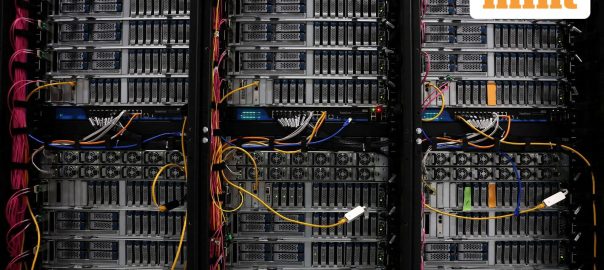
With each passing week, we see new chapters being written as some of the world’s biggest companies compete to make new headlines in AI. While much about AI is driven by headlines today, Mint reported this week on one phenomenon that doesn’t appear to be a fad — the rise of sovereign computers. If you have been an active participant in the AI news cycle, you would have realized that I called it sovereign ‘computing’ and not sovereign ‘cloud’ or ‘AI’. The reason for this is that the common drive for companies today is to break up the sweeping connections of the Internet into fragments and create air-gapped online walls. It’s certainly not just figurative. From physical data center investments to laws and regulations, each top economy has its own philosophy behind what it believes will be the future of technology in this world. India, too, is right up there with all the others. Last week we welcomed Satya Nadella to New Delhi, Bengaluru and Mumbai (we also welcomed Lionel Messi, but that’s a story for another day). The top Big Tech leader has announced investments in the country worth $17.5 billion (that’s a staggering ₹1.6 trillion), most of which will go into expanding Microsoft’s India data centers. A day later, Amazon announced investments of $35 billion, including data centers. As India builds its data centers, the Department of Industrial Promotion and Internal Trade (DPIIT) has released a set of proposals to make tech makers pay publishers for using the latter’s content when making an AI model. All this is designed to make AI work for India, in India. This perhaps explains why the likes of Airtel, Tata Consultancy Services and Larsen and Toubro are in a battle for India’s sovereign technology armoury. But it also explains why Google, Microsoft and Amazon are also in a three-way battle for it. Linked here are a number of excellent stories to guide you through this burgeoning showdown. A $120 billion research fund is finally ready. In the middle of this year, after several submissions by industry consultants, an incentive scheme of ₹1 trillion was proposed to promote research and development (R&D) projects nationwide. The idea: promote R&D in the private sector to create innovative products as US Big Tech and other industries have flourished. Example: TCS, one of India’s largest spenders of R&D in the private sector, spends just over $300 million a year on R&D funding. That’s just over ₹2,800 crore in R&D budget—ask anyone in academia, and they’ll tell you that by itself is more than enough for many projects to meet their targets. But it is no longer about meeting targets. So far, India’s prowess in the tech world has been driven by services. India has become known as the world’s technological back office over the past two decades. And we made good money in this—today, India’s IT services industry is close to $300 billion in annual revenue. Things have changed now. Without products, services are indispensable—and margin arbitrage will no longer hold countries to ransom and bring business here. That’s what this ₹1 trillion R&D fund hopes to help with, and now, a quick chat with Jyoti Sharma, the head of research, development and innovation at the Centre’s Department of Science and Technology, tells us that two fund managers are already appointed and operational. At the end of this fiscal, they will begin to identify opportunities, and some time in 2026, the first checks will be signed. It’s exactly the kind of boost the post-academia, pre-industry world needs, if you ask the few who work tirelessly to help companies scale and bring their products to market. Some, like IISc Bengaluru’s Yogesh Pandit, and HCL co-founder Ajai Chowdhry, believe this is a much-needed start to India’s R&D journey. The question is, will this restart finally get us to build what is needed? The side of electronics you don’t often see. This week I also reported on a key growing challenge in India’s electronics manufacturing sector—the lack of cash flow and working capital. You see, we keep talking about how India’s electronics exports are skyrocketing, and assemblies replaced 99.9% of cell phone imports just over a decade ago. While wonderful, this expansion has not led to the kind of substantial gains in patents and proprietary technology that China has achieved over the past two decades. Now India’s leading technology manufacturers are racing against time and incentives to acquire companies as well as skills. In doing so, they now face the dangers that naysayers have always warned against pursuing a low-margin, high-volume electronics business — despite a decade of investment, still a capex challenge. Brokers, including the usually reliable JPMorgan, say the damage is not irreparable. But there’s no denying that India’s electronics manufacturing industry is at an inflection point today — one where companies will have to prove their mettle by moving up the technology value chain, or perish in the process. A decade of UPI I remember the day of demonetisation very clearly, simply because it was discussed so many times. Over the next few days, what followed was a blitzkrieg on the Indian banking system, with most of the middle class struggling to get some cash out of any ATM machine that would work. This, as the story goes today, gave birth to India’s mainstream cashless economy. As UPI has become mainstream, there is no doubt about what the technology has successfully achieved. Instead, the key question remains: what are the dangers of this ecosystem, and can it be sustained forever? This week, a Mint Long Story took a deep dive into a decade of India’s digital payments framework. Needless to say, this one is quite the ride. In other news: AI loan agent, creative under fire Shadma Shaikh at Mint wrote this week about how AI is rewriting the way loan defaults are handled. Many will wonder if this is true – after all, any individual who has ever defaulted on a loan has faced what is quite common in the form of outrage stories and the pains of strife. Ask the AI companies trying to win a piece of this business from banks, and they’ll tell you – compassion is the way forward. Here is Shadma’s piece. If you’ve faced this too, write in – we’re all ears to hear your experience too. Finally, the same $300-billion IT services industry we talked about earlier in this week’s newsletter appears to be pulling some of its business from media, entertainment and digital marketing. The latter, as it stands, is right in the middle of a concentrated disruption arising from the growth of AI-driven automation. Thinking of Nano Banana, or Sora? Yes, it appears to be automating quite a bit of this marketing industry. Here’s Jas Bardia, with why this is a massive disruption that could change the contours of thousands of jobs. Transformer by Mint is a weekly newsletter that brings India’s most important and interesting technology updates under one umbrella. As the world transforms with every day of innovation, Transformer will hold the impact that technology will make in each of our lives. The newsletter is published every week and brings some of India’s technology landscape’s most insightful coverage to date.