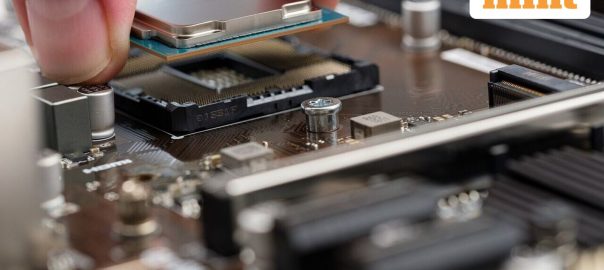
Copyright © HT Digital Streams Limited All rights reserved. First red flags for electronics firms like Kaynes go under the lens Shouvik Das 5 min read 12 Dec 2025, 06:00 am. IST Despite faltering investor confidence, analysts pointed out that India’s top electronics firms are still clinging to the solid gains made since their market debut. (Pixabay) Summary Fresh concerns over Kaynes Technology’s finances have rocked India’s electronics manufacturing sector, calling into question the industry’s ability to bankroll the huge investments tied to government incentives. A flurry of warnings about Kaynes Technology’s finances rattled India’s electronics manufacturing (EMS) sector, sharpening focus on the industry’s ability to fund the heavy investments needed to take advantage of upcoming government incentives. Brokerage firm Kotak Securities’ notes on the company this month had a cascading effect on the broader sector. Since Dec. 1, shares of Dixon, Syrma and Kaynes have fallen 11-30% as analysts noted problems with cash flow, availability of working capital and the ability to expand manufacturing to seek government incentives. On December 3, a Kotak Securities note reported “ambiguous accounting” of revenue from one of Kaynes’ acquisitions, as well as “inconsistencies” in related party transactions. The note also questioned whether the company’s current operating cash flow would allow for its planned capital expenditures in new projects. Despite faltering investor confidence, analysts remain optimistic for the long term as India’s top four electronics companies maintain the exponential gains they have brought to investors since their listings. Over the past week, according to Kotak Securities’ note. there were similar flags by the likes of JM Financial and JPMorgan, raising concerns about financial disclosures and operating cash flow at Kaynes. They raised questions about the company’s accounting discrepancies, and whether it had enough capital to grow at the rate it planned. On December 5, Kaynes filed a response to the BSE, admitting to “inadvertent non-disclosure” of related party transactions in its financial statements. And on December 8, the company’s management, led by executive vice chairman and founder Ramesh Kannan, addressed these concerns in a call with analysts. Investors, however, appeared excited. Kaynes shares fell 10.5% on Wednesday, before recovering 3.5% on Thursday. Overall, Kaynes’ share price is down 30% since December 1, and 44% from its 52-week high. Operations under stress Hitherto, electronics manufacturing services firms have largely relied on building scale, driven by central and state government incentive schemes. It has worked out very well so far – both for the companies and their investors. Kaynes, since listing in November 2022, has given investors a 10x return within three years. Even now its share prices are at 5.4x since listing. The benchmark 30-share BSE Sensex rose 37% during this time. Similarly, Dixon, Amber and Syrma have returned investors 6x, 5x and 2.5x since their listings in September 2017, February 2018 and August 2022, respectively. Now a new set of incentive schemes wants to boost component manufacturing, which in turn requires these companies to invest in building factories before they get the said soups and reap the rewards. Analysts are now questioning whether the sector will be able to make such investments. “We note management responses to our report; however, certain aspects related to intangible accounting and increased working capital remain unclear. We believe that the generation of positive OCF (operating cash flow) in FY2026, improvement in internal controls and timely execution of PCB (printed circuit board) and Osat (outsourced semiconductor assembly) will occur through a second extension and testing from December 9. Security analysts A note by Bhavik Mehta and Ankur Rudra, analysts at brokerage JPMorgan, added: “There was no change in fundamentals on the stock, but one of the key concerns about the stock was stretched working capital and receivables. On November 14, Mint reported that all of India’s leading electronics companies, including the privately held Tata Electronics, pursuing acquisitions to venture into components manufacturing and other sub-segments reaping better rewards in electronics. Concerns over the entire electronics manufacturing services sector have seen Dixon Technologies, the only large-cap firm, fall 15% before recovering 5.3% in the past nine business days, respectively At the heart of the issue, therefore, are questions about the ability of EMS companies, which have relied heavily on high-volume, low-value electronics, to generate enough operating cash flow to invest in their businesses. Long-term outlook In response to a questionnaire sent by Mint, CFO Jairam Sampath reiterated his claim from last quarter’s earnings call, saying: operating cash flow by March 2026.” “Kaynes has always delivered in the execution of new projects. We were the first to manufacture and ship ICs (integrated circuits) made in India among the various entities granted capital subsidy approval by the government,” he said. We have taken note of the comments by various people in the media and during our analyst interactions, and we are confident of ensuring the desired improvements on each of the key issues facing the business.” Sampath added that the company expects “higher revenues in non-industrial sectors such as railway electronics, aerospace, electric vehicles, automotive, etc. to achieve, which will drive the growth of ESDM (electronic system design and manufacturing) revenue for Kaynes to compensate for the smart meter revenue.” The company also plans to start supplying self-packaged chips this financial year from its Osat plant in Sanand, Gujarat. However, he denied that there is any need to raise any further capital, at least in the near term. On that note, analysts said that despite the long-term concerns, Kaynes is seen as a stable company for investors can stay. “The company’s overall business model is solid, and in terms of expansion, there is no reason for Kaynes to fail at any stage. It may consider raising further funding for future acquisitions or venturing into more new categories,” said Harshit Kapadia, vice president at brokerage Elara Capital. “Overall, what will be key to see is tighter internal controls in financial reporting, and whether it will actually meet its positive operating cash flow guidance this financial year.” “We remain OW (overweight) and expect improved receivables and NWC (net working capital) will be key drivers of the stock over the next two quarters,” added JPMorgan’s Mehta and Rudra. Get all the corporate news and updates on Live Mint. Download the Mint News app to get daily market updates and live business news. more topics #KaynesTechnology #KotakSecurities #manufacturing Read next story