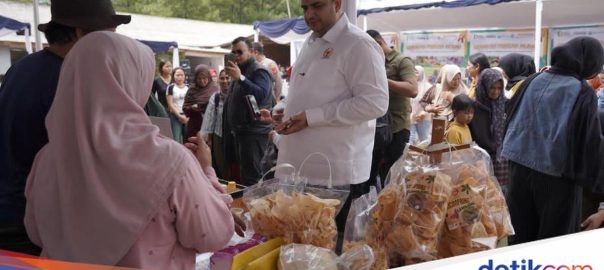
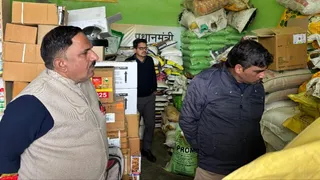
Jakarta – Member of Commission IV DPR RI, Rajiv conducted cheap food movement (GPM) activities together with the National Food Agency (NFA). Activities were held in Margaasih District, Bandung Regency and Lembang, West Bandung Regency, West Java. According to him, this cheap food movement is an attempt to help ease the burden on people before the 2025 Christmas and 2026 New Year (Nataru) holidays. “The Cheap Food Movement is one of the government’s programs in collaboration with the DPR RI in Commission IV. I see that there is quite a lot of enthusiasm among the people participating in the government program for the cheap food movement. Hopefully this program can be useful to the community, hopefully it can provide some relief,” Rajiv said in his statement, Thursday (18/52/2). Scroll TO CONTINUE CONTENT The cheap food movement held by Rajiv in the West Java II Constituency (dapil) covering Bandung Regency and West Bandung Regency is in the form of rice, oil, meat and other agricultural commodities. For this reason, this member of the Nasdem Party faction appreciated the Logistics Agency (Bulog) and the National Food Agency for preparing vendors well and professionally. Because Rajiv directly checked the quality of the products produced like vegetables. “I checked the goods, such as good cucumbers. In fact, the products are from Bandung Regency, not from other places. We, Commission IV DPR RI, appreciate Bulog and Bapanas for preparing sellers well,” he said. Furthermore, Rajiv said the cheap food movement is a direct response to the pressure on prices of basic necessities that people in various regions continue to feel. According to him, this activity is not just a temporary market operation, but part of state intervention to ensure that food, a basic right of citizens, remains affordable, especially for vulnerable groups. “Food price fluctuations cannot be read as a distribution problem, but also a reflection of poor upstream-downstream coordination in the national food sector. In the midst of the threat of climate change, global uncertainty and the dynamics of domestic production, the state must not be passive,” he explained. Therefore, Rajiv assured that Commission IV DPR RI will continue to oversee the national food policy so that it does not move away from the interests of the wider community. According to him, the success of the food sector is not only measured by surplus numbers, but by the extent to which people can access food at reasonable prices and of decent quality. “Food is a matter of justice. When food prices are out of control, what is threatened is not only people’s kitchens, but also the nation’s resilience,” he stressed. For this reason, Rajiv reminded that the direct presence of the government and all stakeholders in society through cheap food is a form of real alignment, as well as a sign that food stability is not left entirely to market mechanisms. “Through the cheap food movement, the central and regional governments must make it a sustainable policy model, not an accidental agenda,” he concluded. (anl/ega)